
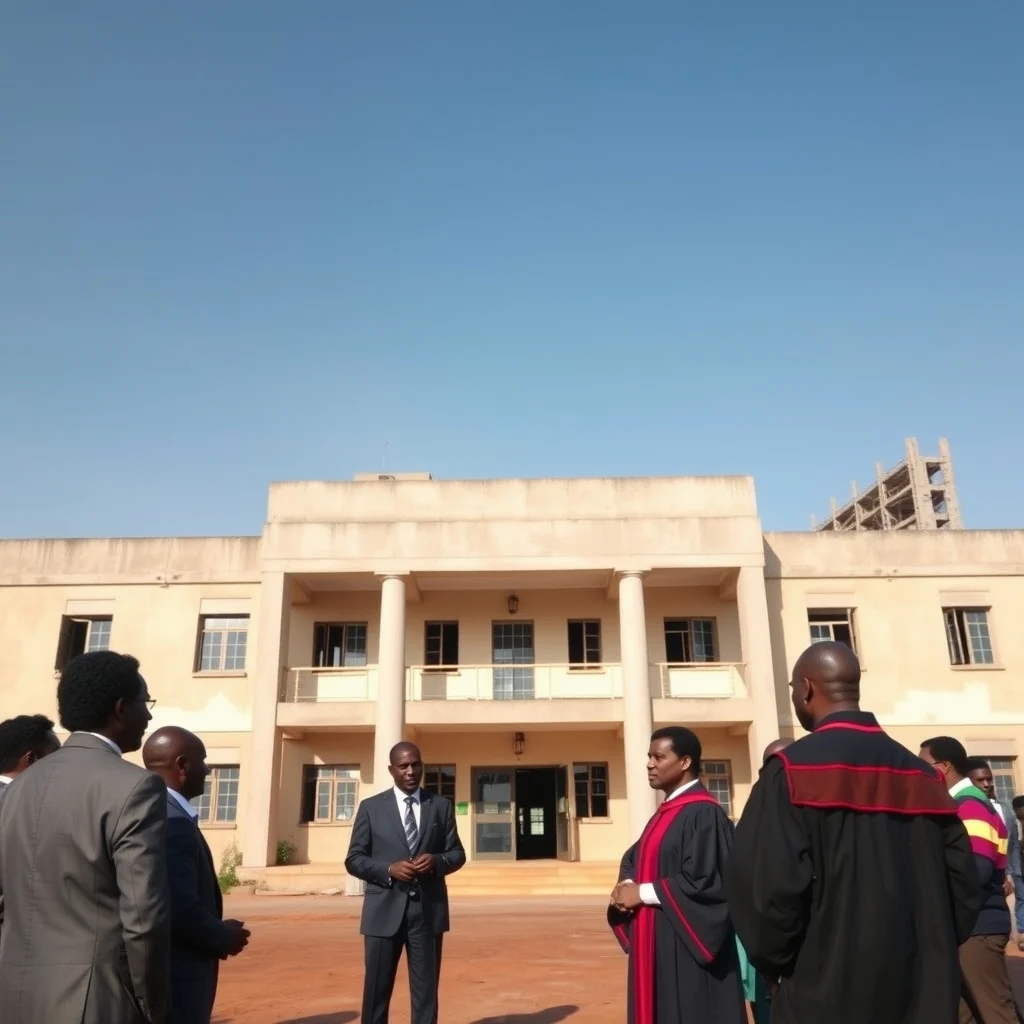
Wa, Ghana – The Parliamentary Select Committee on Judiciary has pledged to address critical staffing shortages and infrastructure deficits plaguing the judicial system and legal education in Ghana’s Upper West Region. The commitment followed an appeal from Justice Osei Wusu-Antwi, Supervising Judge of the Wa High Court, during the committee’s recent visit to the region, highlighting the urgent need for resources to ensure effective justice administration and training.
Addressing Judicial Infrastructure and Staffing Gaps
Justice Wusu-Antwi informed the committee that significant progress had been made on the new High Court complex in Wa, a project revived following the committee’s previous intervention. While this development brings relief, the region’s district courts continue to face severe understaffing. He stated that only one district magistrate is currently managing three courts, with the Tumu district court entirely without a magistrate. This scarcity of judicial officers critically hampers the delivery of justice across the region.
The Supervising Judge also pointed out the challenge of poor road infrastructure, which discourages judicial officers from accepting postings to the Upper West Region. This issue exacerbates the existing staffing problem and impacts the judiciary’s ability to attract and retain qualified personnel.
Parliamentary Committee’s Oversight and Commitment
Bede Anwotaazuma Ziedeng, the Ranking Member of the Judiciary Committee, affirmed the committee’s dedication to resolving these systemic issues. He confirmed that the committee had already facilitated the release of funds for the completion of the Wa High Court complex. “We have oversight over the entire judiciary,” Ziedeng stated, emphasizing the committee’s role in budget deliberations and on-the-ground assessments.
The committee plans to conduct firsthand assessments of circuit and magistrate courts in Tumu, Jirapa, Nadowli, and Lawra to gain a comprehensive understanding of the challenges. This direct engagement aims to inform their recommendations to Parliament for improved judicial services.
Challenges in Legal Education at UBIDS
The committee also met with Professor Isaaka Osumanu Kanton, Pro-Vice Chancellor of the University of Business and Integrated Development Studies (UBIDS). Professor Kanton highlighted the considerable difficulties in running the university’s newly established law faculty. A primary concern is the shortage of qualified lecturers, leading to a heavy reliance on part-time faculty, which incurs significant costs.
The UBIDS law faculty is actively monitoring proposed reforms in legal education. To accommodate the growing needs of the law school, the university is undertaking infrastructure expansion, including converting the Upper West Hall, formerly a student hostel, into additional classrooms and office spaces.
Broader Implications for Justice and Education
Mr. Ziedeng stressed that the committee’s mandate extends beyond physical infrastructure inspection. Their focus is on addressing the broader systemic issues that impede both justice delivery and legal training in the region. The committee’s work is crucial for ensuring that citizens in the Upper West Region have access to timely and fair justice, and that the region’s future legal professionals receive quality education.
Looking Ahead
The Judiciary Committee’s visit and subsequent pledges signal a critical step towards alleviating the challenges faced by the Upper West Region’s judicial system and its burgeoning law faculty. The coming months will be crucial in observing the implementation of these commitments, particularly regarding the deployment of judicial officers, the improvement of infrastructure, and the support for legal education. The committee’s continued oversight and engagement will be key to transforming the legal landscape in this vital region of Ghana.







Leave a Reply