
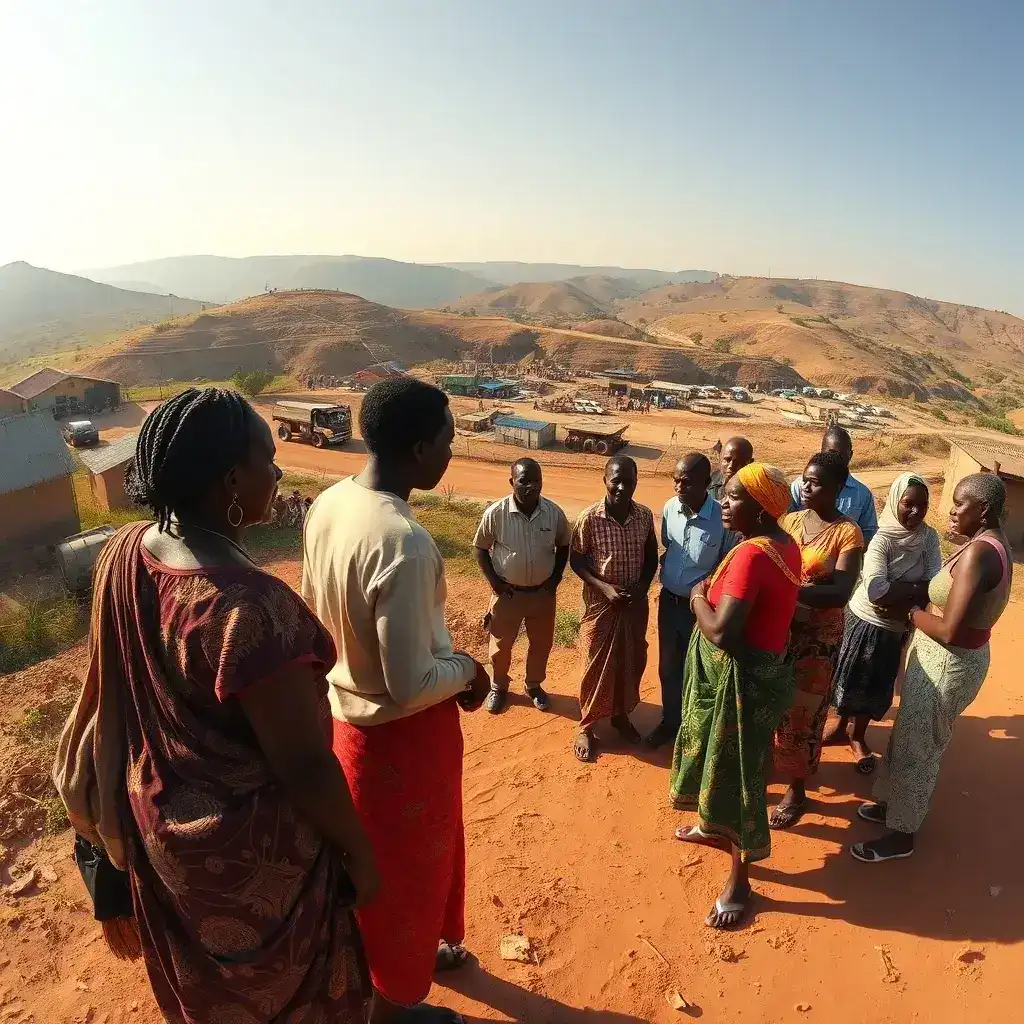
Over the past week, the Institute of Economic Affairs (IEA) held a press conference urging the Government of Ghana not to renew Gold Fields’ mining lease, advocating instead for a local owner. This call, supported by former judiciary and legislature officials, aligns with a growing trend of resource nationalism across Africa, prompting a closer look at how Ghana pursues greater value from its natural resources.
Ghana has historically cultivated a stable, investment-friendly environment for businesses, including a robust statutory and fiscal framework for the mining sector designed to attract foreign capital from exploration to production. Large-scale operators like Gold Fields have operated within these frameworks, consistently meeting their tax and environmental obligations.
The discourse surrounding the lease renewal for Gold Fields in Ghana highlights the complexities of balancing corporate operations with community development. While calls for denial of renewal cite underdevelopment in mining areas, a deeper examination reveals significant corporate contributions to socio-economic development, often filling gaps where government presence is limited.
Gold Fields has articulated a vision of “creating an enduring world beyond mining.” As part of sustaining its social license, the company has invested substantially in its host communities. These initiatives have been enabled by the mine’s operational growth, which has expanded significantly since the company’s acquisition.
Notably, Gold Fields has consistently exceeded its voluntary corporate social responsibility (CSR) obligations. The company pioneered a funding model for the Gold Fields Ghana Foundation, allocating 1% of its Profit Before Tax (PBT) plus US$1 per ounce of gold produced to support its development initiatives.
A comparative analysis of government social investments versus Gold Fields’ voluntary CSR initiatives would likely demonstrate substantial reinvestment into impact-driven community development. Proponents of denying the lease renewal should critically assess the demonstrable impact of royalties directed through government channels, which are split among the Minerals Development Fund (MDF), the Minerals Income Investment Fund (MIIF), and the Consolidated Fund, on Tarkwa and other mining communities.
Denying a lease renewal based on generalized claims of underdevelopment, without concrete proof of non-compliance with tax or environmental obligations, appears premature and potentially detrimental when a company commits substantial capital, adheres to regulations, and positions itself as a development partner.
However, evolving community concerns regarding reinvestment levels must be addressed. The socioeconomic and technological landscape has changed dramatically over the past thirty years, with current economic realities and ESG benchmarks being far more demanding. Many community members and opinion leaders believe that the level of reinvestment should more closely reflect the immense value derived from the Apinto lands.
There are growing calls to formalize and legally enshrine these social commitments within the lease renewal agreement. This critical conversation needs to satisfy the interests of the community, the state, and the investor.
The Institute of Economic Affairs’ arguments suggest Ghana’s share of mining proceeds is low, focusing on gross revenue-to-cost ratios. This perspective often overlooks the multifaceted economic value generated within Ghana throughout the mining lifecycle.
Analysis from the Ghana Chamber of Mines indicates that Ghana benefits significantly, exceeding 70%, through direct and indirect channels, excluding factors like amortization, imports, capital expenditure, and other shareholder benefits. This highlights the comprehensive economic impact beyond direct revenue.
Ghana’s benefit extends beyond the 10% carried interest. Approximately 18.71% flows back to the state via taxes, royalties, and dividends. Employee salaries, predominantly paid to Ghanaians, account for 8.17%, with CSR initiatives receiving 0.37%. Ghana’s stringent local content regulations mandate that large-scale mining firms rely heavily on local suppliers.
Gold Fields’ commitment to local procurement alone represents a substantial portion of retained value within the economy, estimated at 46.4%, fostering the survival and growth of Ghanaian businesses. The company has a documented history of investing in local contractor capacity building.
The success of companies like Engineers and Planners, now a major mining contractor, and ZEN Petroleum Holdings PLC, a recent Ghana Stock Exchange listing and business partner of Gold Fields, exemplifies this investment in local enterprise.
In the transport sector, Western Transport Services, a Ghanaian-owned business, has grown alongside Gold Fields, becoming a key contractor for complex logistics. To meet demands for sustainable mining and a reduced carbon footprint, Gold Fields also partners with Genser Energy, an indigenous power provider, demonstrating how local participation policies translate into real Ghanaian enterprise growth.
Claims of an “insignificant” share of revenue from large-scale mining operations are often based on incomplete analyses. When considering direct revenue, taxes, local procurement, employment, and capacity building, companies like Gold Fields are significant contributors to the Ghanaian economy.
A rational, data-driven approach to lease renewal must acknowledge these contributions and evaluate performance against regulatory compliance, rather than generalized perceptions of underdevelopment. The focus should be on fostering a collaborative environment that encourages responsible investment and sustainable development, avoiding punitive measures that could jeopardize both the company’s future and Ghana’s global economic interests.
The writer supports greater Ghanaian ownership of resources, defining true resource nationalism as expanding Ghanaian participation across the mining value chain, not just symbolic takeovers. A fairer approach would involve amending laws to create pathways for greater Ghanaian equity participation in mining, similar to Botswana’s model.
Ownership entails capital commitment, sharing both risk and return. The Government should consider renegotiating its stake with Gold Fields rather than adopting a hostile posture that threatens lease renewal and investor confidence.







Leave a Reply