
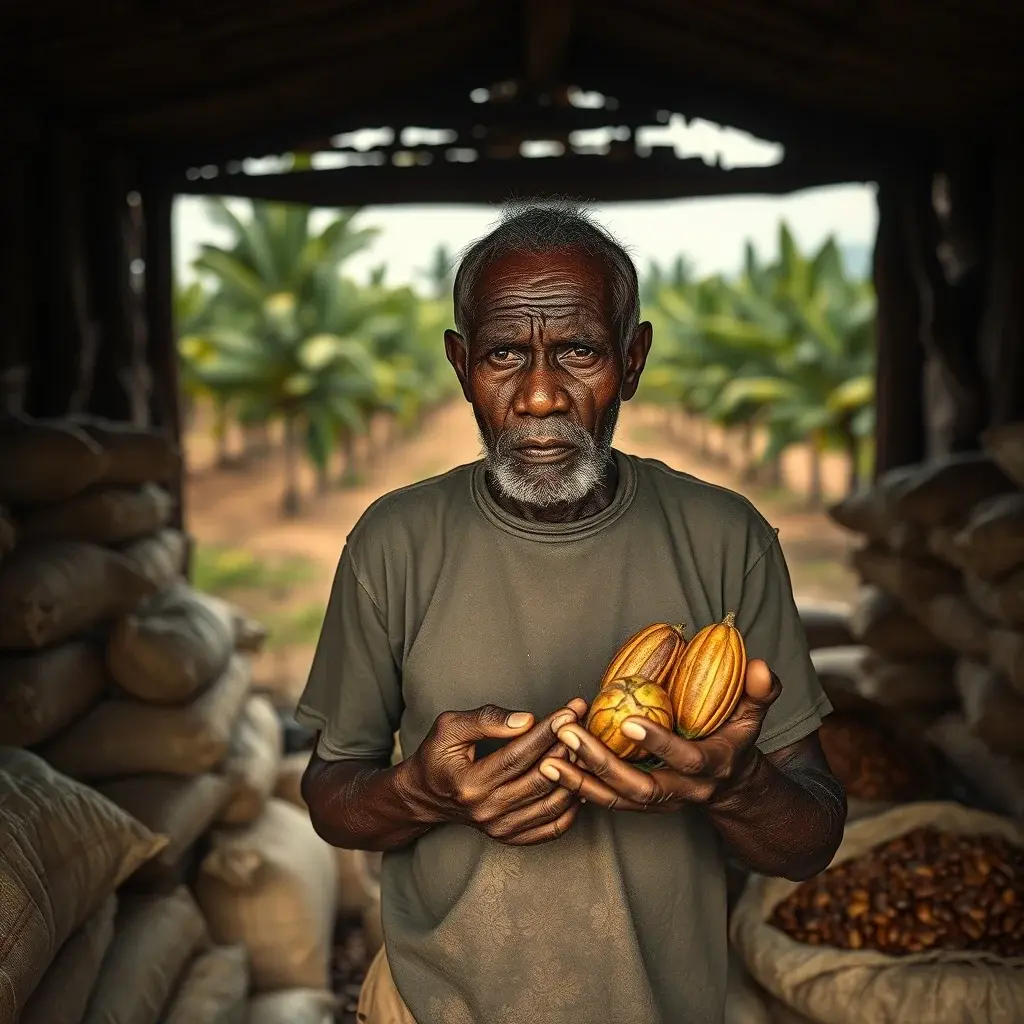
Energy analyst Kwadwo Poku has issued a stark warning to Ghanaian cocoa farmers, predicting significantly lower earnings in the upcoming 2026/2027 season due to a sharp decline in global cocoa prices. This downturn is expected to hit farmers harder than at the beginning of the current year, potentially leaving them with less income despite efforts to boost production.
Global Price Drop and Farmer Earnings
Poku stated in a recent interview on JoyNews’ AM Show that the reduction in international cocoa prices will directly translate to lower producer prices. “Whatever the cocoa farmer was crying about at the beginning of this year, he is definitely going to get much less when the new season opens,” he asserted.
Global cocoa prices are forecast to fall dramatically by 2026. The World Bank projects a drop of over 50 percent, from approximately US$7.80 per kilogram in 2025 to around US$3.80 per kilogram in 2026. This anticipated decrease is largely attributed to an expected recovery in global cocoa supply.
However, Poku suggests that prices might fall even lower than the World Bank’s projections. He anticipates prices could hover around $3,500 per tonne, potentially dipping below the World Bank’s $3,800 per tonne forecast. Historically, cocoa prices have fluctuated between $2,000 and $3,200 per tonne over the past 15 years, indicating that current market conditions might still be higher than long-term averages.
Challenges in Ghana’s Cocoa Purchasing System
Beyond global market fluctuations, Poku highlighted significant challenges within Ghana’s domestic cocoa purchasing system. He explained that past pricing decisions, which offered farmers up to 90 percent of the world market price, created a severe financial strain on cocoa buyers.
This pricing structure left only 10 percent of the revenue to cover essential operational costs. These costs include purchasing, transportation, storage, fumigation, and export handling. “That 10 percent does not cover the cost of sale. So the cocoa marketing company was making a loss per tonne,” Poku elaborated.
The financial strain reportedly led to scaled-back purchasing activities by marketing companies. Consequently, many farmers have been left with unsold cocoa beans stored in their homes and sheds. “A lot of cocoa farmers have cocoa in their houses, in their sheds, and basically nobody is buying it,” he claimed.
Factors Influencing Future Supply and Demand
The upcoming cocoa season, typically opening around September or October, is expected to coincide with an increase in cocoa supply, both domestically and globally. Improved rainfall and better yields are contributing factors to this anticipated production surge.
Additionally, there remains a carryover stock of cocoa from the previous season in key producing countries like Ghana and Côte d’Ivoire. Poku noted that the earlier surge in cocoa prices was primarily driven by supply disruptions, such as crop losses due to disease. These issues have since been addressed through farm rehabilitation and replanting efforts.
With supply expected to recover and inventories rising, the market conditions are shifting unfavourably for cocoa producers. “Look, it doesn’t look good, but let’s wait,” Poku advised, underscoring the uncertainty and potential hardship ahead for farmers.
Implications for the Cocoa Industry
The projected decline in cocoa prices and existing purchasing system challenges pose a significant threat to the livelihoods of thousands of cocoa farmers in Ghana. Reduced income could impact farmers’ ability to invest in their farms, potentially affecting future yields and quality.
For the broader cocoa industry, a sustained period of low prices could influence investment decisions and supply chain dynamics. Companies that rely heavily on cocoa as a raw material may benefit from lower input costs, but the sustainability of the supply chain could be jeopardized if farmer incomes become insufficient.
The situation highlights the complex interplay between global commodity markets, national agricultural policies, and the economic realities faced by primary producers. As the next cocoa season approaches, stakeholders will be closely monitoring price movements, government interventions, and the actual impact on farmer incomes. The recovery efforts in Ghana and Côte d’Ivoire, coupled with global demand, will be critical factors to watch in determining the market’s trajectory.









Leave a Reply