
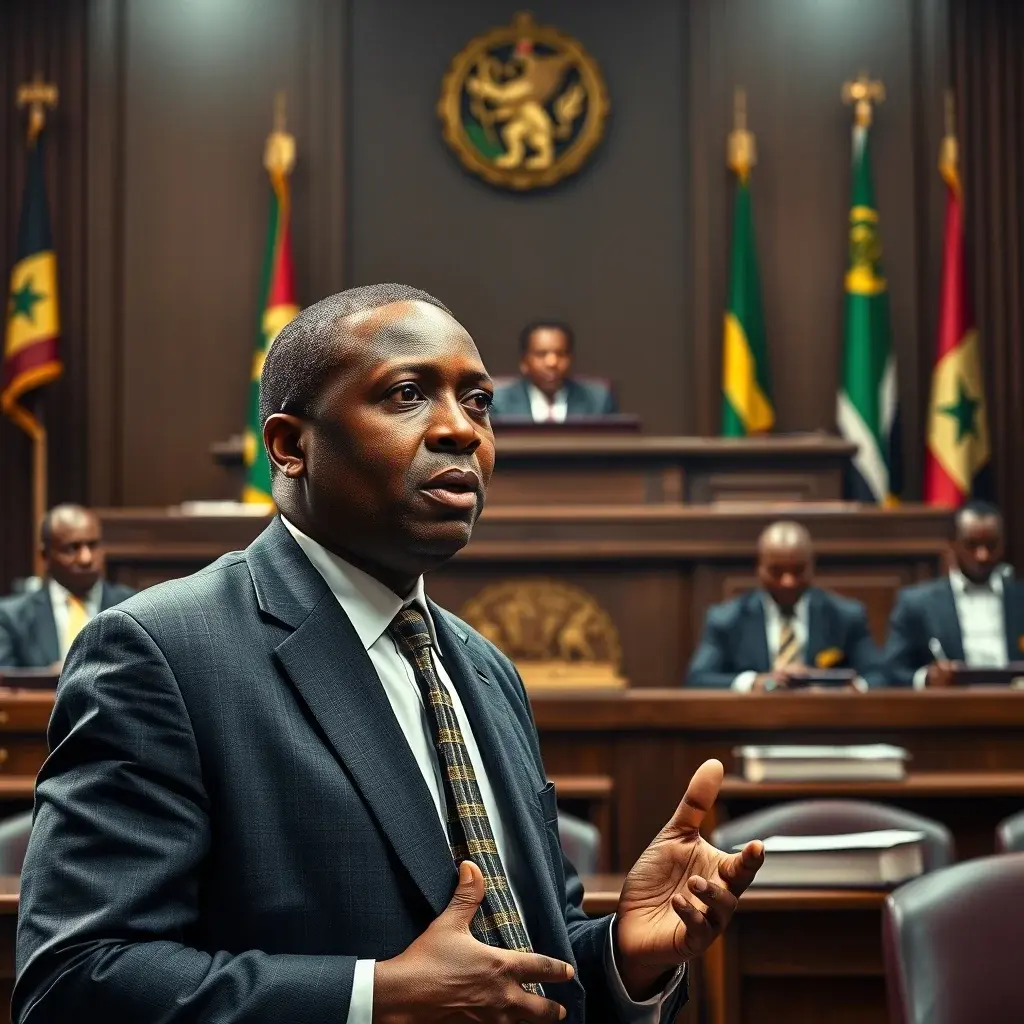
Government spokesperson Felix Kwakye Ofosu stated on Monday that the current Supreme Court case involving the Office of the Special Prosecutor (OSP) will significantly influence the anti-corruption body’s future operations. He asserted that the Mahama administration is not attempting to undermine or abolish the OSP, countering claims of a coordinated effort to dismantle the institution.
Context: The OSP and Constitutional Challenges
The Office of the Special Prosecutor (OSP) was established to combat corruption by investigating and prosecuting suspected cases. However, its authority to independently prosecute certain offenses without prior approval from the Attorney General has been challenged in court. This legal controversy raises fundamental questions about the OSP’s constitutional mandate and operational boundaries.
Kwakye Ofosu highlighted that the government’s commitment to the OSP is evidenced by President Mahama’s intervention to prevent an earlier parliamentary attempt to scrap the office. He recalled that the Majority in Parliament had introduced a bill to abolish the OSP, but the President persuaded the Majority Leader and Chief Whip to allow the office a chance to operate.
He further explained that if the government had intended to dissolve the OSP, the Majority’s numbers in Parliament would have easily facilitated the passage of such a bill, potentially by invoking a certificate of emergency. This, he argued, demonstrates a commitment to allowing the OSP to function.
Judicial Interpretation and the Rule of Law
The core of the current legal dispute, according to Kwakye Ofosu, revolves around constitutional interpretations regarding the Special Prosecutor’s prosecutorial powers. He noted that a court had already ruled in favor of the argument that the OSP requires authorization from the Attorney General before initiating prosecution for specific offenses.
Upholding such judicial pronouncements is crucial for maintaining the rule of law, Kwakye Ofosu emphasized. He stated that if the judiciary, which is constitutionally empowered to interpret laws, finds that the Special Prosecutor’s actions contravene the Constitution, these findings must be respected.
Attorney General’s Role and Supreme Court’s Authority
Kwakye Ofosu defended the Attorney General’s position in the ongoing case, explaining that the AG is fulfilling his constitutional duty by presenting his legal interpretation to the Supreme Court. The Attorney General, he clarified, is obligated to advocate for what he believes is the correct legal stance.
The ultimate arbiter in this matter is the Supreme Court. Its decision will definitively establish whether the OSP’s current operational framework aligns with the Constitution. The court’s ruling will be binding on all parties involved, as is customary within Ghana’s legal system.
Potential for Constitutional Review
Should the Supreme Court identify any constitutional deficiencies in the OSP’s operations, Kwakye Ofosu suggested that these issues could be addressed through Ghana’s constitutional review process. This mechanism provides a pathway for rectifying identified legal or constitutional ambiguities.
Despite the ongoing legal challenges, Kwakye Ofosu reiterated President Mahama’s unwavering support for the OSP’s continued existence. He declared that the office has the President’s full and absolute backing, signaling a continued commitment to the anti-corruption mandate.
Implications and Future Outlook
The Supreme Court’s impending decision carries significant weight, potentially reshaping the OSP’s powers and operational independence. The ruling will clarify the boundaries between the OSP and the Attorney General’s office, impacting how anti-corruption efforts are pursued in Ghana. Observers will be watching closely to see if the court’s decision leads to legislative amendments or a revised constitutional review process to strengthen the OSP’s effectiveness while ensuring adherence to the rule of law.








Leave a Reply