
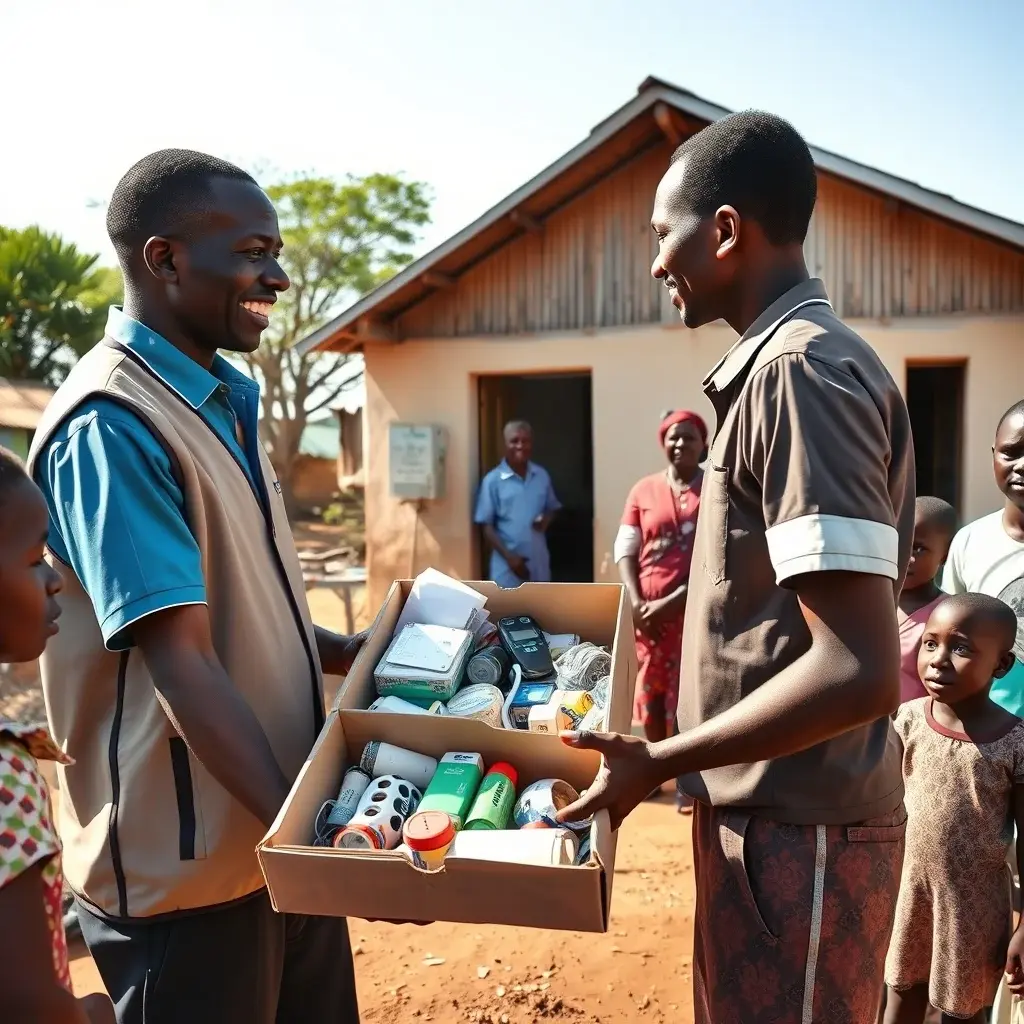
The Underground Mining Alliance (UMA)-Subika, operating at Newmont Ahafo South mines, donated essential medical equipment to the Amomaso Community-based Health Planning and Services (CHPS) compound on Friday, May 15, 2026. This initiative, part of UMA’s Corporate Social Responsibility (CSR) policy, aims to enhance primary healthcare services in the Asutifi North District by equipping the facility to handle previously high-risk referrals locally.
Context of Rural Healthcare Challenges
The Amomaso CHPS compound serves not only Amomaso but also four surrounding agrarian communities: Centre, Besease, Panaaba, and Ninkyeama. These communities depend heavily on this single facility for immediate medical attention. Historically, the compound has operated with significant limitations due to a lack of basic medical equipment, forcing healthcare workers to refer patients for conditions that could have been managed on-site.
This deficit became particularly acute during the rainy season, when increased seasonal illnesses and emergencies like snakebites put further strain on the facility. The In-Charge of the facility, Joyce Sarfo, highlighted the difficult decisions staff faced, often having to turn away or transfer patients unnecessarily.
The situation was compounded by poor infrastructure. The Odikro of Amomaso, Nana Asamoah Wih III, described harrowing instances where residents had to transport pregnant women or injured individuals on motorcycles over the dilapidated Amomaso-Wamahinso road to reach functional clinics in Ntotroso, posing severe risks to vulnerable patients, especially mothers and newborns.
The Donation and its Contents
The donation from UMA includes critical diagnostic and maternal health equipment. Among the items provided are hospital beds, a delivery bed, an autoclave machine for sterilization, an infant scale, a blood pressure apparatus, a thermometer gun, circumcision instruments, and a fetal Doppler. This infusion of resources is expected to significantly improve the compound’s capacity to provide comprehensive primary care.
UMA’s intervention builds upon previous contributions to the region’s healthcare infrastructure. The company previously supplied GH₵104,000 worth of medical equipment to the Kramokrom and Koforidua CHPS compounds, strengthening the broader network of preventive and primary care facilities in the area.
Expert Perspectives and Data Support
Academic research on sub-Saharan African mining enclaves consistently shows that direct investments in medical infrastructure are crucial for sustainable development. Studies on global mining health initiatives indicate that partnerships focused on comprehensive primary healthcare yield tangible returns on investment.
Collaborative models between the public and private sectors in healthcare delivery have been shown to reduce regional disease burdens, lower local mortality rates, and enhance the overall economic well-being of rural communities. These findings underscore the significance of UMA’s commitment.
UMA’s Corporate Social Responsibility Strategy
Joseph Osei, UMA’s Purchasing Supervisor and a member of the CSR team, emphasized that the company’s local strategy extends beyond financial performance. “The company cannot employ every person, but our presence must be beneficial to residents, especially hard-to-reach rural communities,” Osei stated during the handover ceremony.
He revealed that the request for equipment came after the company’s annual budget had been finalized. However, the critical nature of the need—saving human lives—prompted management to mobilize additional funds to meet the demand. Osei urged the facility’s managers and the community to ensure the equipment is used judiciously and maintained properly for long-term benefit.
Broader Impact and Past Initiatives
This donation is part of a broader pattern of health and infrastructure support from UMA in the region. Previously, the company funded a GH₵700,000 walkway at the Asutifi North Government Hospital in Kenyasi, easing the burden on medical staff who previously had to carry heavy oxygen cylinders across difficult terrain.
UMA has also supported life-saving corrective heart surgeries for children in the locality and partnered with Newmont to construct a Child Welfare Clinic at St. Elizabeth Hospital in Hwediem. These efforts highlight a sustained commitment to improving community well-being.
Implications for Amomaso and Beyond
With the new equipment, the Amomaso CHPS compound is now better positioned to stabilize patients on-site, reducing the need for dangerous long-distance referrals. Healthcare workers have pledged to use and maintain the equipment diligently. This intervention is expected to significantly improve health outcomes for the over five communities served by the compound, particularly in reducing maternal and infant mortality and improving emergency response times.
The success of this public-private partnership in Amomaso could serve as a model for other rural areas facing similar healthcare access challenges. As UMA continues its CSR initiatives, the focus on critical health infrastructure demonstrates a forward-looking approach to community development, addressing immediate needs while contributing to long-term sustainability. The coming months will reveal the full impact of these new capabilities on local health statistics and the overall quality of life in the Asutifi North District.








Leave a Reply