
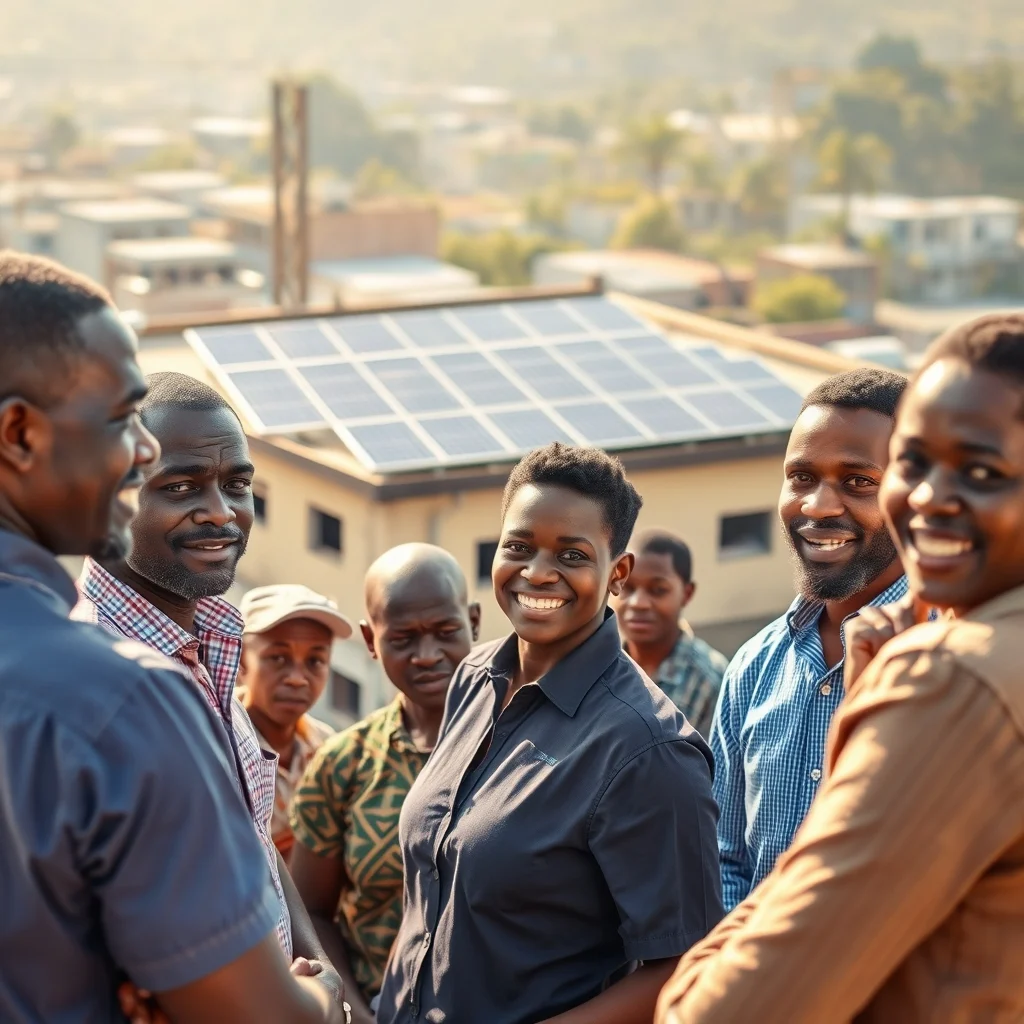
Ghana’s small and medium-sized enterprises (SMEs) are increasingly adopting cleaner, more sustainable energy solutions, driven by the growing availability of green financing, a trend observed over recent months across the nation. This shift is directly addressing long-standing challenges of costly and unreliable energy access that have historically hampered business growth.
Context: The Energy Challenge for Ghanaian SMEs
For years, Ghana’s SMEs, which constitute the backbone of the economy and generate over 70% of employment, have struggled with a difficult energy landscape. Frequent power fluctuations and a heavy reliance on expensive diesel generators have significantly impacted operational costs and productivity.
While larger corporations and government initiatives have focused on sustainability, SMEs have often lacked access to capital tailored for renewable energy investments. This gap has prevented many from transitioning away from carbon-intensive energy sources.
Stanbic Bank’s Role in Green Financing
Stanbic Bank Ghana is at the forefront of this transformation, reframing lending to incorporate environmental sustainability. The bank offers specialized Renewable Energy Loans designed to support solar installations, energy-efficient machinery, and cleaner production processes.
By providing this capital, Stanbic Bank aims to invest in the long-term viability and competitiveness of Ghana’s private sector. The bank emphasizes that green financing is an acknowledgement of the intrinsic link between business success and environmental health.
Compelling Economics of Green Investment
The financial benefits for SMEs adopting renewable energy are substantial. Businesses that have made the transition report energy cost reductions of up to 30%. This saving, compounded over time, leads to significant improvements in profitability.
Beyond cost savings, SMEs experience enhanced productivity. Reduced downtime due to power outages and optimal equipment performance contribute to measurable real-world returns on green investments.
The Power of Strategic Partnerships
Recognizing that no single entity can address this challenge alone, strategic partnerships are central to Stanbic Bank’s approach. Collaboration with the Development Bank of Ghana has enabled the creation of blended financing models.
These models help absorb some of the risk and offer longer repayment terms at concessional interest rates, making green investments more accessible to typical SMEs. These arrangements are built on a shared conviction to deploy catalytic finance effectively for Ghana’s energy transition goals.
Furthermore, ties with renewable energy providers across the country offer SMEs end-to-end support. This includes identifying appropriate technologies, installation, monitoring, and after-sales service, creating an integrated ecosystem that ensures successful adoption.
Impact Across Sectors
The positive effects of green financing are becoming evident across various sectors. Manufacturing enterprises are adopting energy-efficient machinery, leading to reduced waste and lower operating costs.
In agribusiness, solar-powered irrigation systems are extending growing seasons and mitigating risks associated with erratic rainfall, bolstering food security. The hospitality sector, known for high electricity bills, is increasingly turning to solar solutions, with hotel operators reporting significant overhead reductions.
What unites these success stories is not just the technology, but the financing framework that made it possible. Tailored products, flexible repayment schedules, concessional rates, and advisory support have removed the barrier of high upfront costs.
Technology as an Accelerator
Advances in solar technology, battery storage, and smart metering are making renewable energy systems more reliable and cost-effective. Digital platforms allow SME owners to monitor energy consumption in real-time, identify inefficiencies, and optimize usage.
The equipment available today is significantly more advanced and efficient than in previous years, further improving the cost-to-benefit analysis for businesses considering the switch.
Closing the Awareness Gap
Despite technological advancements and financing availability, awareness remains a key challenge. Many SME owners are unaware of the available financing solutions or hold outdated perceptions about renewable energy costs and feasibility.
Sustained engagement, credible advisory support, and visible success stories are crucial to closing this awareness gap and encouraging broader adoption.
A Vision Built on Resilience
Ghana has set ambitious goals for carbon emission reduction and energy transition. The success of these national commitments hinges significantly on the participation of SMEs.
The cumulative adoption of renewable energy by SMEs represents a fundamental shift in the nation’s relationship with energy. Green financing partnerships are evolving from a niche offering to a foundational strategy for SMEs aiming to remain competitive and resilient.
The critical question for Ghana’s SMEs is no longer whether to transition to sustainable energy, but how quickly they can implement it.








Leave a Reply