
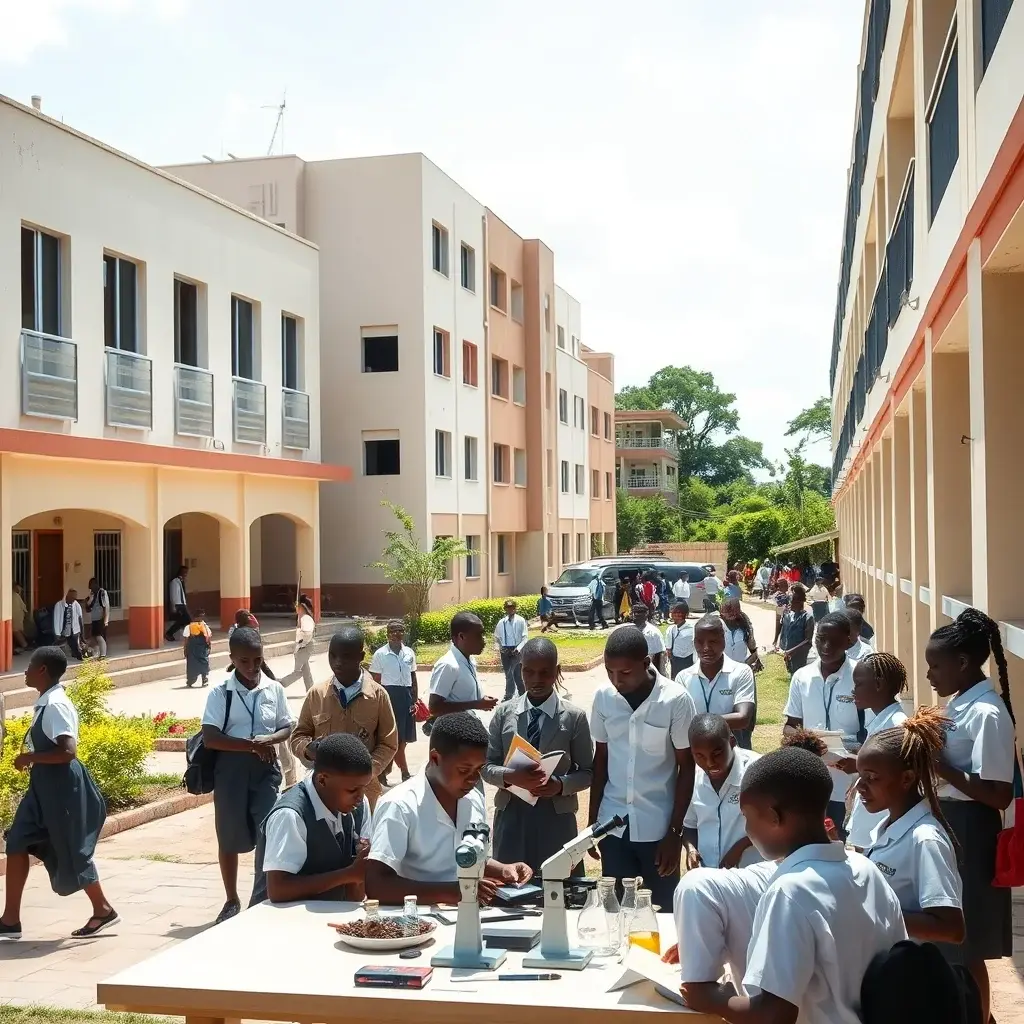
President John Dramani Mahama has announced the launch of a significant secondary education improvement program in Ghana, backed by a $300 million facility from the World Bank. The initiative aims to enhance the quality of senior high schools nationwide and address existing disparities in educational standards.
Addressing Educational Disparities
The program directly targets the persistent issue of unequal quality across senior high schools, a problem that often leads parents and students to avoid certain institutions perceived as having lower academic standards. President Mahama stated during a visit to Sawla Primary School that this intervention is designed to eliminate the “annual ritual where people don’t want to be posted to some schools because they think they are Category C.”
Strategic School Upgrades
A key component of the initiative involves a strategic upgrade of schools based on their current categorization. Thirty Category C schools are slated to be elevated to Category B status. Concurrently, another 30 schools currently in Category B will be upgraded to Category A.
This targeted investment is expected to significantly raise the overall academic standing and resource availability in these selected institutions. The aim is to ensure a more equitable distribution of educational resources and opportunities across the secondary school system.
World Bank Partnership and Funding
The substantial $300 million funding for this ambitious program is being provided by the World Bank. This financial injection, equivalent to approximately GHS 3.5 billion, will support critical infrastructure development and quality enhancement measures in the chosen senior high schools.
The partnership with the World Bank underscores the importance Ghana places on improving its educational sector and the confidence international bodies have in the country’s development plans.
Focus on STEM and Quality Enhancement
The announcement was made while President Mahama was inspecting the implementation of Science, Technology, Engineering, and Mathematics (STEM) education initiatives at Sawla Primary School. This context highlights a broader government commitment to not only improving general secondary education but also fostering critical fields vital for future economic growth.
By investing in infrastructure and quality improvements, the program seeks to create learning environments that are conducive to better teaching and learning outcomes. This includes ensuring that schools across the country can offer a comparable standard of education, regardless of their initial categorization.
Implications for Students and the Future
The implications of this $300 million investment are far-reaching. Students will benefit from improved facilities and potentially higher academic standards in schools that were previously considered less desirable. This could lead to increased enrollment and better performance in these upgraded institutions.
For the education sector, the program represents a significant step towards national educational equity. It signals a commitment to leveling the playing field and ensuring that all Ghanaian students have access to quality secondary education, a crucial foundation for tertiary studies and future employment.
What to Watch Next
Moving forward, stakeholders will be keenly observing the transparent and efficient implementation of the program. Key metrics to monitor will include the progress of school upgrades, the impact on student enrollment and performance in targeted schools, and the overall improvement in teaching quality. The success of this World Bank-funded initiative could set a precedent for future large-scale educational reforms in Ghana and other developing nations seeking to tackle similar challenges in their secondary education systems.






Leave a Reply