
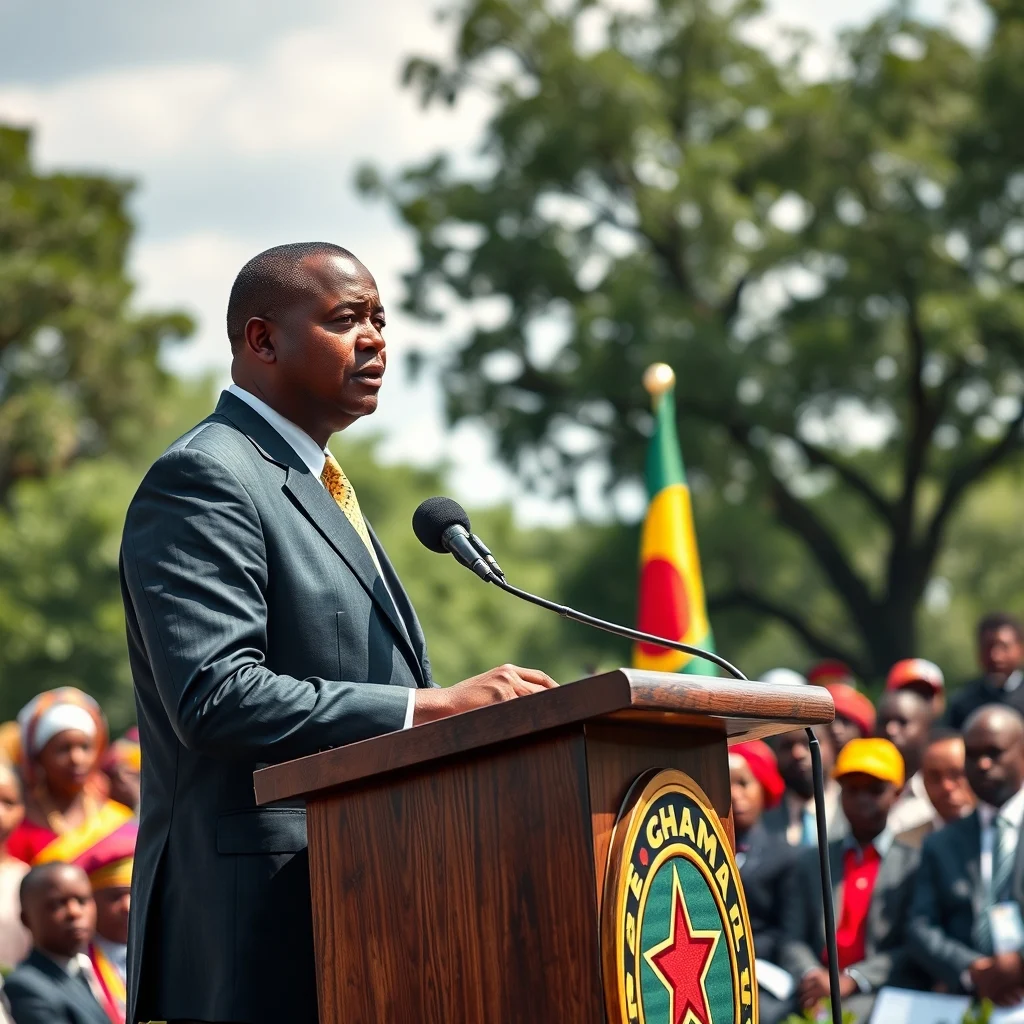
President John Mahama reaffirmed his administration’s commitment to a robust anti-corruption framework on Friday, May 1, 2026, during the 2026 May Day celebrations in Koforidua. He asserted that ongoing legal disputes concerning the Office of the Special Prosecutor (OSP) should not undermine efforts to ensure public accountability.
Constitutional Basis for OSP
Speaking at Jackson Park, President Mahama stated that the government believes in the constitutional viability of an effective Special Prosecutor institution, even with pending Supreme Court interpretations on its powers. He acknowledged recent legal challenges questioning the OSP’s constitutionality.
“While some of the issues are pending appeal and Supreme Court interpretation, the government believes that there is space for an effective Office of the Special Prosecutor with special powers of prosecution,” the President remarked.
Enhancing Justice Delivery
In addition to supporting the OSP, the government is actively working to improve the justice system’s efficiency. President Mahama highlighted a bill submitted to Parliament by the Attorney-General to establish regional tribunals.
These proposed tribunals are intended to decentralize and expedite justice, particularly for complex corruption cases that often experience significant delays within the current judicial structure. This initiative aims to speed up the overall system of justice delivery.
Ongoing Debate on OSP Mandate
The President’s comments come at a time of continued discussion regarding the OSP’s mandate, established by the Office of the Special Prosecutor Act, 2017 (Act 959). The Act empowers the OSP to investigate and prosecute corruption-related offenses.
Since its inception, the OSP has undertaken several high-profile investigations and prosecutions. However, persistent questions revolve around whether its prosecutorial powers are constitutionally independent or if they ultimately derive from the Attorney-General.
Legal analysts point to a tension between Act 959 and Article 88 of the Constitution. The core of the debate concerns Parliament’s authority to grant independent prosecutorial powers to a body not directly under the Attorney-General’s control.
Focus on Institutional Strength
President Mahama emphasized that his administration’s priority remains the development of stronger institutions capable of delivering justice effectively. The ultimate goal is to restore public confidence in the nation’s fight against corruption.
Future Implications
The ongoing legal interpretations and legislative efforts to strengthen prosecutorial powers signal a critical juncture for Ghana’s anti-corruption drive. The Supreme Court’s eventual ruling on the OSP’s constitutional standing will be pivotal. Furthermore, the successful establishment and operation of the proposed regional tribunals could significantly reshape how corruption cases are handled, potentially leading to swifter resolutions and increased accountability. Observers will be watching closely to see how these legal and legislative developments impact the effectiveness of anti-corruption measures and public trust in the justice system moving forward.









Leave a Reply