
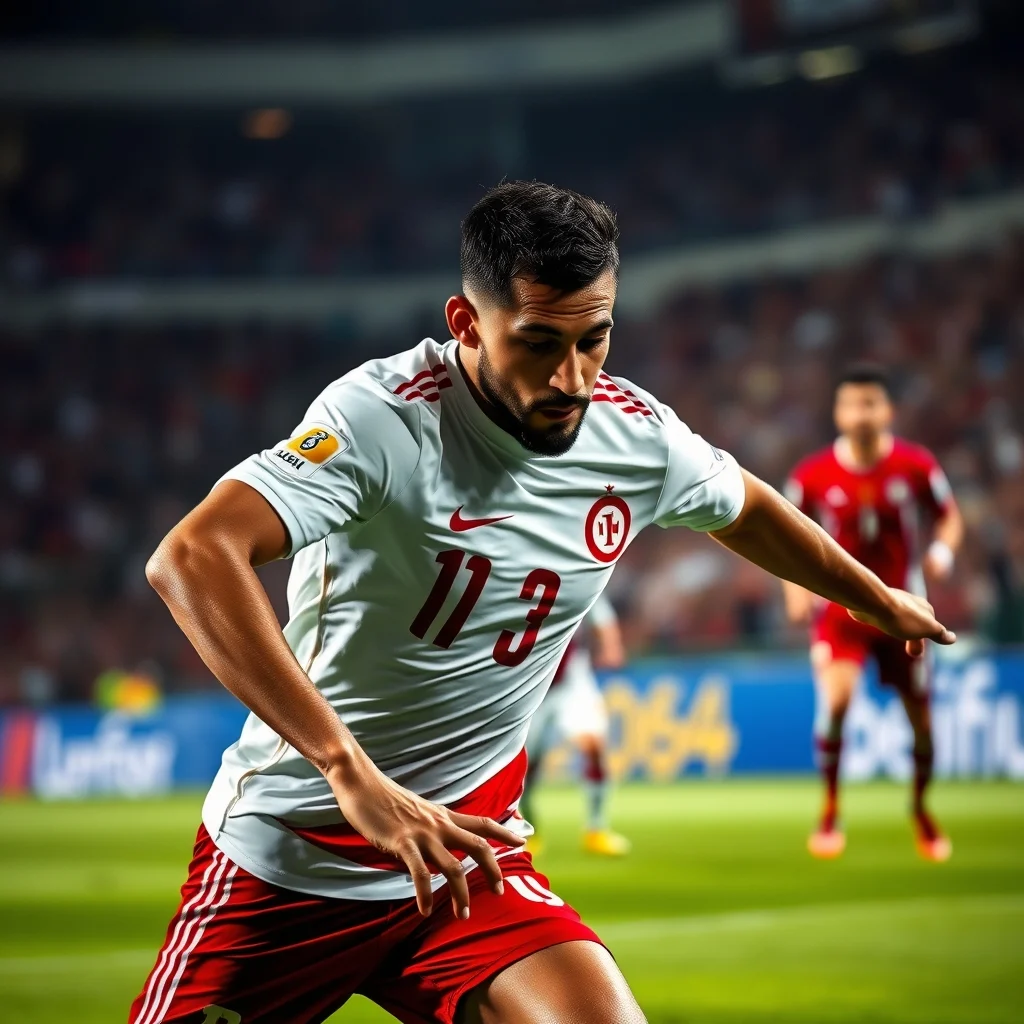
Tunisia has achieved a remarkable feat by qualifying for the 2026 World Cup without conceding a single goal, showcasing exceptional defensive mastery. However, despite their consistent organization and reliability, the Eagles of Carthage face a familiar historical challenge: they have never progressed beyond the group stage in their six previous World Cup appearances. The pressing question for this tournament is whether head coach Sabri Lamouchi can finally translate this defensive control into advancement.
The Road to 2026: Unbeaten and Unbroken
Tunisia’s qualification campaign was a testament to methodical planning and defensive solidity. They navigated the path to the 2026 World Cup undefeated and, crucially, without leaking any goals. This defensive unit operates with positioning as its core principle, effectively guiding opponents away from dangerous areas and neutralizing threats before they materialize.
The appointment of Sabri Lamouchi in early 2026 marked a period of renewed clarity for the national team. His coaching philosophy emphasizes pragmatism, with Tunisia defending with a well-defined structure, pressing strategically, and executing attacks through rehearsed patterns rather than relying on impulse. The team’s objective is not to dominate matches but to ensure certainty and control throughout.
Squad Composition: Function Over Fame
The Tunisian squad for the 2026 World Cup is built around collective function rather than individual fame. Players are selected and utilized based on their ability to contribute to the team’s overall structure and strategy. Captain Ellyes Skhiri serves as the midfield anchor, dictating the tempo with his positioning and anticipation.
Hannibal Mejbri provides a crucial element of verticality and unpredictability, while Anis Ben Slimane and Rani Khedira offer the balance necessary for other players to take calculated risks. In defense, Montassar Talbi and Dylan Bronn prioritize controlled positioning over aggressive confrontation. Goalkeeper Aymen Dahmen’s calm decision-making often prevents opposition attacks from even developing into shots, highlighting a defensive line that excels at defending space as much as the ball.
The attacking department remains a key variable for Tunisia. While Elias Achouri, Sebastian Tounekti, and Elias Saad bring pace and technical quality, the team’s forward play is still characterized by moments of brilliance rather than sustained attacking momentum. Their primary challenge lies not in creating a high volume of chances, but in recognizing and maximizing the few opportunities that arise.
Hannibal Mejbri: The Spark of Unpredictability
Despite their defensive perfection, Tunisia has historically lacked a consistent cutting edge in attack. While Skhiri provides control and veteran experience from players like Wahbi Khazri, it is the dynamic presence of Hannibal Mejbri that offers a different dimension. His ability to break defensive lines, change the tempo of the game, and inject imagination into a sometimes overly controlled side is invaluable.
Mejbri’s goal in the final qualifier against Namibia, though small in isolation, carried significant symbolic weight. It hinted at the potential for Tunisia to combine its renowned discipline with a genuine attacking threat, a crucial element if they are to progress further in the tournament.
Tactical Identity: Structure as Strategy
Tunisia typically lines up in a 4-3-3 or 4-2-3-1 formation, but their true system is rooted in spatial control. They maintain disciplined distances between players, keep compact lines, and employ pressing selectively. This approach is less about immediate ball recovery and more about shaping the flow of the game and dictating where play will occur.
The team is particularly adept at redirecting opposition attacks towards the flanks, where possession becomes less dangerous and more predictable. Matches involving Tunisia often settle into a rhythm of circulation without penetration and pressure without payoff. Consequently, set-pieces are not merely a supplementary tactic but a key strategy, offering one of the few controlled opportunities to gain an advantage in a game where randomness is minimized.
More Than Football: National Cohesion
The Tunisian national football team carries a significance that extends beyond mere sporting results. Since the 2011 Jasmine Revolution, the team has served as a unifying force within a dynamic national landscape, embodying discipline, resilience, and collective identity. In this context, Tunisia’s tactical style is not incidental; it reflects deeper cultural values of order, patience, and structure.
Achieving a place in the knockout stage would represent more than just sporting progress; it would validate a distinct way of competing that often gets overshadowed in a sport that celebrates spectacle. It would signify that control and discipline can be as potent as flair and attacking dominance.
Group F: Margins and Matchups
Tunisia faces a challenging draw in Group F, alongside Sweden, Japan, and the Netherlands. Each opponent will test different facets of their system. Sweden will likely challenge their physical and structural resilience. Japan will probe their spacing and decision-making under fluid movement. The Netherlands, known for their ability to manipulate possession, will pose the ultimate question of whether Tunisia can maintain control against a team designed to disrupt it.
Progression for Tunisia will likely hinge on small, decisive moments: capitalizing on a set-piece, avoiding crucial defensive lapses, or executing a transition at the opportune time. Their margin for error is thin but clearly defined by their tactical approach.
The Defining Question: Can Control Translate to Progression?
Tunisia has undeniably mastered the art of qualification, proving once again their presence at the World Cup is well-earned. The more significant challenge now lies in demonstrating that their flawless qualifying campaign can translate into tangible success once the tournament begins.
For Tunisia to reach the knockout stage for the first time, they will need to stretch their established identity rather than abandon it. This means finding ways to score without sacrificing control and taking calculated risks without losing their shape. This is a narrow path, one that has historically proven difficult for them to navigate.
They have answered the question of whether they can defend. In 2026, they must finally answer whether they can attack effectively on the world stage. What distinguishes this moment is not heightened expectation, but the precision of their preparation. Tunisia is not seeking to introduce variance haphazardly; they are aiming to evolve beyond their historical limitations.
The true test will be whether a team built to eliminate chaos can, when necessary, produce just enough of it to alter their historical trajectory and make a defining mark on the World Cup.




Leave a Reply