
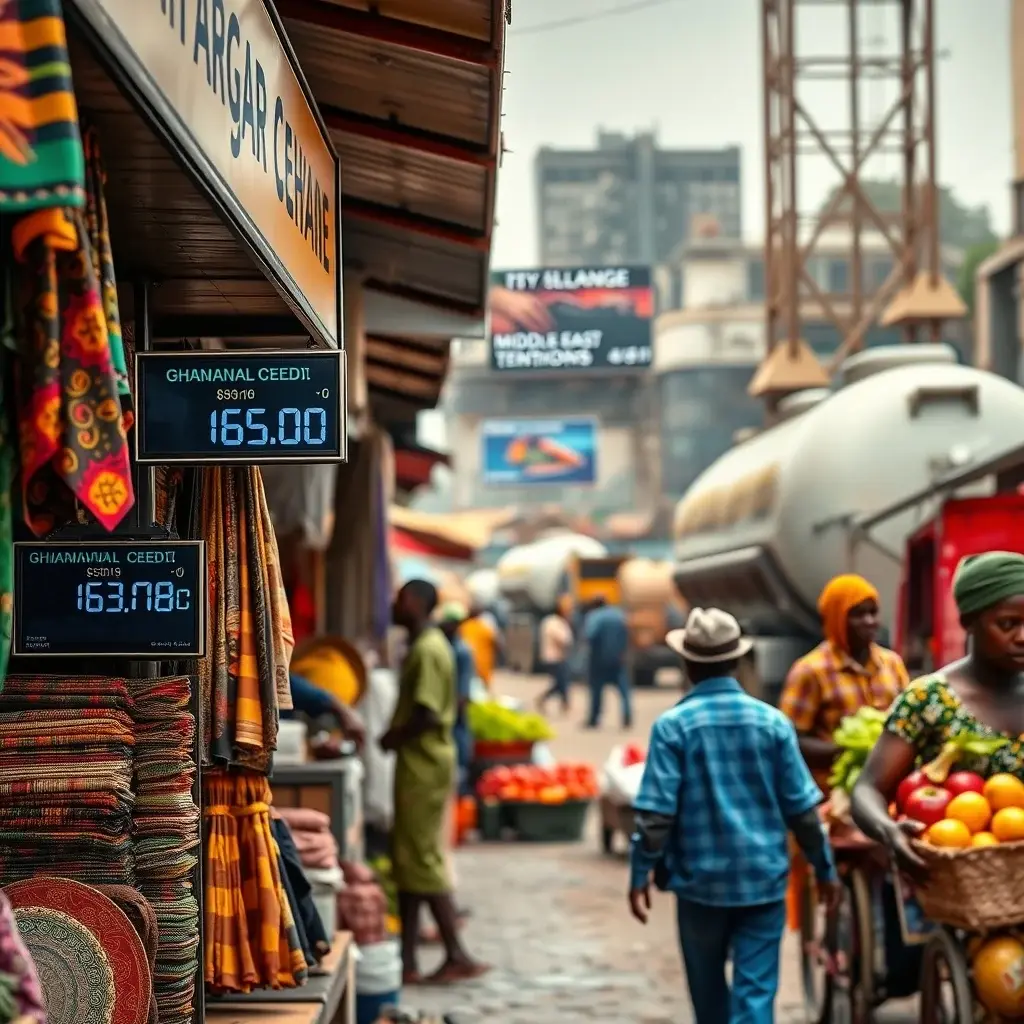
Accra, Ghana – The Ghanaian Cedi has experienced a noticeable depreciation since late March 2026, a trend attributed to the escalation of the US-Israel-Iran conflict in the Middle East, which has significantly impacted global oil prices and trade routes. This marks a reversal for many who witnessed the Cedi’s remarkable 40.7% appreciation against the US dollar in 2025, raising questions about renewed currency pressures and potential alarms.
Context: A Remarkable Year Followed by Expected Fluctuations
The Cedi’s strong performance in 2025, moving from approximately GH¢14.7 to the dollar at the start of the year to around GH¢10.4 by its close, was one of its best in recent history. This significant gain, however, set a high bar, and some level of currency movement was anticipated. Even President Mahama had indicated that a gradual annual depreciation of around 5% would be acceptable if it supported stability and competitiveness, projecting a year-end 2026 rate near GH¢11 to the dollar, still considerably stronger than pre-2025 levels.
Crucially, many of the fundamental factors underpinning the Cedi’s 2025 rally remain in place. Elevated gold prices continue to bolster export earnings, and fiscal policy has maintained a degree of discipline. The introduction of GoldBod, which centralizes gold export proceeds and channels them through the Bank of Ghana, has also altered foreign exchange dynamics.
Current Pressures: A Confluence of Demand and Supply Disruptions
The current pressures on the Cedi appear to stem from a combination of increased dollar demand and temporary disruptions to dollar inflows. The most significant factor is the surge in global oil prices, driven by the Middle East conflict. Crude oil prices have climbed from $60-$70 per barrel to over $100 at times. As Ghana imports the majority of its refined petroleum products, this has substantially increased the nation’s monthly fuel import bill.
Recent industry estimates suggest Ghana’s monthly petroleum import costs have risen to approximately US$500 million, up from around US$400 million in the same period of 2025. This alone significantly boosts demand for US dollars.
Adding to this pressure is a seasonal increase in dividend repatriation. Following the release of 2025 financial statements, foreign-owned companies are sending profits back to their parent companies abroad, transactions that require dollars. Furthermore, many businesses typically restock inventories around mid-year, creating another wave of demand for dollars to cover import costs.
Supply Side: Temporary Hurdles in Gold Exports
While dollar demand is rising, there are indications of temporary disruptions to Ghana’s foreign exchange inflows. The Middle East conflict led to temporary disruptions in airspace, impacting trade routes. GoldBod’s Chief Executive Officer, Sammy Gyamfi, confirmed a temporary halt in some gold exports due to market uncertainty. Although GoldBod was reportedly exploring increased sales to India, India has also implemented measures to manage gold imports, potentially slowing some of Ghana’s export proceeds.
These developments may have temporarily slowed portions of Ghana’s foreign exchange inflows precisely when dollar demand was escalating.
Bank of Ghana’s Stance: Managed Adjustment Over Aggressive Intervention
Despite these pressures, the Bank of Ghana maintains that overall foreign exchange conditions remain relatively robust. Gross international reserves currently stand around US$14 billion and continue to improve. The central bank’s approach appears to be a deliberate decision not to aggressively intervene in the market to artificially prop up the Cedi.
This strategy aligns with a revised foreign exchange intermediation framework developed with the IMF in late 2025. This framework encourages more flexibility in the exchange rate, provided movements are orderly. As Ghana transitions from an Extended Credit Facility program to a Policy Coordination Instrument arrangement, maintaining policy credibility is paramount.
Excessive intervention could send the wrong signal to investors and international markets, especially as Ghana seeks to demonstrate enhanced macroeconomic discipline. Governor Johnson Pandit Asiama has emphasized that the Cedi is expected to move and that the Bank’s concern is to avoid excessive volatility, not to defend a fixed rate.
Implications: Controlled Correction Amidst Global Volatility
The Cedi’s recent depreciation is thus a reflection of several factors: increased oil import costs due to global price hikes, seasonal dividend payouts, temporary disruptions to gold export logistics, and the Bank of Ghana’s policy of allowing for more managed currency adjustments. The extraordinary appreciation in 2025 made some degree of correction in 2026 likely.
For now, the situation appears manageable. Strong international reserves, robust performance of key export commodities, and the central bank’s capacity to intervene if volatility becomes excessive suggest this is more of a controlled adjustment to shifting global conditions than the onset of a broader currency crisis. What remains to be watched is the duration of the Middle East conflict’s impact on oil prices and the effectiveness of Ghana’s ongoing dialogue with international financial institutions regarding its macroeconomic management.








Leave a Reply