
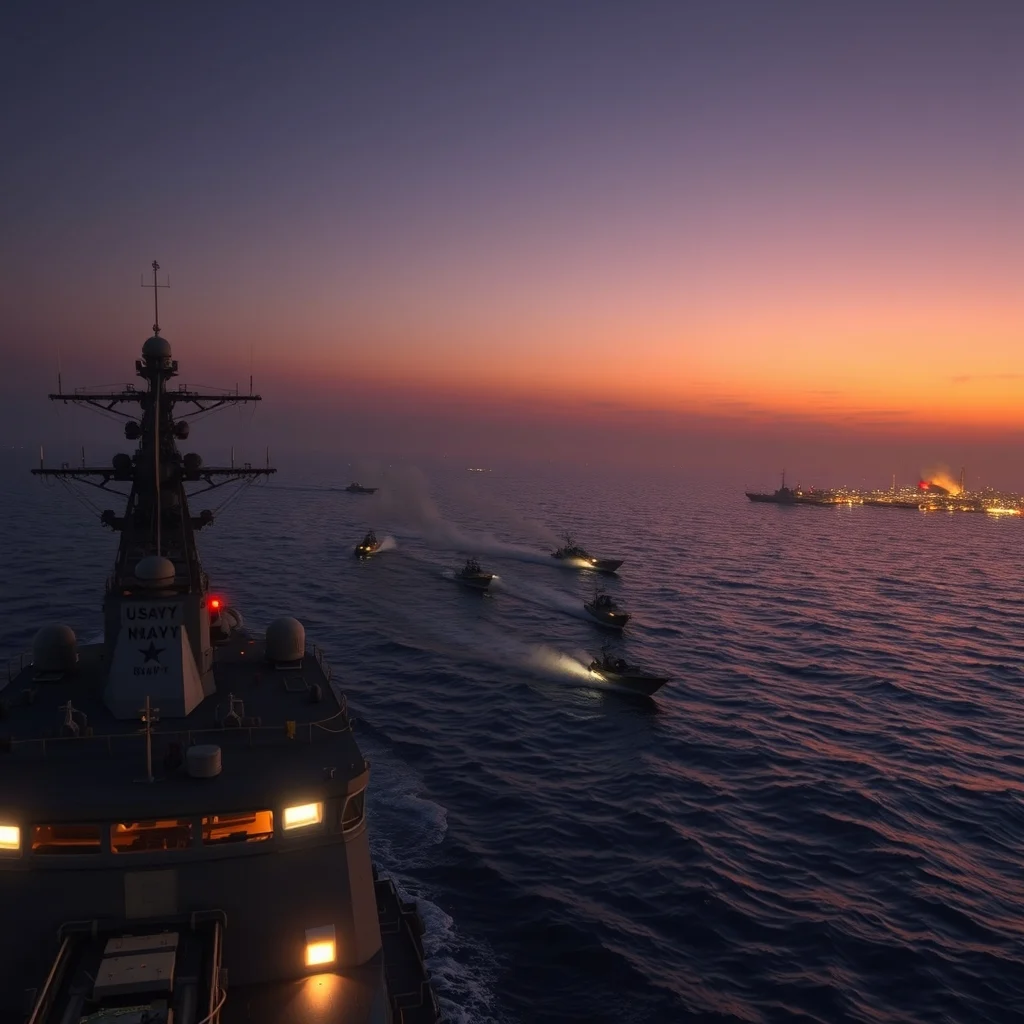
The United States military launched targeted airstrikes on southern Iran near the Strait of Hormuz on Monday, hitting missile launch pads and naval vessels. American officials stated the targets were attempting to deploy maritime mines in the vital energy corridor. This military action introduces fresh volatility into a fragile regional ceasefire, complicating delicate diplomatic negotiations aimed at concluding the wider conflict.
Airstrikes Formally Characterised as Defensive Action
U.S. Central Command confirmed the operation, asserting that the engagement was conducted in “self-defence” to protect U.S. troops from Iranian threats. The strikes occurred near Bandar Abbas, a key port city overlooking the Strait of Hormuz, which handles approximately 25% of global maritime oil trade.
Central Command spokesperson Navy Capt. Tim Hawkins clarified that targets included missile launch sites and Iranian boats attempting to emplace mines. He emphasized that U.S. forces are defending themselves while exercising restraint during the ongoing ceasefire.
These engagements follow previous incidents in early May, where American forces targeted Iranian military sites in response to unprovoked actions against U.S. warships in the strait.
Explosions Recorded Along the Persian Gulf
The Islamic Revolutionary Guard Corps reported three distinct explosions in Bandar Abbas, followed by subsequent detonations near the local airport. Local air defence systems were activated to counter hostile targets.
Iranian state media indicated that municipal and military officials were investigating the aftermath. Similar acoustic disturbances were reported by witnesses near Sirik and Jask.
Meanwhile, Iranian President Masoud Pezeshkian ordered the restoration of domestic internet access, which had been largely disconnected since late December 2025 to suppress protests. Despite the military engagement, semi-official Iranian media reported the domestic situation in Bandar Abbas remained under control.
Diplomatic Progress Tempered by Core Disputes
The military friction occurred concurrently with high-stakes diplomatic deliberations in Qatar, where an Iranian delegation met with Qatari mediators to review a potential memorandum of understanding with the United States.
The framework under review includes a 60-day ceasefire extension, mechanisms for reopening the Strait of Hormuz, and a roadmap for future negotiations on Iran’s nuclear program. However, senior diplomats cautioned that a definitive peace treaty remains distant.
Iranian Foreign Ministry spokesman Esmail Baqai acknowledged structural progress but managed expectations, stating that an immediate agreement could not be guaranteed.
Logistical obstacles, including the undisclosed location of Iran’s Supreme Leader Mojtaba Khamenei due to injuries sustained earlier in the conflict, have hampered direct communication with Iranian envoys.
Nuclear Stockpiles Remain Central Sticking Point
The primary diplomatic barrier is Iran’s highly enriched uranium stockpile, estimated at 440 kilograms of uranium enriched to 60% purity. Western intelligence agencies warn this material is close to weapons-grade.
The U.S. negotiating posture, summarized as “No dust, no dollars,” insists on the permanent neutralization of this nuclear material before any sanctions relief or frozen asset releases.
President Trump publicly reiterated these terms, stating the enriched uranium must be turned over for destruction or destroyed in place under international oversight. While this introduced a new option for destruction on Iranian soil, White House aides clarified it reflects previously communicated terms.
Regional Postures Harden Amid Lebanese Friction
Hard-line sentiment within Iran’s security apparatus, led by the new head of the Supreme National Security Council, Mohammad Bagher Zolghadr, promises an uncompromising approach to Western pressure.
In parallel, the conflict continues to expand along Israel’s northern border. Despite a U.S.-brokered ceasefire, the Israel Defense Forces prepared to widen combat operations against Hezbollah infrastructure, citing intensified attacks from the group.
Israeli Prime Minister Benjamin Netanyahu confirmed an intensification of military pressure, stating Israel would “increase the force” used against Hezbollah. The IDF reported striking over 70 Hezbollah targets in response to a wave of advanced drones.
A U.S. official supported Israel’s response, stating Israel should not passively absorb attacks and blaming Hezbollah for breaking the ceasefire and hindering peace negotiations.
Domestic Memorial Tributes and War Costs
Global economic disruptions persist due to shipping blockades along the Strait of Hormuz, keeping fuel prices high.
In Washington, Memorial Day services at Arlington National Cemetery focused on honoring American service members killed in the conflict, with President Trump linking their sacrifices to the ongoing nuclear negotiations with Tehran.
President Trump highlighted the loss of 13 service members across recent operations, including “Operation Epic Fury,” vowing that Iran would never acquire nuclear weapons.
Strait of Hormuz Remains the Flashpoint of War and Peace
The current situation, marked by localized military strikes and active diplomatic channels, underscores the volatility of the Middle East. While U.S. strikes signal resolve, the presence of Iranian negotiators indicates a mutual reluctance to escalate to total warfare.
The success of any potential framework agreement hinges on whether technical consensus on sanctions relief and nuclear dismantling can overcome the daily military friction that destabilizes the world’s most critical energy corridor.










Leave a Reply