
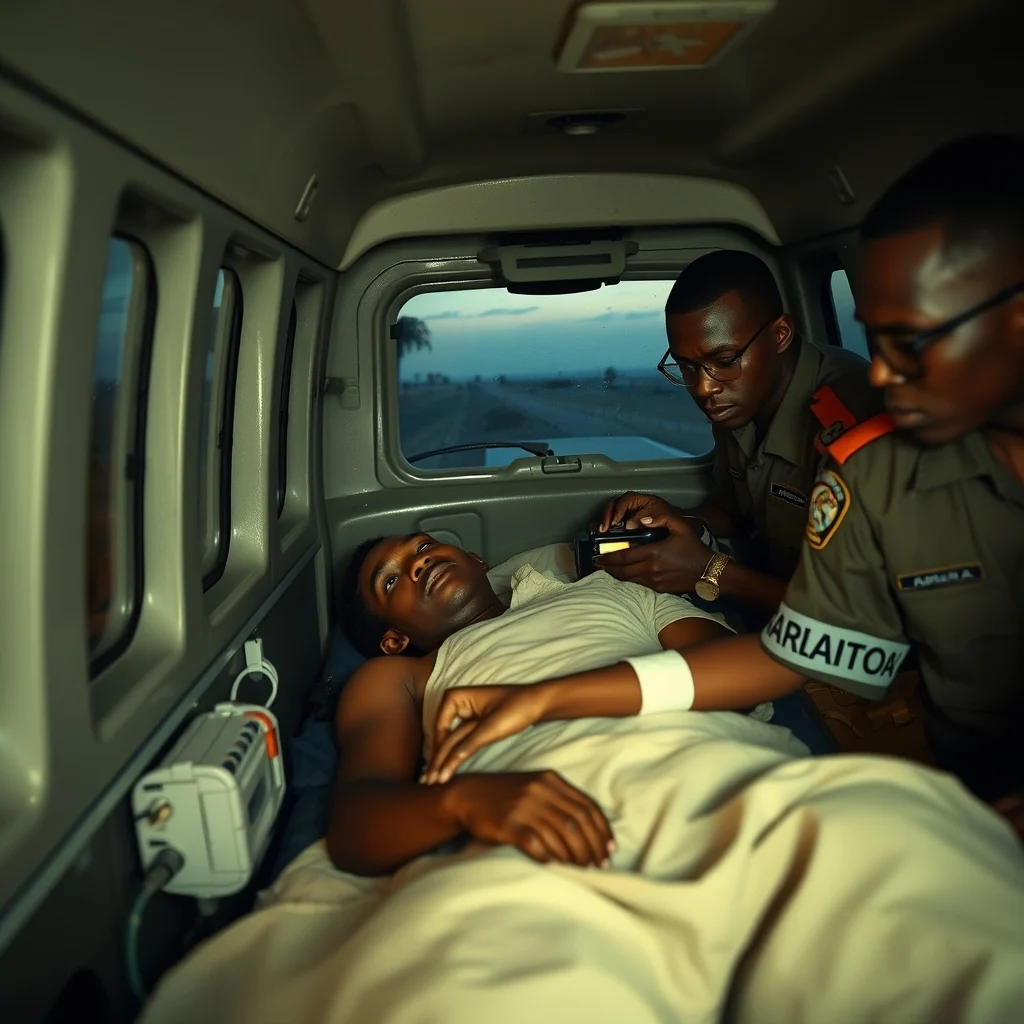
Accra, Ghana – May 9, 2024 – Dr. Justice Yankson, a legal practitioner and former General Secretary of the Ghana Medical Association (GMA), has pointed to the Ghana National Ambulance Service as bearing significant responsibility for the death of 29-year-old Charles Amissah. Dr. Yankson’s statements, made on the program Newsfile following the release of an investigative committee’s findings, highlight a critical lapse in the duty of care during the emergency response, suggesting that the service failed to provide essential pre-hospital medical intervention.
Investigative Findings Raise Concerns
An investigative committee’s report, recently made public, has shed light on the circumstances surrounding Charles Amissah’s death. While the report itself has been lauded, Dr. Yankson argues that a crucial aspect of the emergency response, namely the actions of the ambulance crew, warrants deeper scrutiny and accountability.
He emphasized that the mandate of the Ghana National Ambulance Service extends beyond simple patient transport. The service is expected to provide vital pre-hospital medical care, a duty Dr. Yankson contends was unmet in Mr. Amissah’s case.
Critical Lapse in Pre-Hospital Care
“Professor Akosa’s report is a very good one, but there is one area that I think, a lot of the blame, to be honest with you, should go to the ambulance service and their crew,” Dr. Yankson stated.
He elaborated on the findings, noting that Professor Akosa’s report indicated that “what should have happened and what could have saved him from the very word go was proper securing of homeostasis. Basically, to stop the bleeding, the bandaging and all those compression things that we do to stop the bleeding.”
Dr. Yankson stressed that these life-saving interventions are precisely within the capabilities of ambulance service personnel and should have been administered at the scene. The fact that these actions were not taken, according to the committee’s findings, represents a significant failure.
Procedural and Documentation Deficiencies
Beyond the lack of direct medical intervention, the report also revealed procedural shortcomings. “It talks about the fact that proper documentation in the ambulance didn’t happen, proper protocol was not followed, chain of command was missing,” Dr. Yankson revealed.
These deficiencies paint a picture of a disorganized and potentially negligent response. The committee’s findings confirmed that Mr. Amissah received no medical treatment whatsoever during his transport in the ambulance.
Breach of Duty of Care
Dr. Yankson described this lack of treatment as a “fundamental breach” that likely impacted the patient’s chances of survival. He expressed deep concern that the ambulance service, possessing the earliest and most critical opportunity to stabilize the patient, instead appeared to prioritize inter-hospital transfers over immediate medical intervention.
This omission, he insisted, must be a central focus of any future accountability discussions regarding the incident.
Implications for Emergency Services
The case of Charles Amissah raises critical questions about the operational standards and training of the Ghana National Ambulance Service. The findings suggest a potential systemic issue that needs urgent attention to prevent similar tragedies.
Moving forward, it will be crucial to observe how the relevant authorities respond to these findings. The focus will likely be on implementing stricter protocols, enhancing training for ambulance crews, and ensuring robust oversight mechanisms are in place to guarantee that all emergency responses meet the highest standards of care and professionalism. The public will be watching to see if tangible changes are made to improve pre-hospital emergency medical services.










Leave a Reply