
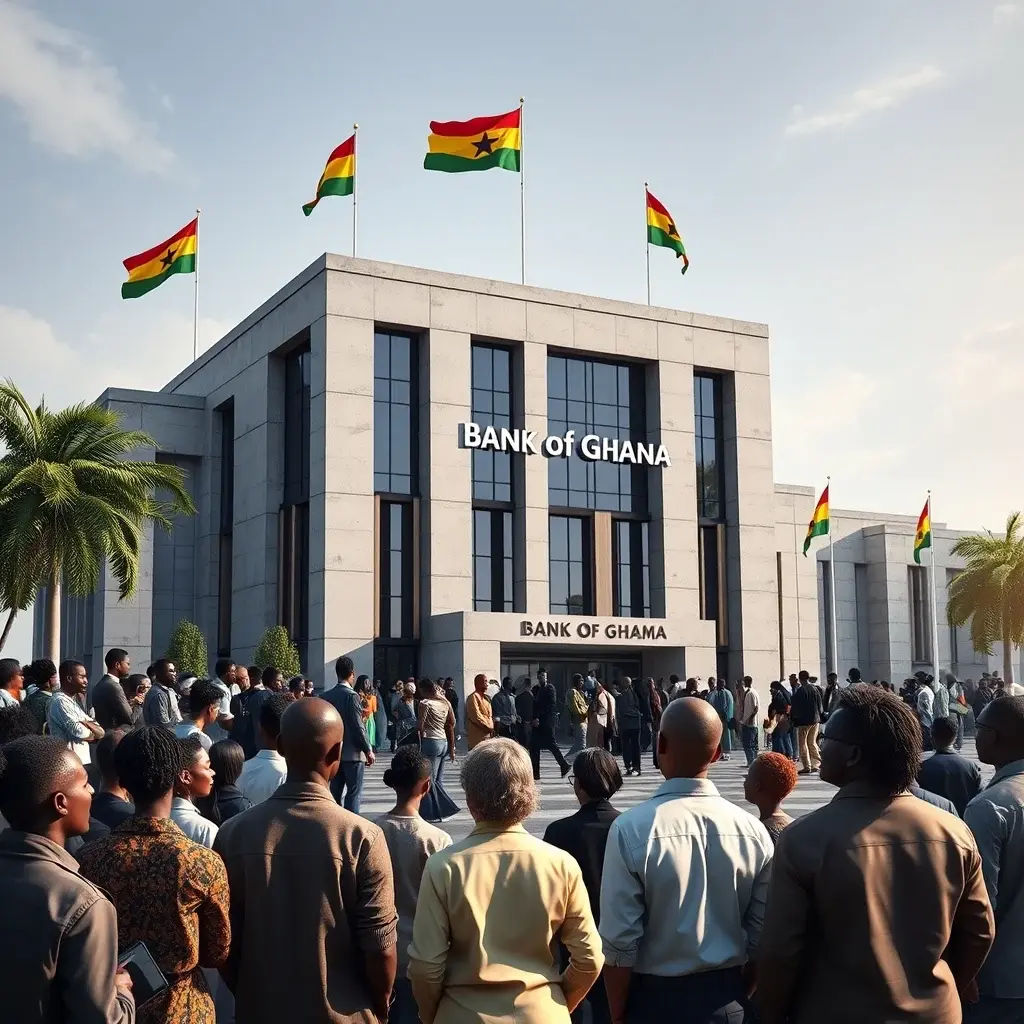
Accra, Ghana – The Majority in Parliament has defended the Bank of Ghana’s (BoG) substantial operational loss of approximately GH¢15.63 billion for the 2025 financial year, asserting that the central bank’s mandate prioritizes macroeconomic stability over profit generation. This defense follows the release of the bank’s latest audited financial results, which revealed a significant 65% increase in losses compared to the GH¢9.49 billion recorded in 2024, despite recent signs of economic stabilization.
Context of Central Bank Operations
The Bank of Ghana, like most central banks globally, operates under a mandate that differs fundamentally from commercial financial institutions. Its primary objectives include managing inflation, ensuring exchange rate stability, and maintaining the overall health of the financial system. These responsibilities often necessitate policy interventions that can carry significant financial costs.
Explaining the Financial Position
Eric Afful, Member of Parliament for Amenfi West and spokesperson for the Majority, emphasized that the BoG’s financial performance should not be evaluated using the same metrics as private banks. He stated that the reported losses do not impede the bank’s operational capacity or its ability to fulfill its core duties.
“It is therefore important to emphasize that these financial outcomes do not impair the operational capacity of the Bank of Ghana,” Afful explained. “The Bank continues to effectively deliver on its core mandate.”
He further clarified that negative equity, a situation where liabilities exceed assets, is an accounting condition and not an indicator of insolvency for a central bank. This accounting state reflects the costs incurred by the bank in implementing policies aimed at stabilizing the economy during periods of significant economic distress.
“Simply put, the Bank’s balance sheet reflects the cost of stabilising the economy,” Afful added, underscoring that the interventions were necessary to mitigate broader economic crises.
Economic Stabilization Costs
The substantial increase in the operational loss is attributed to the costs associated with policy interventions undertaken by the Bank of Ghana. These interventions are often designed to absorb economic shocks, manage inflation spikes, and stabilize the national currency. While these actions are crucial for long-term economic health, they can result in significant short-term financial outlays for the central bank.
Expert Perspectives and Data
Central banking experts often point out that the balance sheets of central banks are not designed for profit maximization. Their assets and liabilities reflect monetary policy operations, foreign exchange reserves management, and interventions in the financial markets. For instance, during periods of high inflation or currency depreciation, a central bank might engage in open market operations or currency interventions that directly impact its financial statements.
Data from other central banks globally also shows instances of operational losses, particularly following periods of economic crisis or significant monetary policy adjustments. These losses are typically viewed as the necessary cost of fulfilling the central bank’s mandate to maintain price and financial stability.
Implications for Ghana’s Economy
The defense by the Majority suggests that the government views the Bank of Ghana’s financial position as a consequence of its critical role in economic management rather than a sign of mismanagement. This stance implies that investors and the public should look beyond the reported loss to assess the effectiveness of the bank’s policies in achieving macroeconomic stability.
The focus remains on whether these stabilization efforts will translate into sustained economic recovery, reduced inflation, and a stronger currency in the medium to long term. The market will be watching the Bank of Ghana’s future actions and their impact on the broader economy, particularly as the country navigates post-crisis recovery.










Leave a Reply