
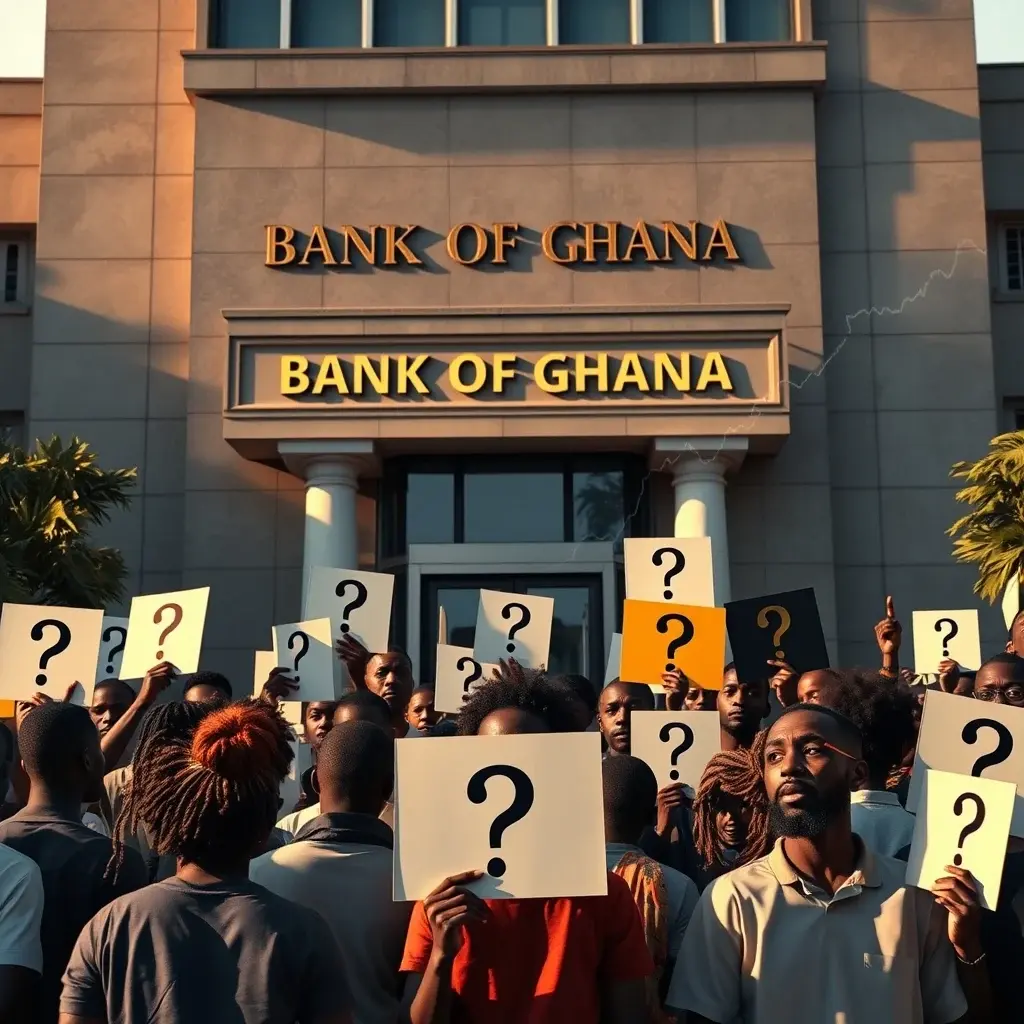
Accra, Ghana – The Bank of Ghana has reported a staggering operating loss of GH¢34.9 billion for the fiscal year 2025, a significant increase from GH¢9.49 billion in 2024. This substantial financial downturn, confirmed in the central bank’s latest financial statements, has ignited concerns among economic analysts and the public regarding the cost of economic stability and the transparency of monetary policy decisions.
Context of Economic Stability and Central Bank Performance
Central banks globally often incur costs to manage inflation, stabilize currency, and maintain overall economic health. These actions can include interventions in foreign exchange markets or adjustments to interest rates, which may impact their balance sheets. However, the scale of the Bank of Ghana’s 2025 losses has prompted questions about whether these objectives could have been achieved more cost-effectively.
Previously, the Bank of Ghana had shown a trend of narrowing losses while inflation was declining and economic growth was improving. The current Governor had also publicly committed to reversing the bank’s losses and addressing its negative equity position upon taking office. The recent financial results suggest this goal remains elusive, raising questions about the effectiveness of the strategies employed.
Policy Communication and Credibility Concerns
Adding to the public’s concern is the apparent shift in communication from the Bank of Ghana’s leadership. Last year, the Governor reportedly denied that the central bank would face any losses in 2025. The subsequent confirmation of significant losses, now being justified as the cost of maintaining economic stability, has led to accusations of inconsistency and a lack of transparency. Such discrepancies can erode public trust in the institution’s credibility.
The Institute of Economic Research and Public Policy (IERPP), an economic think tank, has publicly questioned the central bank’s explanation. They argue that stability is a crucial goal but should not serve as a blanket justification for substantial financial losses without clear, verifiable explanations. The core issue, according to IERPP, is whether equivalent macroeconomic gains could have been realized at a lower financial cost to the nation.
IMF Oversight and Accountability Questions
Ghana is currently engaged in an economic reform program supported by the International Monetary Fund (IMF). This partnership typically involves close monitoring of the country’s fiscal and monetary policies by the IMF. The occurrence of such massive losses within this framework naturally raises questions about the IMF’s role and the accountability mechanisms in place.
Analysts are seeking clarity on whether the IMF merely observed these financial developments, endorsed the policy choices that led to the losses, or if concerns were raised but not publicly disclosed. This scrutiny centers on four critical questions: Do IMF-supported stabilization programs characteristically result in significant central bank losses? Under what conditions are such losses deemed acceptable? What specific factors, beyond major crises like COVID-19 or the banking sector clean-up, contributed to Ghana’s 2025 losses? Finally, what accountability measures are in place when central bank policy decisions lead to substantial financial deficits?
Implications for Ghana’s Economic Future
The substantial losses and the accompanying questions about transparency and accountability have significant implications for Ghana’s economic stability and international financial standing. Citizens are demanding clear, consistent, and honest answers from both the Bank of Ghana and the IMF. Without adequate accountability, the very economic stability that the central bank aims to protect could become unsustainable, potentially impacting future borrowing costs, investor confidence, and the overall economic well-being of the nation.
Looking ahead, the public and economic analysts will be closely watching for detailed explanations from the Bank of Ghana regarding the specific drivers of these losses. Further transparency regarding the IMF’s engagement and oversight during this period will also be crucial. The ability of Ghana’s authorities to address these concerns effectively will be a key indicator of the country’s commitment to sound economic governance and fiscal responsibility.










Leave a Reply