
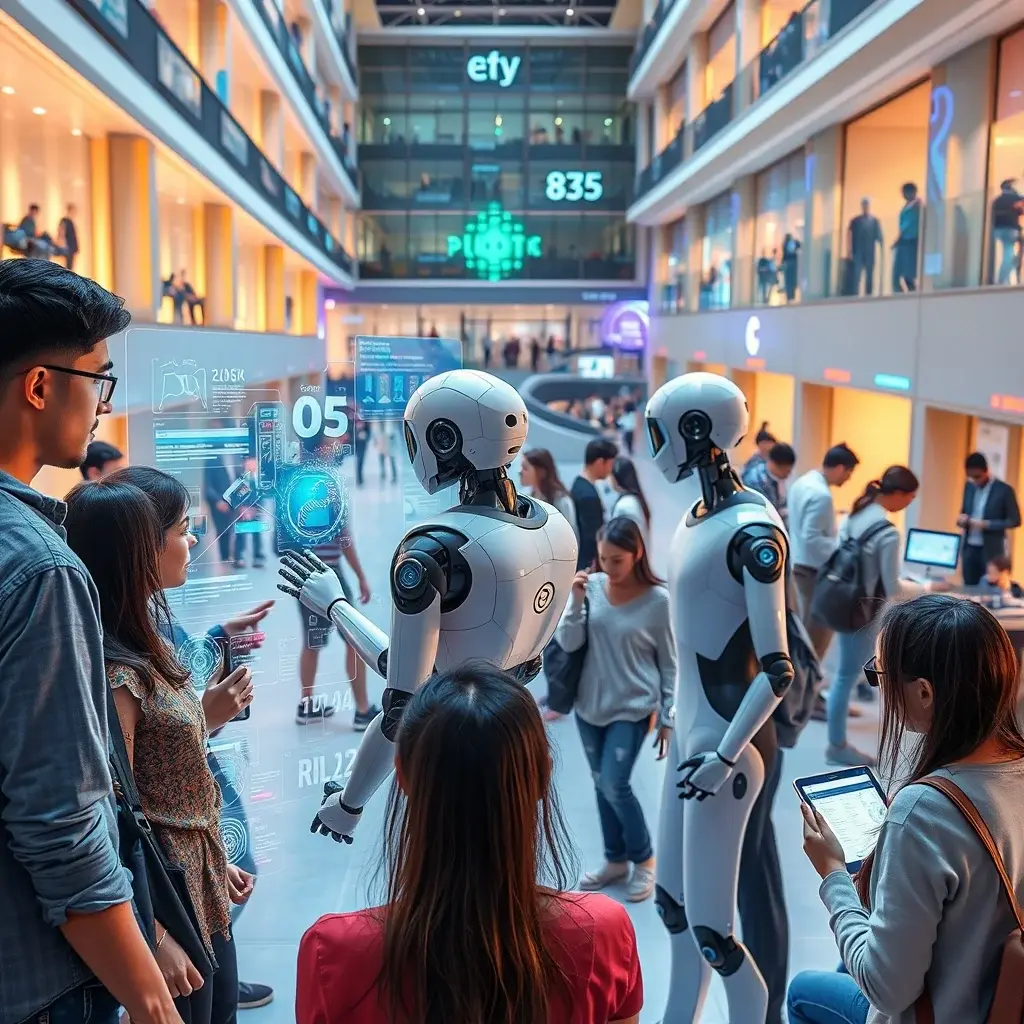
The education sector is grappling with the rapid integration of artificial intelligence (AI), leading universities and schools to implement stricter policies, deploy detection tools, and warn students about potential misuse. This widespread reaction is primarily driven by concerns over AI-facilitated plagiarism, where students might generate assignments without genuine learning, thereby undermining academic integrity. However, this response is seen by some as misdirected, focusing on misconduct rather than a systemic misalignment and viewing AI as an anomaly instead of an evolutionary stage in human cognition.
The Misdiagnosis of the AI Problem
The prevailing narrative in education suggests AI enables cheating, allowing students to generate essays and complete assignments effortlessly, leading to a reactive strategy of detection, restriction, and punishment. This perspective, however, relies on a narrow definition of learning and AI, assuming education’s main purpose is the production of text demonstrating individual effort and that the value of this text lies solely in its originality.
This view overlooks how AI transforms cognition by externalizing aspects of thinking, such as organizing information, simulating reasoning, and assisting in problem-solving. This fundamentally alters what it means to know, understand, and produce. If AI can perform tasks traditionally rewarded by education, the issue is not student misuse but that educational structures are built around now-automatable tasks. The focus on plagiarism, therefore, addresses a symptom, not the root cause.
Artificial Intelligence as an Evolution of Human Cognition
AI is not a sudden development but part of a historical progression of humans extending cognitive capabilities, from writing and printing to calculators and computers. Each innovation externalized aspects of thinking, reconfiguring intelligence rather than eliminating it. Writing reduced the need for memorization, printing democratized knowledge, and computers enhanced processing. AI continues this trajectory by aiding reasoning, synthesis, and generation.
Concerns about cognitive decline have accompanied each technological leap, yet intelligence has consistently been reconfigured. AI represents a similar shift, changing where and how thinking occurs. As some cognitive tasks become externalized, others like interpretation, evaluation, and application gain prominence, making AI a catalyst for redefining learning rather than a threat to it.
Why AI Is Not Plagiarising
The common assertion that AI plagiarizes human work is flawed, stemming from a misunderstanding of AI models. These systems do not store and retrieve text like databases; they learn statistical patterns from vast datasets and generate novel outputs based on these patterns.
Consequently, AI-generated text is a probabilistic construction, not a direct reproduction. While influenced by human content, it is not identical. This distinction is critical for understanding the limitations of current plagiarism frameworks, which are designed for identifiable copying. AI disrupts this by drawing from distributed patterns rather than single sources, blurring the lines between original and derived content and making the concept of traditional plagiarism conceptually inaccurate.
The Collapse of Detection as a Reliable Strategy
Educational institutions have turned to AI detection tools, which analyze linguistic patterns to identify AI-generated text. However, these tools are themselves AI-based and operate on probabilities, not certainties.
This creates a paradox: using uncertain systems to enforce certainty. Detection tools are prone to false positives and negatives, which become more pronounced as AI systems improve. Reliance on these tools risks falsely accusing students, fostering misplaced confidence in educators, and making academic integrity dependent on unreliable technology. Crucially, even perfect detection would not solve the fundamental issue that the assessed tasks are increasingly automatable, merely enforcing an obsolete model.
Beyond Similarity: The Limits of Turnitin and Text Comparison
Tools like Turnitin assess originality by measuring textual similarity, assuming originality is the absence of overlap and that overlap indicates a lack of independent effort. These assumptions are insufficient in the age of AI.
A text can be original in wording yet reflect common reasoning patterns, or show similarity due to shared terminology without constituting plagiarism. Similarity, therefore, is not a reliable indicator of intellectual value; it measures textual overlap, not cognitive depth. The continued reliance on similarity indices suggests academia prioritizes measurable outputs over meaningful learning, an approach that is becoming increasingly inadequate.
The Rethink Implicizer: A Framework for Academic Transformation
The Rethink Implicizer framework highlights the crisis by examining how outdated frameworks are applied to new realities like AI. It reveals a misalignment between what is measured and what truly matters in education.
Applying this lens clarifies that the focus on plagiarism is misplaced. The critical issue is not AI usage but whether education systems are preparing students for an AI-augmented world. The Rethink Implicizer shifts the conversation from enforcement to redesign, urging institutions to move from controlling behavior to enabling capability and integrating AI to enhance learning.
Artificial Intelligence and the Exposure of Educational Weaknesses
AI has exposed that many tasks traditionally used to measure intelligence, such as essay writing and summarization, are now automatable. This does not diminish the importance of these tasks but highlights their inadequacy as sole indicators of human capability.
If machines can produce essays, the value of education must lie beyond mere production. This exposure presents an opportunity to reorient education towards higher-order skills like critical thinking, creativity, ethical reasoning, and real-world application. AI acts as a diagnostic tool, revealing outdated educational systems and prompting necessary evolution.
From Reproduction to Value Creation
Education must transition from knowledge reproduction to value creation. Traditional systems reward recall and presentation, functions AI now performs efficiently. Human advantage lies in areas AI cannot fully replicate: problem framing, contextual understanding, ethical judgment, and innovation.
This necessitates redesigning assessments to focus on solving real-world problems, designing projects, building systems, and demonstrating impact, with AI as a tool in the process. Such an approach aligns education with modern demands, preparing students not just to know but to do, shifting emphasis from output to outcome.
Rethinking Academic Incentives and Professorial Roles
The required transformation extends to academia’s structure, where metrics like publication volume and citation counts often overshadow real-world impact. This raises questions about the purpose of academic work if it doesn’t benefit society through application.
Evaluating publications by their potential for application, alongside scholarly contribution, could incentivize engagement with real-world challenges. Rethinking promotion criteria to include metrics like innovation, industry collaboration, and societal benefit would align academic work more closely with societal progress.
The Case for a Productivity-Oriented Education System
Nations that thrive in the AI age will align education with productivity, training students to use tools effectively, solve problems, and create value. Many education systems are already emphasizing applied research, innovation, and industry collaboration.
For regions like Ghana, this shift is crucial given limited resources and significant challenges. Education must focus on solving real problems, with AI as a powerful integrated tool. A productivity-oriented system trains students in responsible AI use, verification, application, and solution generation, moving from policing behavior to enabling capability.
Redesigning Integrity for the AI Age
Academic integrity remains vital but requires redefinition for the AI era. The goal should be ensuring responsible and ethical tool use, not outright prohibition. Integrity now involves transparency, verification, and accountability.
Students should be empowered to use AI tools while being able to explain their usage, validate outputs, and demonstrate understanding. This approach aligns integrity with learning, encouraging ethical use and recognizing AI as part of modern cognition.
Conclusion: We Must Stop Chasing the Wrong Problem
The current fixation on AI plagiarism is a misdirection, addressing symptoms with unreliable tools and reinforcing an obsolete educational model. AI is a catalyst for transformation, challenging assumptions and forcing a reevaluation of educational priorities.
The real task is not detecting AI but redesigning education for an AI-augmented world, shifting from reproduction to creation, similarity to substance, and control to capability. Embracing this transformation will build more relevant and effective systems, preparing students for the future by cultivating tomorrow’s intelligence rather than merely measuring yesterday’s.










Leave a Reply