
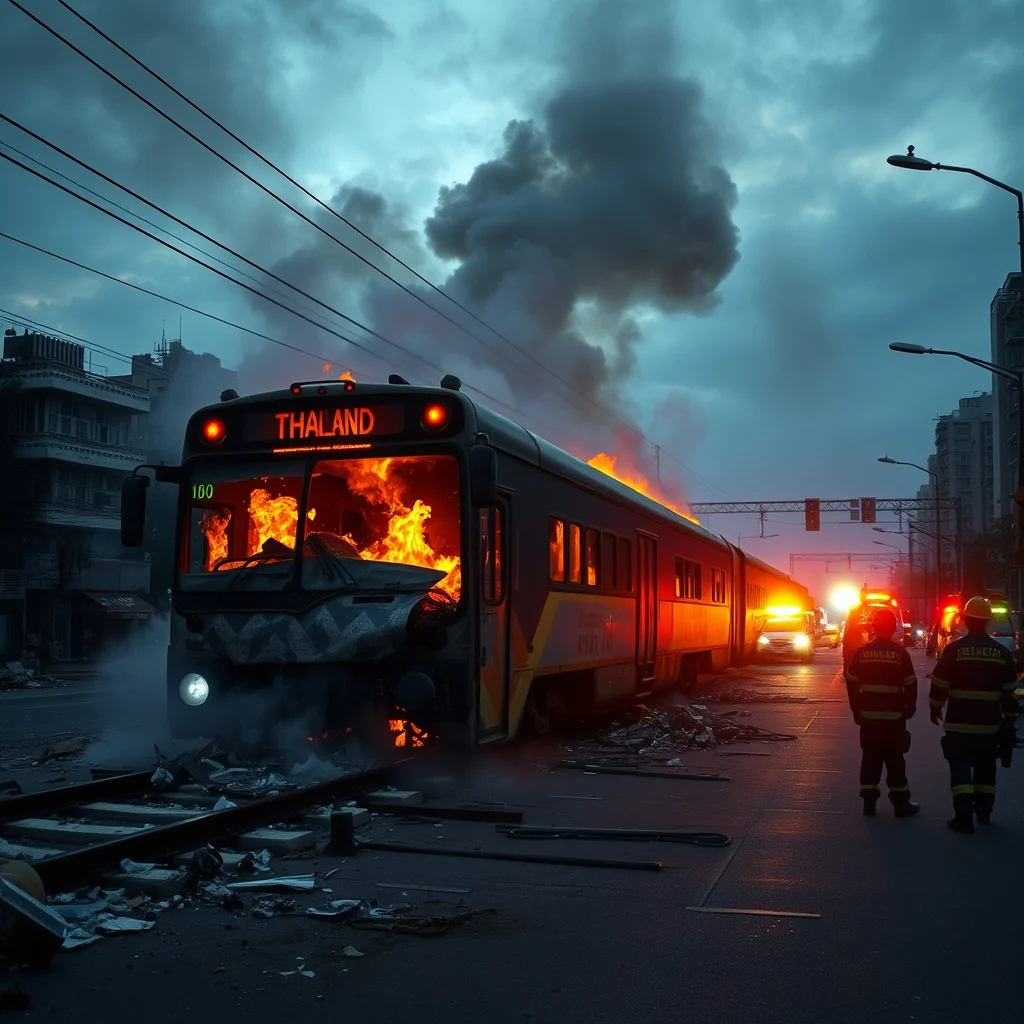
At least eight people died and dozens more were injured when a freight train collided with a public bus near Makkasan train station in downtown Bangkok on Saturday afternoon. The impact ignited a fire that engulfed the bus, and also affected several nearby vehicles, prompting a large-scale emergency response.
Emergency Response and Initial Findings
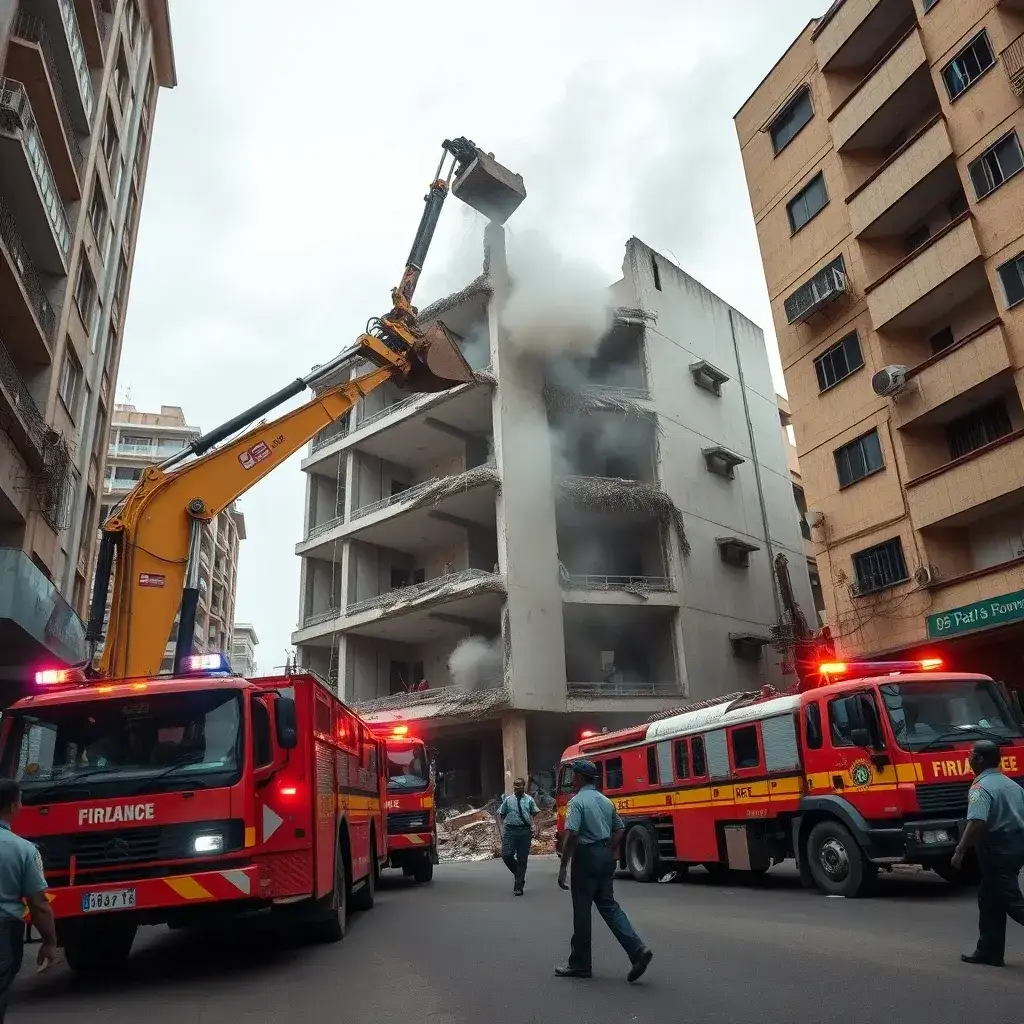
Police and rescue officials responded swiftly to the scene, working to extricate injured passengers from the burning wreckage. Fire crews battled to contain the blaze, which was eventually brought under control. Rescue teams then focused on cooling the area, ventilating gas, and continuing the search for victims.
Deputy Transport Minister Siripong Angkasakulkiat indicated that preliminary reports suggest the bus became stranded on the train tracks due to heavy traffic congestion. This prevented the crossing barriers from fully closing, leaving the bus vulnerable.
The freight train, carrying containers, was reportedly unable to stop in time to avoid the collision. The full cause of the accident remains under official investigation.
Context of Bangkok’s Traffic and Rail Crossings
Bangkok is notorious for its severe traffic congestion, which frequently impacts the efficiency and safety of its transportation networks. The city’s infrastructure includes numerous railway crossings, many of which are located in busy urban areas where traffic can easily back up onto the tracks.
Inadequate infrastructure at some crossings, coupled with high volumes of road traffic, can create dangerous situations. Drivers may misjudge the time needed to clear a crossing, or be caught on the tracks by sudden traffic jams.
Broader Implications for Public Transport Safety
This tragic incident highlights ongoing concerns regarding the safety of public transportation and the management of level crossings in densely populated urban environments. The combination of heavy traffic, potentially insufficient warning systems, and train speeds creates a complex safety challenge.
Such accidents often lead to reviews of safety protocols, infrastructure upgrades at high-risk crossings, and enhanced driver training for public transport operators. The investigation will likely examine the operational procedures of both the railway and the bus service, as well as the traffic management in the vicinity of the Makkasan station.
What to Watch Next
Authorities are expected to release detailed findings from their investigation into the crash’s cause. Attention will likely turn to potential infrastructure improvements at Bangkok’s level crossings and any new regulations or safety measures implemented for public transport and freight operations. The city’s ability to manage traffic flow around critical infrastructure like railway lines will also be under scrutiny.





Leave a Reply