
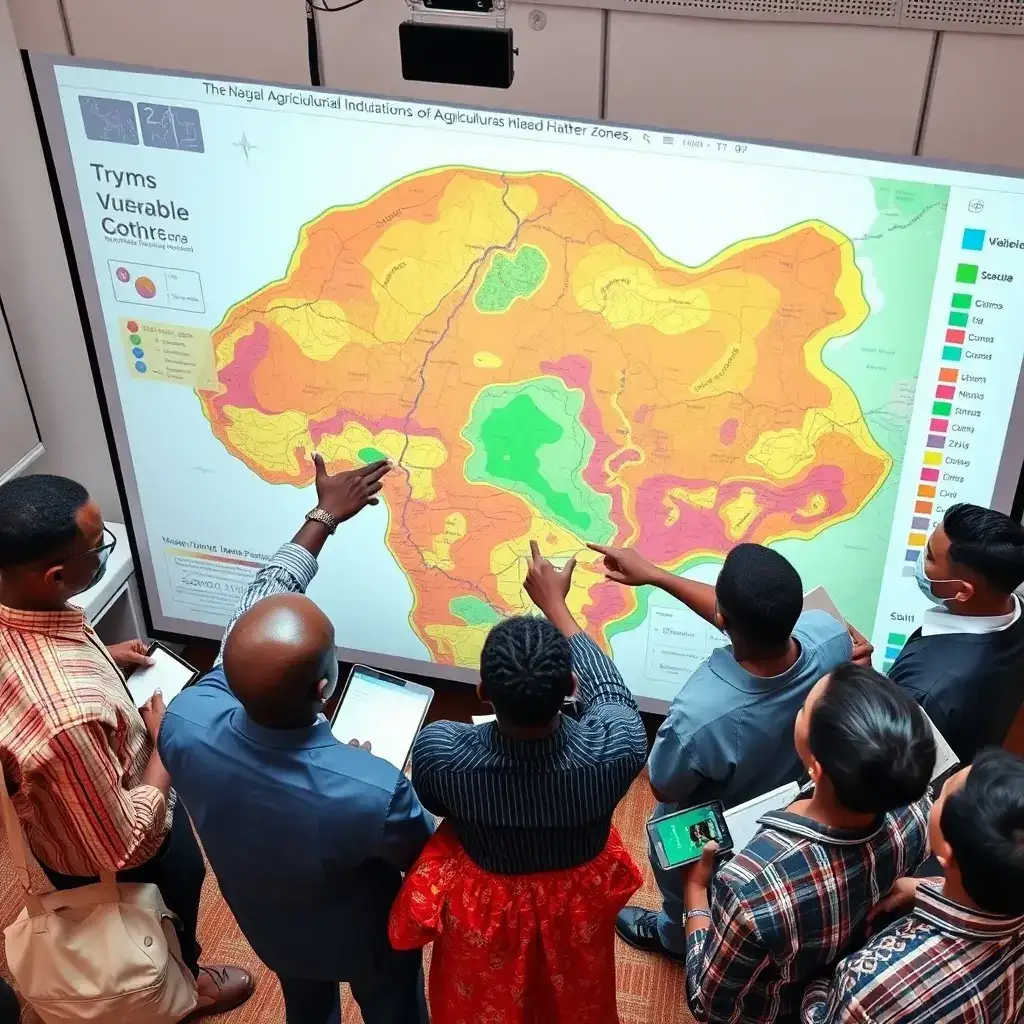
Accra, Ghana – Stakeholders in Ghana’s food systems sector are emphasizing the critical role of evidence-based data in bolstering climate adaptation and resilience initiatives across the nation. This assertion follows a national stakeholder domestication workshop in Accra focused on AGRA’s Climate Vulnerability Assessment Tool (ClimVAT), where participants expressed strong confidence in the tool’s potential to enhance these efforts.
Context: Climate Change Impacts on African Agriculture
Africa’s agricultural systems are increasingly vulnerable to the escalating impacts of climate change. Rising temperatures, prolonged droughts, unpredictable rainfall patterns, and extreme weather events pose significant threats to food security and livelihoods.
To mount effective responses, governments and development partners require precise, reliable data. This evidence is crucial for identifying the most severe climate risks and understanding the underlying factors that drive vulnerability in diverse regions.
Introducing the ClimVAT Tool
The ClimVAT platform offers a solution by integrating climate, soil, and socio-economic data. Developed by AGRA following a comprehensive climate assessment across Ghana between 2024 and 2025, the tool generates detailed spatial maps.
These maps visualize patterns of climate exposure, agricultural sensitivity, and adaptive capacity, allowing users to pinpoint areas of high vulnerability across different geographies, agricultural systems, and time scales.
Supporting Resilient Planning and Investment
ClimVAT is designed to support a wide array of stakeholders. This includes national and local government institutions, development partners, non-governmental organizations, agricultural extension services, and agribusiness development initiatives.
The tool aims to empower these entities to make informed, climate-resilient agricultural planning and investment decisions. Bashiru Musah, Program Officer at AGRA Ghana, highlighted its utility in providing “insider information” for policy management at the district level.
“It helps map out which areas in specific districts are vulnerable to climate change so they could roll out programs to mitigate such challenges,” Musah stated.
Pinpointing Vulnerability Hotspots
Dr. Shaibu Baanni Azumah, a Climate Policy Consultant, explained that ClimVAT provides “regional and on-the-spot information on vulnerability hot spots.” The tool enables comparisons between national and local indices and allows for detailed assessment of sensitivity and exposure to climate change.
“The tool allows you to do prioritization of climate adaptation policies. Simple navigation can help you see what to focus on and where,” Dr. Azumah added. He noted that it can identify areas with high vulnerability and low existing adaptation programs, guiding targeted interventions.
Empowering Vulnerable Populations
The benefits of ClimVAT extend directly to vulnerable populations. Dr. Paul Yao Anani, a Gender Consultant, emphasized that the tool provides policymakers with the evidence needed to direct support effectively.
“With this tool, policy makers are able to tell which districts and communities we should shift support to. Without data, it is difficult to plan,” Dr. Anani remarked. He further explained that the tool helps identify specific needs of women, youth, and persons with disabilities, enabling more informed and inclusive decision-making.
Informing Investment and Crop Strategies
Dr. Kindie Tesfaye Fantaye, Head of Climate Adaptation and Resilience at AGRA, pointed out the tool’s capability in identifying vulnerability levels and guiding investment decisions. “It helps decision-makers determine where to invest. It helps focus on vulnerable crops, sectors, etc., using data visualization tools, and using that to plan appropriately,” he said.
Dr. Fantaye underscored the interconnectedness of climate action and poverty reduction, stating, “Without dealing with climate change, poverty issues cannot be dealt with. So, we need to have proper planning for climate issues. This is important for climate decision-making.”
A Boon for Agricultural Research
Plant breeders and agricultural researchers also stand to gain significantly. Dr. Mawulawoe Awity, Principal Research Assistant and Maize Breeder at the West Africa Centre for Crop Improvement (WACCI), University of Ghana, sees ClimVAT as instrumental.
“For us, as breeders and persons in the agricultural space, what are the adaptive tools that we can come up with? This is an important tool for us to know the kind of strategies we can come up with to ensure our farmers are supported to mitigate the effects of climate change,” Dr. Awity explained.
Next Steps and Broader Rollout
AGRA is actively working to integrate ClimVAT into Ghana’s national policy framework. The goal is to ensure that key institutions, such as the Ministry of Food and Agriculture and the Environmental Protection Agency, can utilize the tool in developing national and sub-national initiatives.
The workshop in Accra was the second in a series, following an earlier session in Tamale. Participants received training on interpreting climate vulnerability data, reviewing risk maps, and translating insights into actionable, gender-responsive planning. Similar workshops are planned for Kenya, Tanzania, Uganda, and Zambia, signaling AGRA’s commitment to a wider regional adoption of the tool.










Leave a Reply