
The Homicide Unit of the Criminal Investigations Department (CID) has arrested a 25-year-old fetish priest and herbalist in connection with the murder and mutilation of a 40-year-old trader, whose dismembered body was discovered in the Central Region on March 10, 2026. The suspect, identified only as a fetish priest and herbalist, was apprehended following the discovery of the remains of Joyce Akua Ampongmaa, a trader from Akweley Kasoa, in a bush at Awutu Bentum.
Discovery of Mutilated Remains
The grim discovery was reported to authorities by the Safohene of Awutu Bentum. Police officers dispatched to the scene found the victim’s body with its head and both legs severed. The remains were subsequently transported to the Police Hospital mortuary for preservation and an autopsy, after which the deceased was positively identified as Joyce Akua Ampongmaa.
Investigation Uncovers Disturbing Details
Initial police investigations revealed a disturbing connection between the deceased and the suspect. Records indicate that Ms. Ampongmaa had sought herbal treatment from the suspect in 2025 for a swollen leg condition. Her last known visit was on March 4, 2026, when she reportedly sought spiritual assistance to protect her business.
According to the Director-General of the CID, Lydia Yaako Donkor, the suspect allegedly lured Ms. Ampongmaa into a nearby bush under the guise of gathering herbs following their consultation at his shrine. It is alleged that the suspect then attacked her from behind with a cutlass, killing her, dismembering her body, and concealing the remains in the bush before removing parts.
Confession and Recovery of Body Parts
During interrogation, the suspect reportedly confessed to the crime. He informed investigators that he had buried the deceased’s head at Mafi Avedo in the Volta Region and her legs at his residence in Awutu Bentum. This confession led to further police action.
The suspect was presented before the Adabraka District Court on March 13, 2026, and was remanded into police custody. Authorities then obtained an ex parte court order to exhume the buried body parts.
On March 17, the suspect guided investigators to Mafi Avedo, where the victim’s head was successfully exhumed and taken to the Police Hospital mortuary. The following day, he led officers back to the crime scene at Awutu Bentum for a reconstruction exercise. He also directed them to locations where he allegedly buried the deceased’s legs and disposed of her destroyed mobile phones.
Crime Scene Reconstruction and Evidence Retrieval
At the crime scene, located approximately 0.5 kilometers from Awutu Bentum on a cassava farm, the suspect pinpointed the exact spot where he allegedly attacked Ms. Ampongmaa. He also indicated where the body was deposited and a pit where he claimed to have buried blood-stained items, according to COP Donkor.
Further searches at the suspect’s residence yielded the recovery of the deceased’s legs. Destroyed mobile phones, believed to be those of the victim, were retrieved from a nearby bush and a latrine.
Community Reaction and Ongoing Investigation
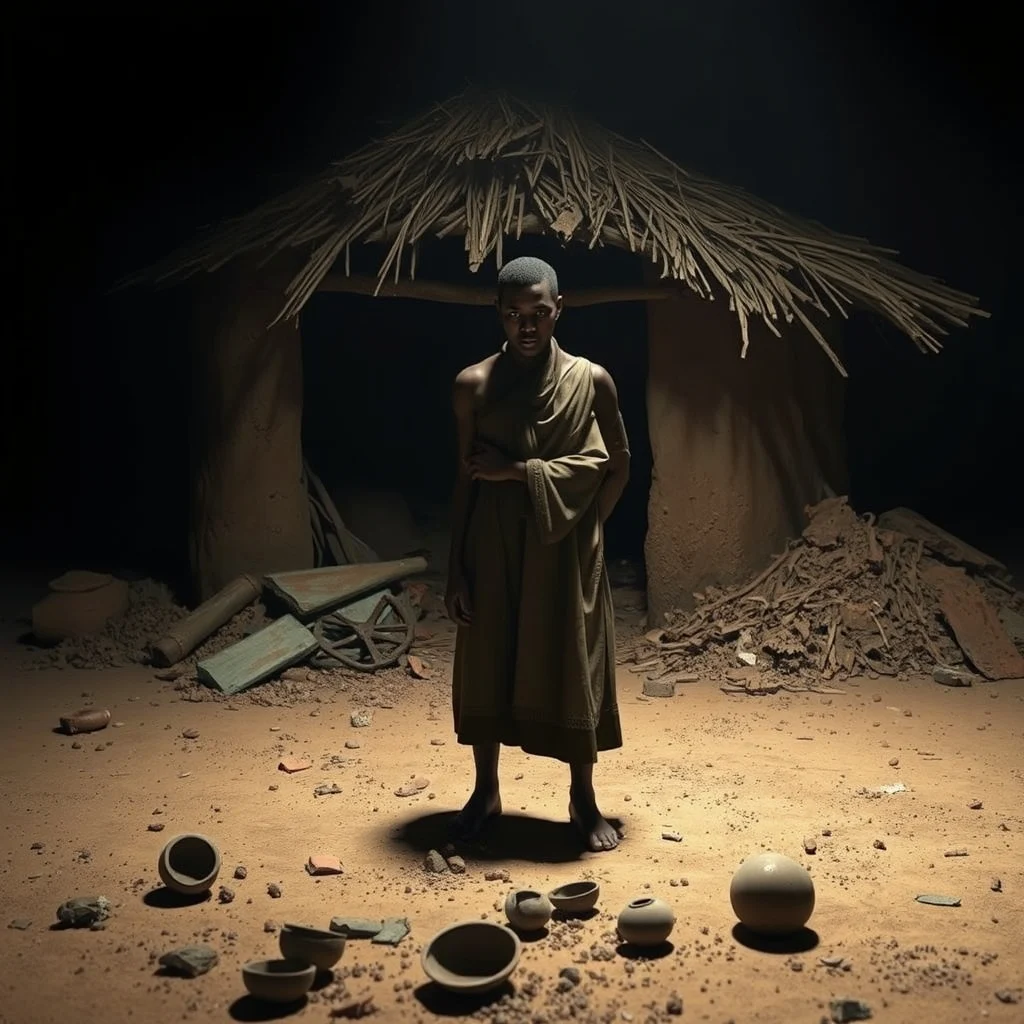
In the aftermath of the incident, members of the community took drastic action, demolishing the suspect’s shrine and residence. This action, while a reflection of community outrage, reportedly hampered efforts to retrieve the suspected murder weapon and other potential exhibits.
All recovered body parts have been deposited at the Police Hospital mortuary for preservation and autopsy. Investigations into the motive behind the brutal killing and the full extent of the suspect’s involvement are ongoing.
Implications and Future Watch
This case highlights the persistent challenges in addressing spiritual and traditional practices that may be exploited for criminal purposes. The brutality of the alleged crime also raises concerns about public safety in remote and rural areas. As investigations continue, authorities will be looking to piece together the suspect’s network and any potential accomplices. The community’s response underscores a deep-seated frustration with such alleged acts, and future developments may involve community policing initiatives and greater scrutiny of traditional healing practices.










Leave a Reply