
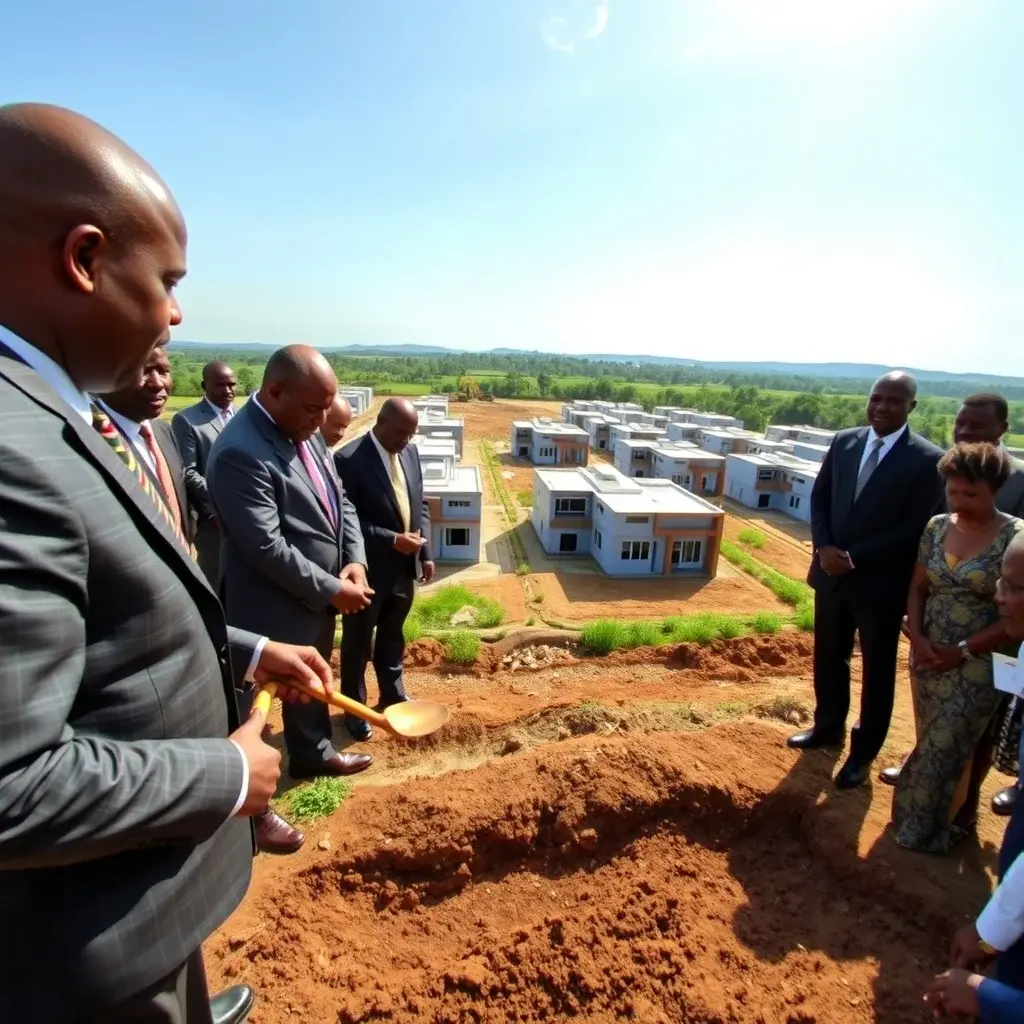
President John Dramani Mahama initiated the construction of the Green City Housing Project at Dedesua in the Ashanti Region on Saturday, May 9, aiming to address Ghana’s significant housing deficit and champion sustainable urban development. The project, spearheaded by the State Housing Company Limited, will transform 200 acres into a residential area featuring 1,067 affordable housing units.
Addressing a National Crisis
During the groundbreaking ceremony, President Mahama highlighted Ghana’s substantial housing deficit, estimated to exceed 1.5 million units. He attributed this shortfall to persistent demand outpacing supply, escalating land and construction costs, and a lack of accessible long-term financing options.
The President also voiced concerns regarding the rapid expansion of informal settlements and accelerating urbanization. He noted that a large segment of the population continues to reside in substandard housing conditions due to these demographic shifts.
“Today, more than half of the population of Ghana lives in urban areas, and projections indicate that this could rise to about 70 per cent of our population living in urban areas by the year 2050,” President Mahama stated.
He emphasized that without immediate and decisive interventions, the nation’s housing crisis is poised to worsen considerably.
Government’s Commitment to Affordable Housing
President Mahama affirmed his administration’s dedication to providing adequate and affordable housing. He believes such initiatives are crucial for improving public health, enhancing educational outcomes, boosting economic productivity, and fostering stable communities.
To combat the housing deficit, the government is prioritizing the completion of the Saglemi Housing Project. Concurrently, new social housing initiatives are being rolled out across various districts to lower barriers to homeownership and ensure equitable distribution of housing opportunities nationwide.
Innovative Financial Framework
A cornerstone of the government’s strategy is an innovative housing financial framework centered around a GH¢3 billion revolving fund. This fund is a collaborative effort involving the government, organized labor, and the private sector.
This initiative aims to enable Ghanaian workers to purchase homes in local currency with manageable long-term repayment plans. The fund’s structure includes partnerships with the Social Security and National Insurance Trust (SSNIT) and Republic Bank Ghana.
Under this arrangement, housing developers like the State Housing Company can secure credit for construction. Simultaneously, financial institutions will offer mortgage facilities, allowing workers to repay their home loans over a period of 15 to 20 years.
President Mahama described this approach as a “Ghanaian-tailored solution,” designed to align with the economic realities and income levels within the country.
Reducing Project Costs for Affordability
Further bolstering the affordability of the Green City Housing Project, the government has pledged to cover the costs associated with constructing internal roads and drainage systems. This measure is intended to reduce the overall project expenses, enabling the State Housing Company to offer the housing units at more accessible prices.
Broader Economic and Social Impact
The Green City Housing Project is anticipated to generate employment opportunities and enhance access to decent accommodation for many Ghanaians. It represents a significant contribution to the government’s broader objective of revitalizing the nation’s housing sector through sustainable and affordable development strategies.










Leave a Reply