
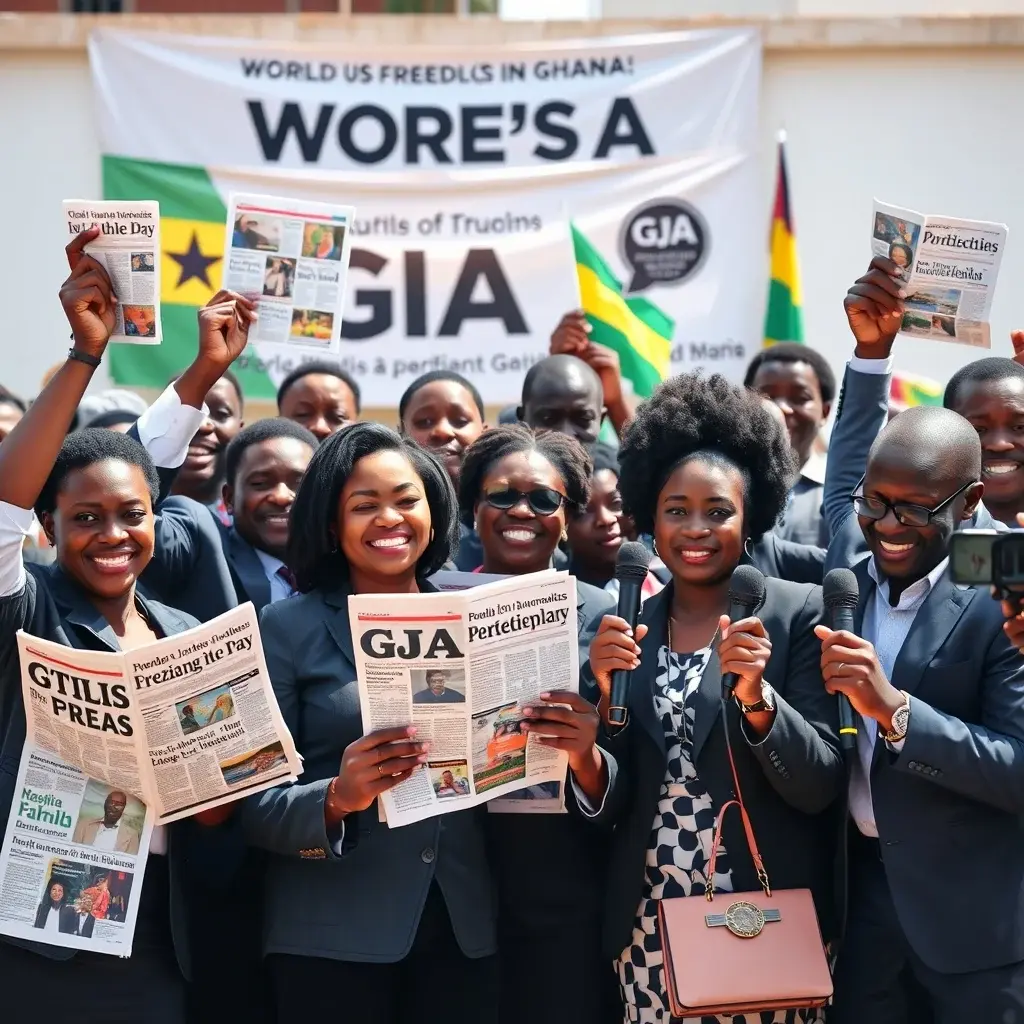
Accra, Ghana – The Ghana Journalists Association (GJA) marked World Press Freedom Day on Sunday, May 3, by celebrating Ghana’s significant advancement in global press freedom rankings, climbing from 52nd to 39th position worldwide and securing 4th place in Africa, according to the latest Reporters Without Borders index. The GJA highlighted the day’s theme, “Shaping a Future at Peace,” as a critical reminder of freedom of expression’s role in building stable societies.
Context of Press Freedom in Ghana
Press freedom is a cornerstone of democratic governance, allowing for the free flow of information, holding power accountable, and fostering informed public discourse. In Ghana, like many nations, the media operates within a framework of constitutional guarantees but also faces challenges related to safety, regulatory pressures, and economic sustainability. The World Press Freedom Index, compiled annually by Reporters Without Borders, assesses these factors to rank countries based on their journalists’ ability to work freely and independently.
Ghana’s Notable Progress
The GJA lauded the collective efforts of journalists, media owners, regulators, civil society, and citizens for their dedication to upholding press freedom, often under difficult circumstances. This year’s upward movement on the World Press Freedom Index is seen as a testament to “measurable improvements across key performance indicators,” as stated by the GJA.
The Association specifically credited sustained advocacy and constructive engagement by the GJA and its partners for fostering this improved environment. They also acknowledged the contributions of the government, civil society organizations, and international partners in creating a more conducive atmosphere for journalism.
Sustained Advocacy and Recognition
GJA President Albert Dwumfour emphasized the importance of this progress, noting that it “underscores the impact of sustained advocacy and constructive engagement.” He also singled out President John Dramani Mahama for his personal commitment to enhancing Ghana’s press freedom credentials.
As part of the World Press Freedom Day commemoration, the GJA announced plans for a national event later in May to recognize individuals and institutions that have made significant contributions to media development and democratic accountability in Ghana.
Persistent Challenges and Calls for Reform
Despite the celebratory tone, the GJA issued a stern warning against complacency, pointing out that critical challenges persist. These include ongoing concerns about the safety of journalists, the financial viability of media organizations, and the necessity of regulatory reforms.
The Association specifically called on authorities, particularly the Ghana Police Service, to conduct swift, transparent, and thorough investigations into attacks on journalists. Holding perpetrators accountable is crucial to eradicating impunity and ensuring a safer working environment.
Furthermore, the GJA urged a review of provisions within the Electronic Communications Act, 2008. The Association indicated that certain sections of this act are frequently used to intimidate media practitioners, and reforms are essential to bolster public trust and further enhance Ghana’s global standing.
Global Engagement and Future Outlook
GJA President Albert Dwumfour is leading a delegation to Paris to participate in the International Federation of Journalists (IFJ) Centenary Congress from May 4 to 7. This global gathering will convene over 300 journalist unions and associations to discuss the future of the profession, addressing critical issues such as artificial intelligence, journalist safety, gender equality, surveillance, and youth participation in media.
The GJA remains committed to its mandate of defending press freedom and promoting professional journalism. “We will continue to speak truth to power, challenge injustices and hold duty-bearers accountable without fear or favour,” pledged Dwumfour.
The Association urged all stakeholders to maintain their resolve in promoting press freedom, recognizing the media as an indispensable pillar of democratic governance. The ongoing discussions at the IFJ Congress and continued advocacy within Ghana will shape the future trajectory of press freedom in the country and globally.










Leave a Reply