
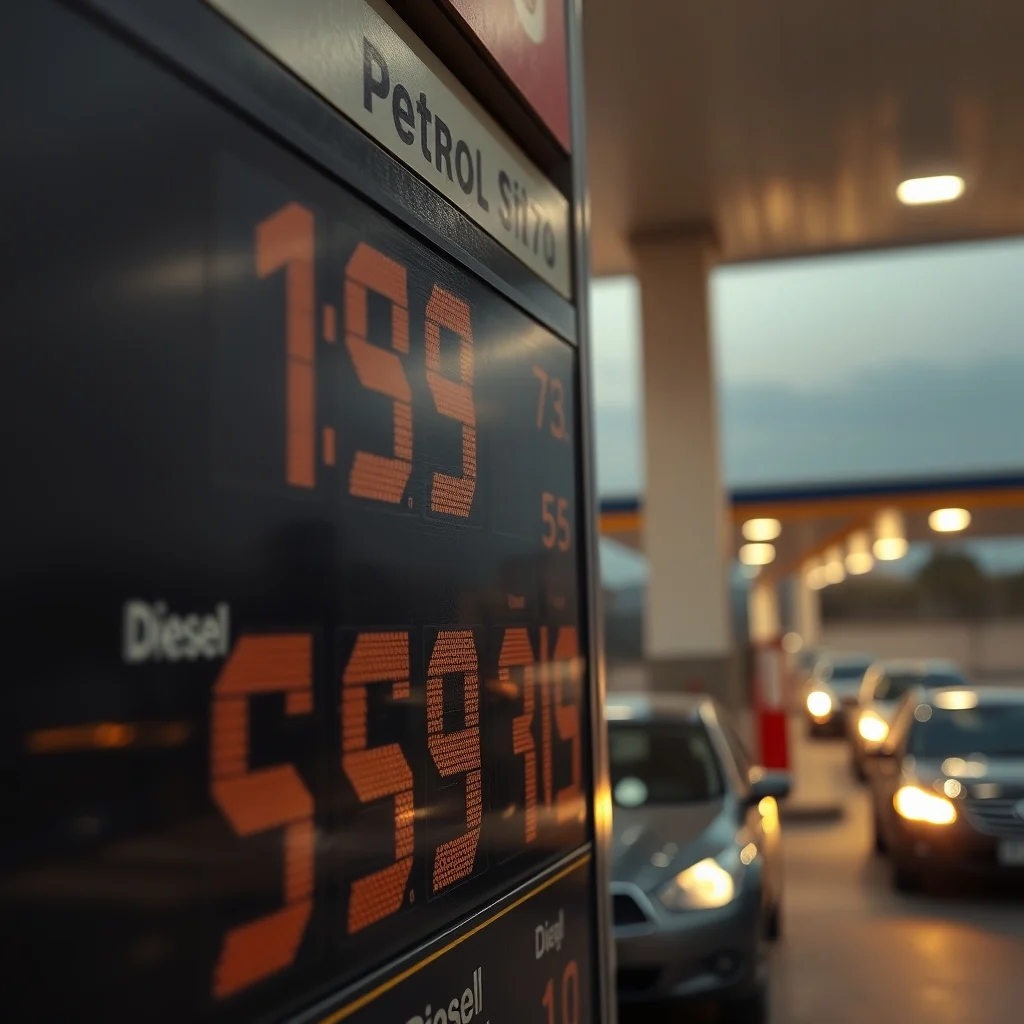
Accra, Ghana – Rating agency Fitch Ratings suggests the Ghanaian government is likely to extend temporary measures designed to alleviate consumer burden from escalating petroleum prices. This projection comes as global crude oil prices experience a renewed upward trend, potentially impacting inflation and economic stability. The potential extension hinges on the fiscal cost of these measures remaining below 0.1% of GDP monthly and being offset by other budgetary savings.
Context of Fuel Relief Measures
The Ghanaian government initially implemented temporary relief measures on April 16, 2026, to shield citizens from the impact of rising global crude oil prices. These measures involved the state absorbing GH₱2 per litre on diesel and GH₱0.36 per litre on petrol. The policy was slated to last for one month, expiring on May 16, 2026.
Government Communications Minister Felix Kwakye Ofosu stated at the time that the intervention was a direct response to sharp increases in international oil prices. These hikes had driven up local ex-pump prices, consequently affecting transportation costs and the broader economic landscape.
The government emphasized its commitment to maintaining price stability, protecting livelihoods, and supporting Ghana’s economic recovery against external shocks.
Rising Crude Oil Prices and Pricing Outlook
International crude oil prices have begun to climb again, reportedly influenced by geopolitical developments, including potential shifts in relations concerning Iran. This has pushed Brent crude prices to approximately $105 per barrel.
Petroleum prices in Ghana are scheduled for review starting May 16, 2026. Indications suggest possible price increases if global price pressures continue. Recent data shows petrol prices have already seen a marginal rise between 0.10% and 0.51% per litre, while diesel prices have increased by nearly 6.77%.
The price of Liquefied Petroleum Gas (LPG) is also anticipated to rise, with forecasts ranging from 7.24% to 10.41%. Industry analysts attribute this LPG increase to the delayed impact of current tender arrangements that had previously provided a buffer against earlier price hikes.
Fitch Ratings on Ghana’s Economic Outlook
Fitch Ratings, in its latest country assessment report, upgraded Ghana’s Long-Term Foreign-Currency Issuer Default Rating (IDR) to ‘B’ from ‘B-’, accompanied by a Positive Outlook. The agency projects that inflation will gradually increase towards the end of the year due to higher oil prices.
However, Fitch maintains that inflation should continue its downward annual average trend through 2026 and 2027. The agency anticipates the Bank of Ghana will maintain a prudent monetary policy, pausing its easing cycle to mitigate inflation risks. This follows a significant cumulative cut of 1,400 basis points in the monetary policy rate between July 2025 and March 2026, bringing it to 14%.
Regarding Ghana’s debt, Fitch forecasts public debt to decline further to 46% of GDP by 2027, falling below the ‘B’ rated median of 51%. This projected decrease follows a substantial 21 percentage point fall in 2025, attributed to a strong appreciation of the Ghanaian cedi and robust fiscal consolidation efforts.
Fitch also projects strong economic growth for Ghana through 2027, with an average GDP expansion of 5%. This growth is expected to be supported by the gold mining sector, improved consumer confidence, easing inflation, and lower borrowing costs.
The current account surplus is forecast to remain robust in 2026, following a record surplus of 8.2% of GDP in 2025. This is supported by the assumption that gold prices will remain high in the current year.
Implications and Future Watch
The potential extension of fuel relief measures by the Ghanaian government signals a delicate balancing act between economic support and fiscal prudence. Consumers may benefit from continued price stability in the short term, but the long-term fiscal implications of such interventions remain a key area to monitor.
The interplay between global oil prices, domestic inflation, and monetary policy decisions by the Bank of Ghana will be crucial in shaping the economic trajectory. Investors and industry stakeholders will be closely watching for any further policy adjustments and their impact on Ghana’s credit rating and economic growth prospects.










Leave a Reply