
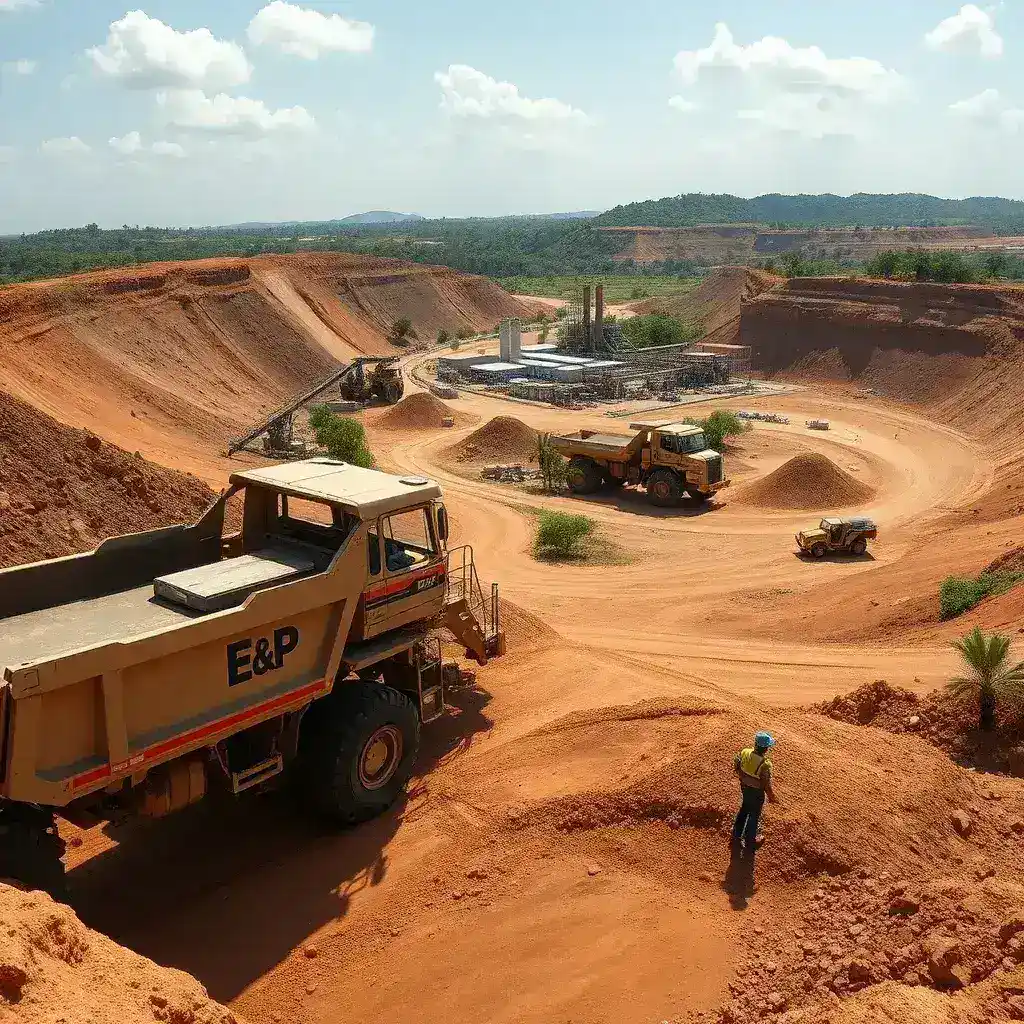
Accra, Ghana – In a significant development for Ghana’s economic landscape, Ibrahim Mahama’s Engineers and Planners (E&P) has reportedly taken over the Damang Gold Mine, a move that signals a potential recalibration of the nation’s approach to foreign ownership of vital natural resources. This transaction, occurring shortly after President John Mahama’s inauguration on January 7, 2025, has ignited a national conversation about state control versus private sector involvement in the lucrative mining industry.
Economic Context: Neoliberalism and Resource Wealth
Ghana’s economic policies have largely adhered to neoliberal principles and “Washington Consensus” tenets since the 1983 Economic Recovery Programme (ERP). This framework has historically favored privatization, deregulation, and trade liberalization, leading to substantial foreign investment and ownership, particularly in the mining sector. Critics argue this approach has perpetuated poverty, inequality, and youth unemployment by diminishing the nation’s stake in its own resource wealth.
Data from 2015-2018 illustrates this disparity: out of US$22.72 billion in mineral resources produced, Ghana garnered only US$1.48 billion (6.5%), with the remaining 93.5% flowing to foreign entities. Furthermore, multinational corporations pocketed 89.5% of the US$14.14 billion in economic rents generated during that period, leaving the government with a mere 10.5%.
This situation has been attributed to successive leaders prioritizing political power over securing a fair share of national resources for the state and its citizens. Foreign powers often support their corporations, creating an environment where local elites may face implicit rewards for compliance and punishment for challenging foreign interests in resource extraction.
The Damang Mine Takeover: Pragmatism or Missed Opportunity?
The takeover of the Damang Gold Mine by E&P, while not an ideal solution for national resource ownership, is presented by some analysts as a pragmatic response within the current neoliberal framework. An alternative, suggested by Dr. Abdul Hakim Ahmed, Senior Lecturer at the Department of Political Science, University of Education, Winneba, would have been for the state, through entities like the Ghana Gold Board (Goldbod) or the Bank of Ghana, to acquire the mine directly.
This state ownership, proponents argue, would ensure all proceeds directly benefit the nation, fostering economic stability and growth. However, past experiences with state-run enterprises, marred by alleged inefficiency and corruption under the ERP, raise concerns about the potential for similar issues to resurface.
Dr. Ahmed hypothesizes that the Mahama government may have opted against state acquisition to avoid sending a signal of nationalization to international financial markets and multinational corporations. Such a move could provoke significant economic and political repercussions, including pushback from foreign interests and their local allies in various sectors.
Another consideration is the potential for political instability. A state takeover could be vulnerable to reversal by future opposing political forces, potentially leading to the mine being handed over to different private entities, possibly foreign ones, thus reversing progress on resource ownership.
Positive Departures and Future Outlook
Despite these complexities, E&P has committed to infrastructure development in the Damang mining areas, which, while serving operational needs, promises significant local and national development benefits. More critically, the recent news that E&P has sold 100% of its first gold output to GoldBod and the Bank of Ghana is hailed as a remarkable departure from past practices. This move directly supports the country’s national reserves and economic stability amidst global economic uncertainties.
This collaboration between the private sector and the state offers a glimmer of hope. The aspiration is for such partnerships to continue, irrespective of the political administration in power, as Ghana gradually seeks to reduce the dominance of foreign corporations in its natural resource sector.
The evolving dynamics surrounding the Damang Gold Mine’s ownership and operation will be crucial to watch. The long-term implications of this private-state partnership model for Ghana’s economic sovereignty and the equitable distribution of its natural wealth remain a key area of focus for the nation’s future development.










Leave a Reply