
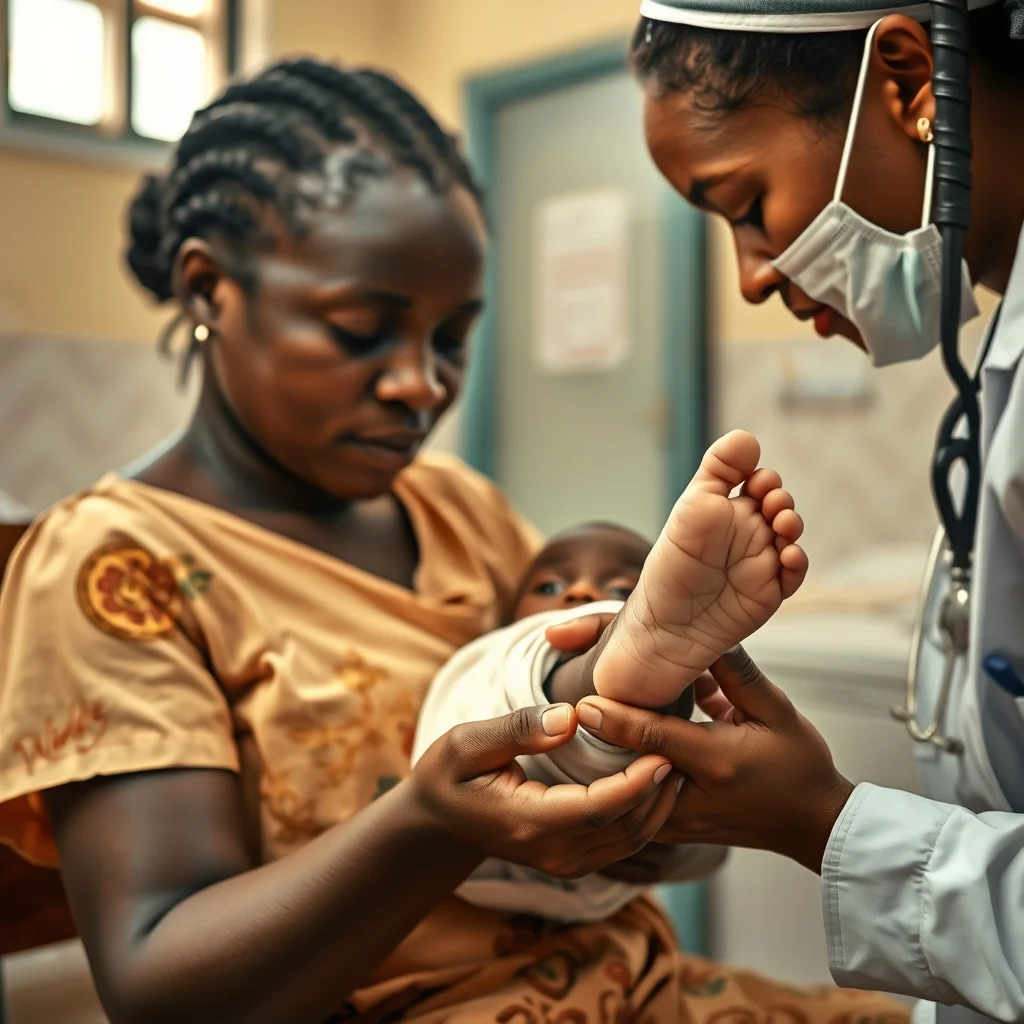
Somewhere in Ghana today, a baby is being born with clubfoot, a condition as old as human history yet one that most Ghanaians still cannot name. Approximately 1,000 babies are born with clubfoot in Ghana every year, about three per day, plunging families into confusion and fear. This news highlights the ongoing efforts and urgent calls to action by the Ghana Clubfoot Program to ensure timely, free treatment for affected children under five, a condition that is fully treatable and can be corrected with the Ponseti method.
Context: The Silent Struggle of Clubfoot in Ghana
Clubfoot is a congenital condition where a baby’s feet are twisted inward and downward. In many Ghanaian communities, a lack of awareness means families often turn to traditional remedies or simply wait, believing the child will outgrow it. This delay, often compounded by a lack of clear referral pathways within the health system, means many children arrive at treatment centers years after birth.
These delays are not due to parental negligence but a lack of timely information and access to proper care. The consequences of untreated clubfoot are lifelong, impacting a child’s ability to walk, attend school, find employment, and participate fully in society. A condition treatable in weeks can lead to a lifetime of disability.
Eighteen Years of Transformation: The Ghana Clubfoot Program
Since 2008, the Ghana Clubfoot Program, a partnership between the Christian Health Association of Ghana (CHAG) and Hope Walks, has been working to combat this challenge. Over 18 years, the program has successfully treated and transformed the lives of more than 9,000 children.
The program utilizes the internationally recognized Ponseti technique. This non-surgical method involves a series of gentle casts to reshape the foot, followed by a brace to maintain the correction and prevent relapse. When initiated early, the success rate of the Ponseti method is remarkable.









Leave a Reply