
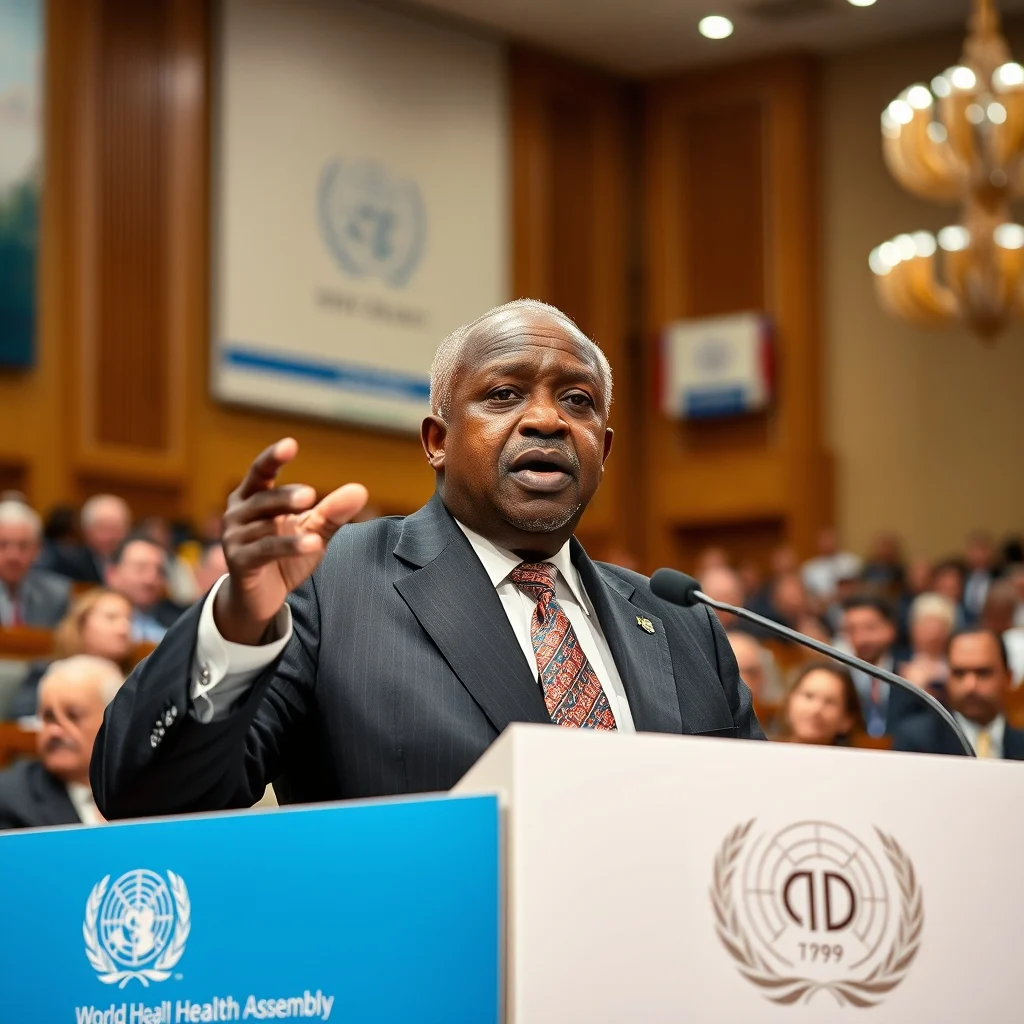
Geneva, Switzerland – On Monday, May 18, 2026, former President John Dramani Mahama addressed the 79th World Health Assembly, urging immediate reforms in global health financing and advocating for enhanced health sovereignty among nations in the global south. His address comes at a critical juncture, with developing countries facing significant challenges due to reduced international development assistance.
Context of Declining Aid
President Mahama highlighted the stark reality of dwindling international support for global health initiatives. He revealed that Ghana alone has experienced a loss of approximately 78 million US dollars following the suspension of United States aid to African nations. This reduction in funding places considerable strain on already vulnerable health systems across the continent.
Mounting Pressure on Health Systems
The consequences of decreased global health support are profound and far-reaching. Projections indicate that up to 5.7 million Africans could be pushed into poverty by the end of 2026 solely due to the suspension of USAID support. Furthermore, current trends suggest a grim outlook, with estimates predicting up to 9 million preventable deaths by 2030 if these funding cuts persist.
Impact on Critical Health Programs
The repercussions extend to vital health programs. In South Africa, approximately 1.8 million individuals living with HIV face uncertainty regarding treatment continuity following the suspension of US support through the President’s Emergency Plan for AIDS Relief (PEPFAR). This situation underscores the precarious dependence of essential health services on external funding.
A Call for Domestic Capacity and Resilience
Despite these alarming trends, President Mahama implored delegates to shift their focus from lamentation to action. He emphasized the necessity of building robust health systems founded on domestic capacity. “We are not gathered in Geneva to mourn the past, but to build a future where a country’s health is not a by-product of charity, but the result of sovereign capability,” he declared.
Rethinking Global Health Financing
The former President called upon global health leaders to fundamentally rethink existing financing models. He urged for greater support to empower African countries to reduce their reliance on external aid. Strengthening domestic investment and securing long-term health resilience are paramount, he argued, to ensure sustainable healthcare for all.
Implications for Global Health Architecture
Mahama’s address signals a growing demand for a more equitable and sustainable global health architecture. The implications are significant for international development partners, national governments, and healthcare providers alike. The call for health sovereignty suggests a move away from aid dependency towards self-reliance, requiring innovative financing mechanisms and a stronger commitment to domestic resource mobilization. The coming years will likely see increased debate and policy shifts aimed at achieving these goals, with a focus on how to foster resilient health systems that can withstand external shocks and ensure universal health coverage.


Leave a Reply