
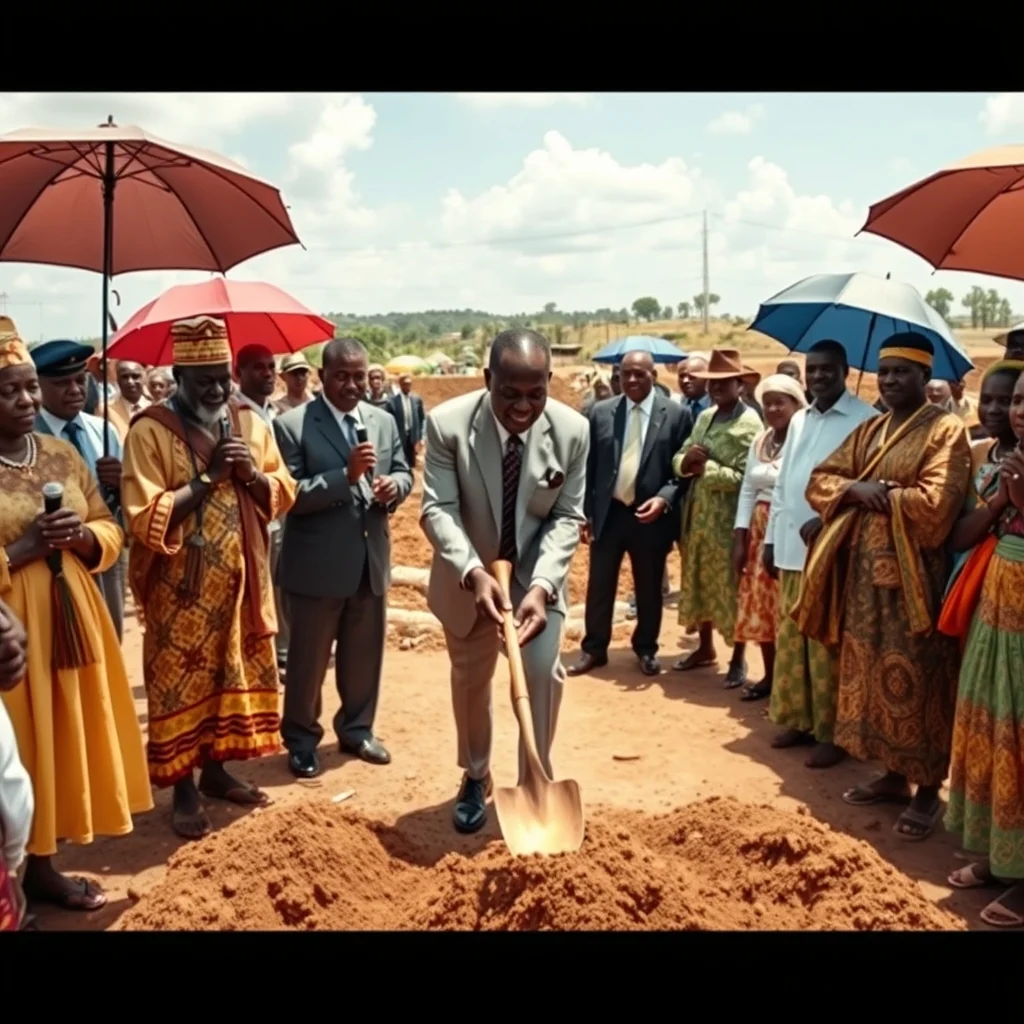
President John Dramani Mahama initiated the construction of the 24-Hour Economy Model Market at Asesewa in the Eastern Region on an unspecified recent date, aiming to re-establish the town as a significant national economic marketplace. The sod-cutting ceremony was part of Mahama’s ‘Resetting Ghana Agenda Tour,’ his third regional tour following visits to Bono and Savannah Regions. This tour provides a platform for citizens, led by traditional authorities, to directly engage with the President on policy impacts, development projects, and community concerns.
Historical Significance and Decline of Asesewa Market
Historically, Asesewa has been a prominent market town since its founding in 1935. References to the Asesewa market appeared in primary school readers during Mahama’s childhood, highlighting its former national importance. However, over the years, the market’s infrastructure has not seen substantial development, leading to a decline in its popularity compared to its peak in the 1960s and 1970s.
Revitalization Through the 24-Hour Economy Model Market
During his 2016 presidential campaign, Mahama pledged to develop the Asesewa market if given a second term. The new 24-Hour Economy Model Market is part of a broader initiative to equip 261 Metropolitan, Municipal, and District Assemblies (MMDAs) across the country with modern markets to accelerate local economic development.
Market Features and Facilities
The Asesewa 24-Hour Economy Model Market is designed to be transformative. It will feature 100 lockable stores and 150 open stalls to accommodate diverse trading needs. Essential facilities will include a police station, a fire station, a kindergarten for traders’ children, a women’s bank, a clinic, and 36 warehouses. President Mahama expressed confidence that these additions will restore Asesewa’s reputation as a central economic hub.
Addressing Water and Road Infrastructure
Mahama also addressed longstanding water supply issues in Asesewa. He noted that a previous water project, intended to draw water from Kpong to Koforidua, bypassed many communities. His administration had initiated efforts to extend this project, but it remained incomplete after they left office in 2016. He pledged to continue and complete the project, ensuring water access for Asesewa and surrounding towns.
Furthermore, plans are in place to improve the road network connecting to Asesewa. The President announced that Asesewa’s feeder roads would be included in a World Bank-funded program for road construction, enhancing accessibility to the new market and boosting economic activity.
Future Implications and What to Watch
The successful completion and operationalization of the 24-Hour Economy Model Market at Asesewa could serve as a blueprint for revitalizing other historic market towns across Ghana. Its success will depend on effective management, sustained infrastructure development, and the active participation of local traders and communities. Continued investment in supporting infrastructure like reliable water and improved road networks will be crucial for realizing the market’s full economic potential and ensuring Asesewa regains its status as a vital commercial center. The progress of the water project and the integration of feeder roads into the national network will be key indicators to monitor in the coming months.










Leave a Reply