
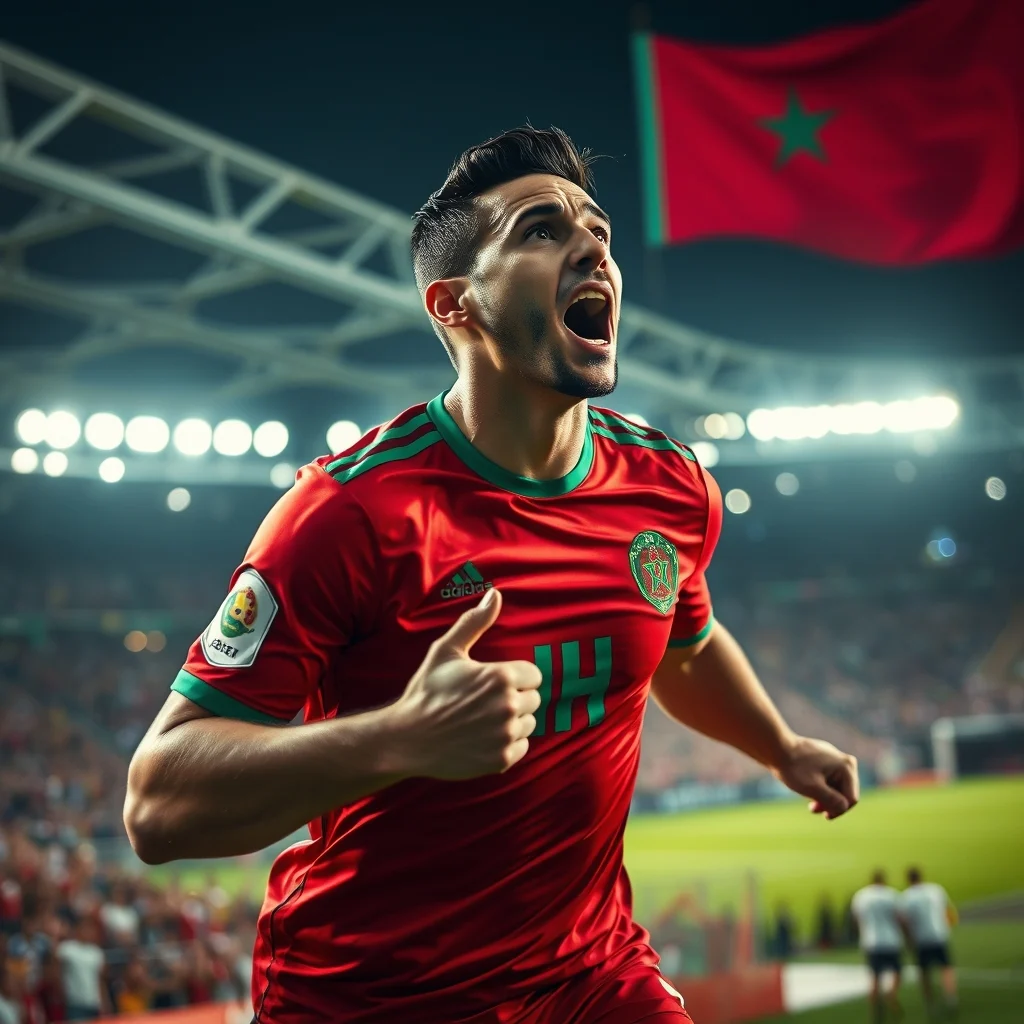
Morocco’s historic run to the 2022 World Cup semi-finals, culminating in Youssef En-Nesyri’s iconic header, has cemented their status as a new standard-bearer for African football. As of April 2026, the Atlas Lions sit at a record high of 8th in the FIFA world rankings. However, with the 2026 World Cup less than three months away, the team faces a significant transition as architect of their success, Walid Regragui, has resigned, with highly-rated U-20 World Cup-winning coach Mohamed Ouahbi taking the helm.
A System Built on Identity and Discipline
Walid Regragui’s tenure was defined by more than just tactical acumen; he instilled a distinct identity in the Moroccan team. This identity was characterized by tactical intelligence, emotional discipline, and ruthless counter-attacking prowess, moving away from the traditional chaotic style often associated with African football.
Regragui also masterfully integrated diaspora stars, such as Achraf Hakimi, Hakim Ziyech, Sofyan Amrabat, Yassine Bounou, and Youssef En-Nesyri, fostering a sense of genuine belief and national pride rather than mere participation.
The team’s tactical setup often employed a compact 4-1-4-1 formation, adaptable to a 4-3-3 or 5-4-1 depending on the opponent. Central to this was a disciplined mid-to-low defensive block, anchored by Sofyan Amrabat, which proved exceptionally difficult to penetrate.
This defensive solidity was evident throughout the 2022 World Cup, where Morocco conceded only two goals in seven matches, including clean sheets against formidable opponents like Belgium, Spain, and Portugal. This defensive resilience continued into the 2025 Africa Cup of Nations held on home soil, where they conceded just one goal before the final and recorded five clean sheets.
The Calculated Gamble on Mohamed Ouahbi
The appointment of Mohamed Ouahbi is seen as a high-stakes, yet calculated, decision prioritizing continuity and a long-term vision for Moroccan football.
Ouahbi’s coaching philosophy emphasizes a pragmatic and vertically compact style. With the U-20 team, he favored a 4-2-3-1 formation that prioritized midfield control, defensive organization, swift transitions, and high pressing to regain possession in advanced areas.
His approach blends technical skill with tactical discipline, integrating young talent within a structured framework, contrasting with purely possession-based football. Ouahbi is viewed not as a radical departure from Regragui’s methods, but as a natural evolution, expected to add attacking dynamism and verticality while preserving the defensive foundation.
Despite his success at the youth level, this appointment represents Ouahbi’s first senior national team role under immense pressure, with limited time to prepare for the upcoming World Cup. He faces the challenge of maintaining Regragui’s established structure while introducing the










Leave a Reply