
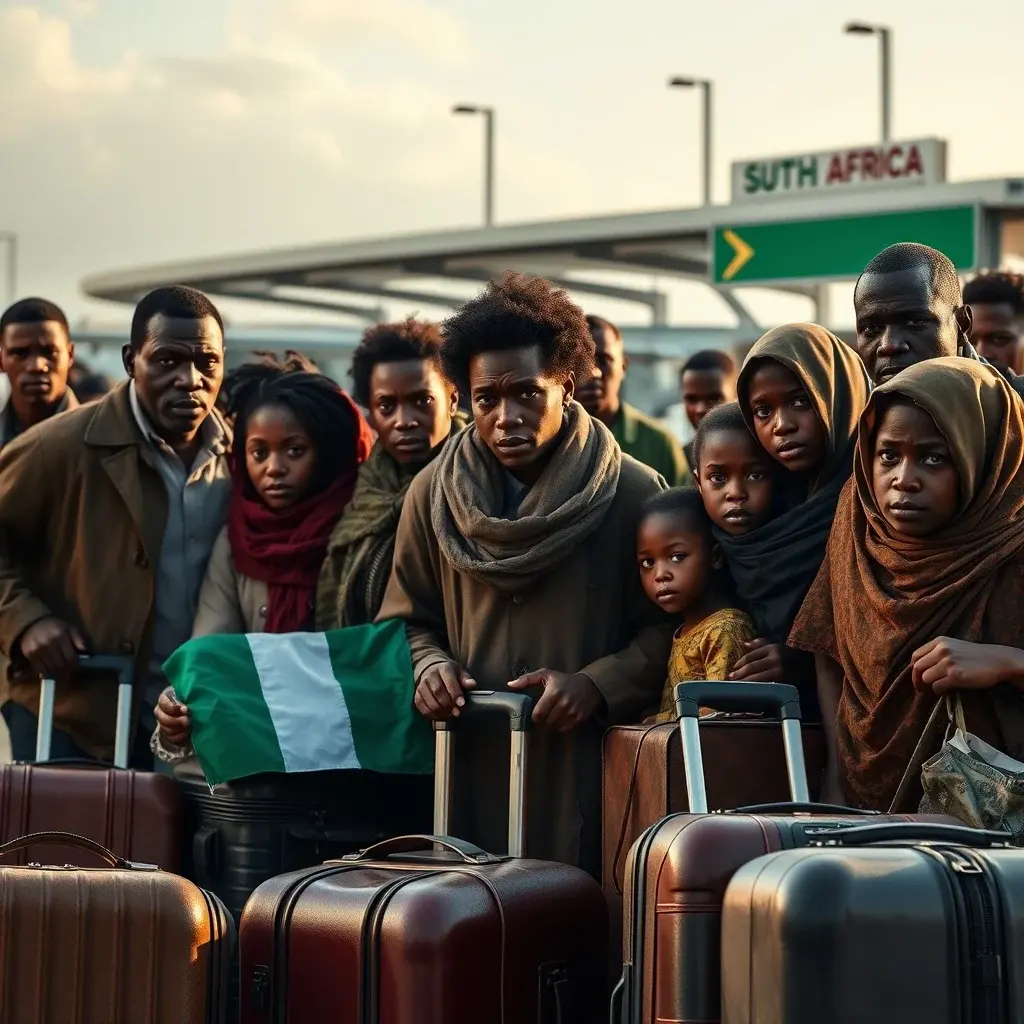
Nigeria is initiating a voluntary repatriation program for its citizens in South Africa who wish to return home, following a surge in attacks targeting foreign nationals. The move comes as fears grow over the potential escalation of xenophobic violence across the southern African nation.
Growing Concerns and Diplomatic Action
Nigeria’s Foreign Minister, Bianca Odumegwu-Ojukwu, announced that 130 Nigerians have already registered for the repatriation exercise, with more expected to join. President Bola Tinubu has expressed profound concern over the escalating violence, which he described as characterized by “xenophobic rhetoric, hate speeches and incendiary anti-migrant statements.” Nigeria has officially summoned South Africa’s acting High Commissioner to convey its deep dissatisfaction and to discuss the implications for bilateral relations.
A formal meeting is scheduled to address recent marches by anti-immigrant groups and documented instances of mistreatment and attacks on Nigerian citizens and their businesses. “Nigerian lives and businesses in South Africa must not continue to be put at risk,” stated the Foreign Minister on Sunday, emphasizing Nigeria’s commitment to finding solutions with South Africa.
Incidents and Demands for Justice
The Nigerian government is demanding justice for at least two Nigerian nationals killed in separate incidents involving local security personnel. These incidents underscore the government’s priority: ensuring the safety of its citizens abroad. Preparations are underway to gather details of Nigerians in South Africa to facilitate voluntary repatriation flights for those seeking assistance.
The violence is not limited to Nigerians; reports indicate that four Ethiopian nationals have also been killed in recent weeks, alongside attacks on citizens from other African countries. Peter Odike, a Nigerian national naturalized in South Africa, shared the pervasive fear among immigrants, noting a significant downturn in business and an increasing number of closures due to safety concerns.
South Africa’s Complex Immigration Landscape
South Africa, as Africa’s most industrialized economy, has historically attracted migrants from across the continent seeking employment. However, anti-immigrant sentiment has been on the rise, fueled by accusations that foreigners are entering the country illegally, taking jobs from locals, and engaging in criminal activities, particularly drug trafficking.
Anti-immigrant groups have been observed confronting individuals, demanding to see identity documents outside essential services like hospitals and schools. During a recent march in Pretoria, foreign-owned businesses were explicitly warned to close to avoid potential violence. These actions have been met with dismay by fellow Africans, who express shock at being targeted on their own continent.
President Cyril Ramaphosa has publicly condemned the attacks while also urging foreign nationals to respect South African laws. In his Freedom Day address, he reminded citizens of the solidarity shown by other African nations during the anti-apartheid struggle, highlighting the historical ties between the countries.
Escalating Tensions and Historical Context
Tensions were further inflamed earlier this year by reports of a Nigerian community leader being installed in a traditional role perceived by some South Africans as an attempt to assert political power. This incident, coupled with ongoing economic pressures, has contributed to the current climate of xenophobia.
Official figures indicate that South Africa hosts approximately 2.4 million migrants, representing just under 4% of its population, though the actual number is believed to be higher. The majority of migrants originate from neighboring countries like Lesotho, Zimbabwe, and Mozambique, which have long supplied labor to South Africa. Nigerians constitute a smaller, though significant, portion of this migrant population.
Broader Regional Impact
The situation in South Africa has drawn international attention, with other African nations also raising concerns. Last month, Ghana summoned South Africa’s envoy following a video that showed a Ghanaian man being questioned about his immigration status. This highlights a pattern of increasing friction and a need for diplomatic resolution to ensure the safety and dignity of all African nationals on the continent.
What to Watch Next
The success and scale of Nigeria’s voluntary repatriation program will be a key indicator of the perceived safety of Nigerians in South Africa. Diplomatic efforts between Nigeria and South Africa, as well as broader regional dialogues, will be crucial in addressing the root causes of xenophobia and preventing future outbreaks of violence. The economic impact on both South African businesses and the livelihoods of foreign nationals will also be closely monitored, alongside any policy changes South Africa might implement regarding immigration and integration.










Leave a Reply