
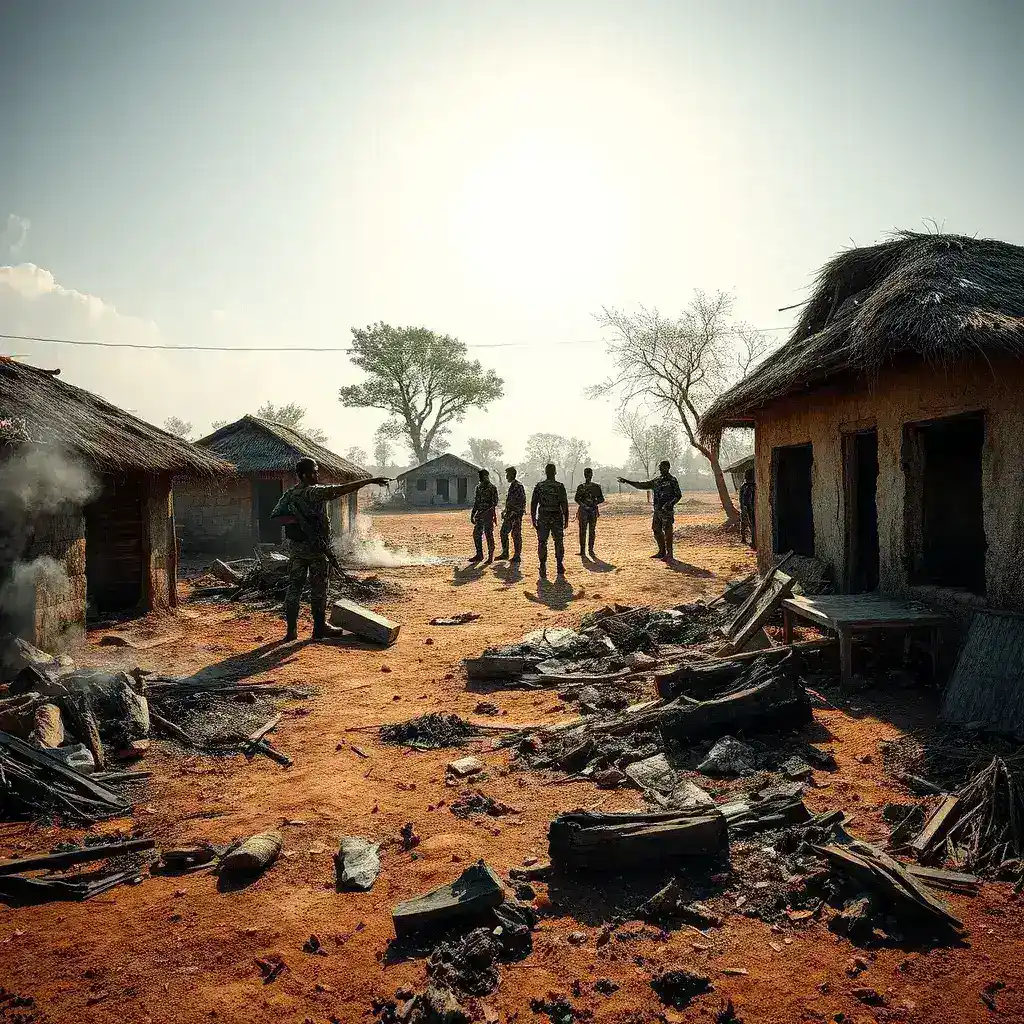
Four houses in the farming community of Keri, located in Ghana’s Oti Region’s Nkwanta South Municipality, were destroyed by fire on Saturday, escalating the ongoing conflict that has gripped the area. The arson attack follows the fatal shooting of a 25-year-old food vendor, Richmond Benye, on the same day, and a separate shooting incident that injured another young man earlier this week, significantly heightening security concerns.
Escalating Violence and Security Response
The latest acts of violence have prompted a robust response from security agencies. A joint contingent of military and police personnel has been deployed to Keri and its environs to restore order and prevent further escalation. The Ghana National Fire Service was also dispatched to combat the blazes and mitigate property damage.
The conflict, the specific origins of which remain under investigation, has cast a dark shadow over the Nkwanta South Municipality. The burning of homes represents a significant and concerning development, moving beyond isolated incidents to affect community infrastructure.
Recent Incidents and Victim Accounts
The tragic death of Richmond Benye, a food vendor, on Saturday has deeply affected the community. Just days prior, on Monday, May 4th, 25-year-old Bright Nkpah sustained gunshot wounds while en route to his home. Mr. Nkpah is currently receiving medical attention for his injuries.
These incidents underscore the volatile nature of the situation. Investigations into both the arson and the shootings are actively underway, with authorities seeking to identify perpetrators and understand the full scope of the conflict.
Expert Analysis and Data Points
While specific data on the Nkwanta South conflict is still emerging, similar inter-ethnic or land-related disputes in other regions of Ghana often involve complex historical grievances and economic factors. According to a 2022 report by the Kofi Annan International Peacekeeping Training Centre (KAIPTC), unresolved land disputes are a significant driver of localized conflicts in West Africa, often leading to cycles of violence and displacement.
The deployment of military and police forces is a standard, albeit serious, response to such escalations. Security analysts note that sustained peace requires not only immediate security measures but also long-term conflict resolution strategies addressing the root causes.
Implications for the Region and Beyond
The burning of homes signifies a dangerous escalation, potentially leading to displacement and further community breakdown. The increased security presence, while necessary for immediate stabilization, can also create an atmosphere of fear and uncertainty.
For residents of Keri and surrounding communities, the immediate future is marked by anxiety and the need for safety. The economic impact on the farming community, with homes destroyed, is also a significant concern.
Looking Ahead
As security operations continue and investigations progress, the focus will be on whether the current measures can effectively de-escalate the violence and prevent recurrence. The ability of authorities to bring perpetrators to justice and to initiate dialogue for lasting peace will be crucial in the coming weeks and months. The long-term stability of the Nkwanta South Municipality hinges on addressing the underlying issues that fuel this conflict.










Leave a Reply