
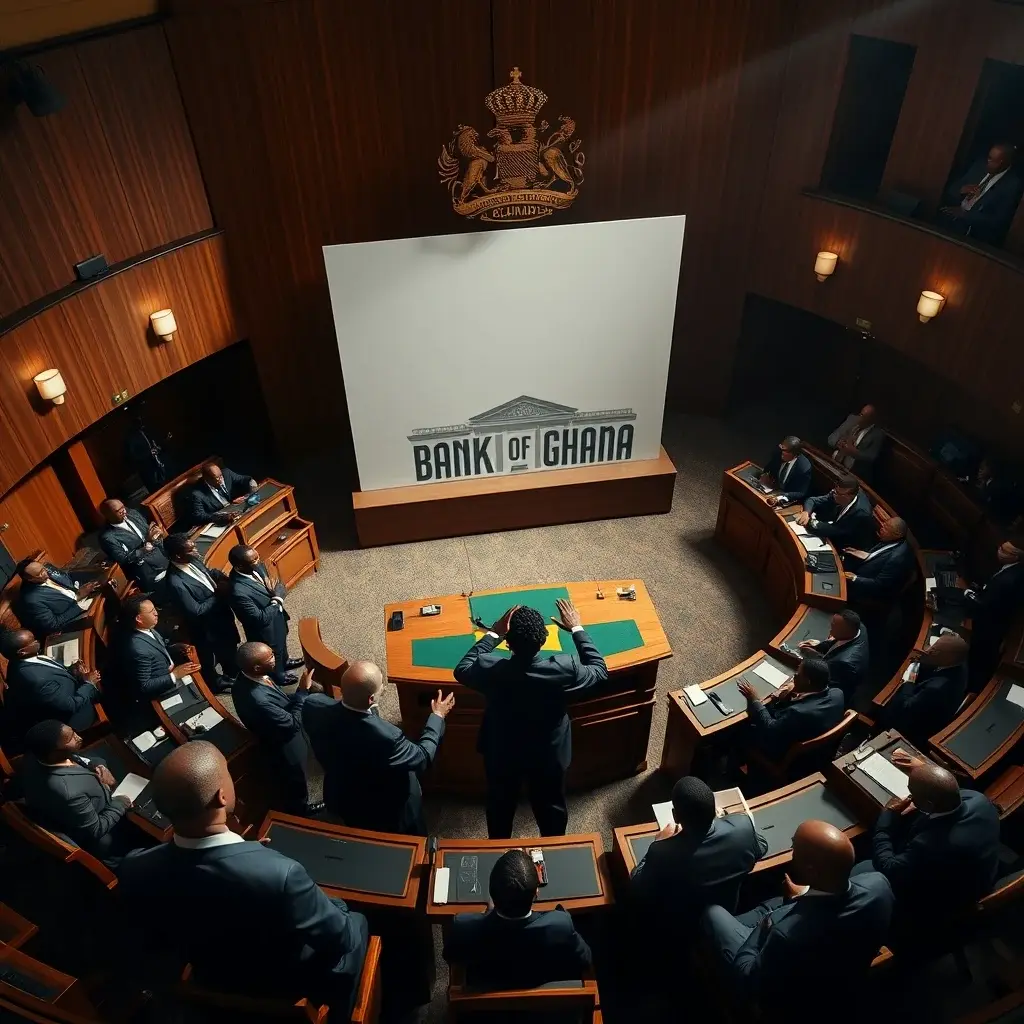
Accra, Ghana – The Minority in Parliament has issued a stern warning against what they perceive as escalating political interference in the operations of the Bank of Ghana (BoG). This concern arose following a press conference held within Parliament’s precincts by members of the National Democratic Congress (NDC), including non-Members of Parliament, to scrutinize the central bank’s audited financial statements. The Minority contends that such actions risk undermining the BoG’s independence and public trust.
Concerns Over Partisan Influence
The Minority caucus expressed alarm over the increasing involvement of partisan actors in matters concerning the central bank’s core functions. They argue that allowing political considerations to influence the Bank of Ghana’s decision-making processes could lead to significant long-term institutional challenges.
Speaking to the media on Sunday, May 3rd, Kojo Oppong Nkrumah, Member of Parliament for Ofoase-Ayirebi, characterized the situation as inappropriate. He cautioned that this trend could set a dangerous precedent for the central bank’s operational integrity.
“The Governor, the Board and the government should take note that this politicisation of the central bank will create issues for the operational independence and credibility of the bank going forward. This must stop,” Nkrumah stated.
Upholding Institutional Independence
The core of the Minority’s argument centers on preserving the Bank of Ghana’s autonomy. They believe that the central bank must operate free from the dictates of political parties to maintain its credibility as a custodian of the nation’s financial stability.
“Mr Governor, if you allow the NDC party to dictate to you how to comply with the law, you will set a precedent that will collapse the operational independence of the bank. The bank is not a political party,” Oppong Nkrumah emphasized.
This intervention highlights a broader debate about the separation between political influence and the management of crucial national institutions like the central bank. The Minority’s stance underscores the importance of robust governance frameworks that shield such institutions from partisan pressures.
Potential Ramifications
The implications of political interference at the Bank of Ghana could be far-reaching. A central bank perceived as politically compromised may struggle to effectively implement monetary policy, control inflation, and maintain financial sector stability.
Investors, both domestic and international, often rely on the perceived independence of a central bank when making investment decisions. Any erosion of this independence could lead to capital flight and reduced foreign direct investment, impacting economic growth.
Furthermore, public confidence in the financial system could be shaken, potentially leading to increased economic uncertainty and challenges in managing national debt and currency stability.
Looking Ahead
The unfolding situation at the Bank of Ghana warrants close observation. The stance taken by the Minority signals a potential increase in parliamentary scrutiny of the central bank’s operations and its relationship with political actors.
How the Bank of Ghana’s leadership responds to these concerns and navigates the delicate balance between legal compliance and political pressures will be critical in the coming months. The precedent set in this instance could shape the future independence and credibility of Ghana’s central bank.










Leave a Reply