
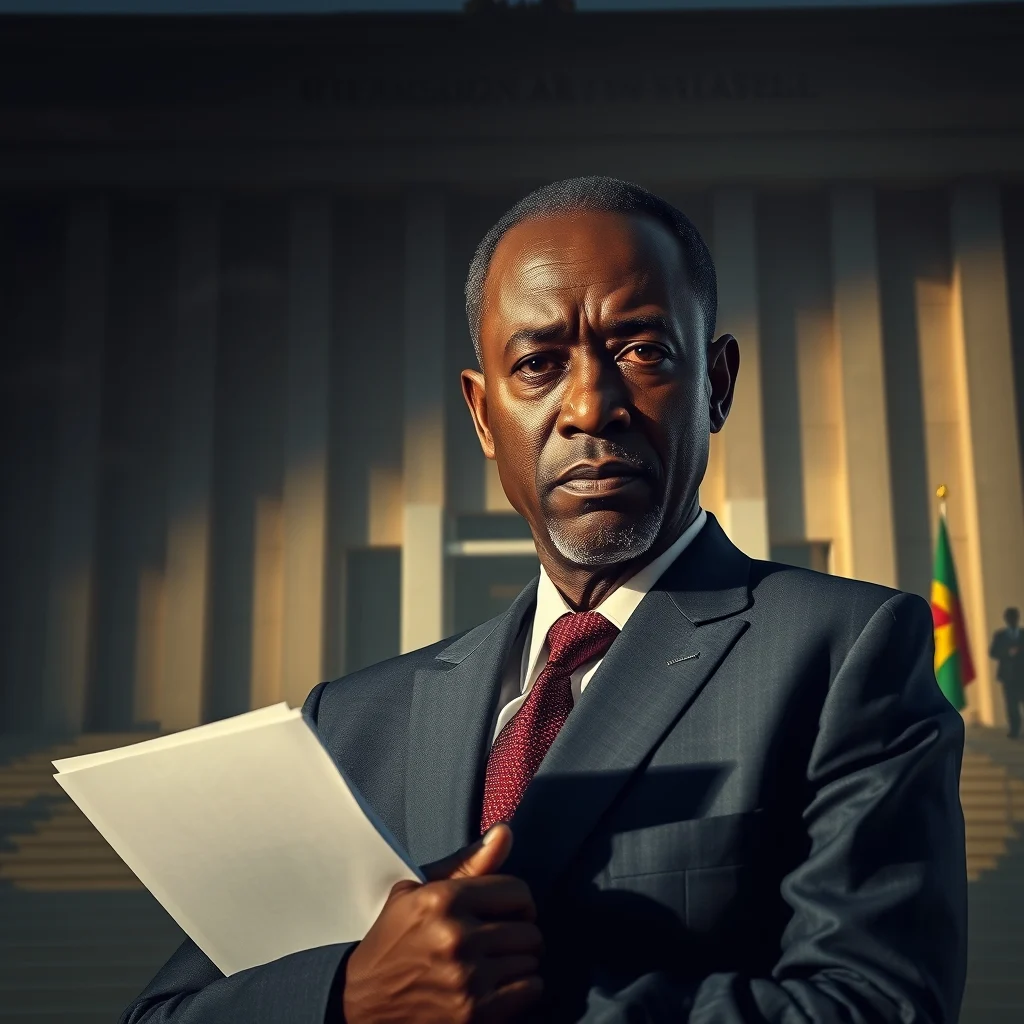
Senegal’s President Bassirou Diomaye Faye appointed economist Ahmadou Al Aminou Lo as the nation’s new prime minister on Monday, following the abrupt dismissal of the previous prime minister and his entire cabinet last week. This significant political shift occurs as the West African nation grapples with a severe debt crisis and an escalating internal rift within the ruling party, threatening legislative deadlock.
A Sudden Rupture in the Ruling Coalition
The political partnership between President Faye and former Prime Minister Ousmane Sonko, once the bedrock of the ruling Patriotes Africains du Sénégal pour le Travail, l’Éthique et la Fraternité (Pastef) party, fractured after months of simmering tensions. Sonko’s dismissal on Friday triggered the dissolution of the entire government.
Pastef rose to power in the March 2024 parliamentary elections on a wave of public discontent, campaigning against the previous administration and widespread speculation about constitutional term limits. President Faye’s ascent was heavily influenced by Sonko, his former mentor, who was barred from running in the presidential election due to a defamation conviction. Faye appointed Sonko as prime minister after his victory, but as president, Faye holds ultimate executive power.
Economic Ideology and the IMF Standoff
The core of the political split lies in fundamental disagreements over how to address Senegal’s dire financial situation. The country is burdened by a debt equivalent to 132% of its GDP. Upon taking office in 2024, Faye and Sonko accused the previous government of misreporting debt, leading to the suspension of a $1.8 billion IMF aid program agreed upon in 2023.
As Senegal navigates this debt crisis, the two leaders diverged on economic strategy. Faye favored negotiating a new aid program with the International Monetary Fund, while Sonko advocated for a more domestic, sovereignist approach, opposing debt restructuring. This policy divergence culminated in Faye’s decision to dismiss Sonko.
The New Premier Pledges Continuity and Stability
President Faye selected Ahmadou Al Aminou Lo, a technocrat with extensive financial expertise, as the new prime minister. Lo previously headed the Senegal branch of the Central Bank of West African States and served as a state minister to the president and secretary-general in Sonko’s government, giving him intimate knowledge of the administration’s workings.
In his first address, Lo acknowledged the nation’s precarious financial state, stating, “We must all be aware of the state of emergency our country currently finds itself in.” He aimed to reassure both domestic and international investors, asserting, “Senegal is a safe and reliable country and intends to remain so.”
Lo framed his appointment as a methodological adjustment rather than an ideological departure from Pastef’s platform. He emphasized continuity with President Faye’s vision, highlighting integrity, transparency, and “economic and cultural sovereignty.” He also praised the outgoing government’s record, including its reliance on domestic funding for economic recovery plans.
A Looming Battle in Parliament
The political crisis now shifts to the National Assembly, where Pastef holds a substantial majority. Ousmane Sonko, having been elected as a lawmaker, sought his mandate’s suspension to become prime minister. Following the resignation of the previous speaker, Sonko is poised to return to the legislature and contest the position of National Assembly president.
If elected speaker, Sonko could leverage his position to challenge President Faye’s authority. He had previously warned of potentially leading the Pastef party into opposition if the president deviated from the party’s agenda, a threat that could hinder the passage of crucial reforms needed for IMF support.
Constitutional Concerns and Future Rivalries
The opposition has raised concerns about the legality of the recent political maneuvers, with one leader denouncing an “institutional coup.” Questions have been raised regarding the process of Sonko’s potential return to parliament and his eligibility to hold both legislative and potential future executive roles.
Significant legislative hurdles remain for the executive, including parliamentary approval of the new prime minister within three months. Furthermore, a recent electoral code reform makes Sonko eligible to run for the presidency, setting the stage for a potential future rivalry with President Faye.
Regional Implications for the ECOWAS Bloc
Senegal’s political developments are closely watched across West Africa, particularly within the Economic Community of West African States (ECOWAS). The nation’s institutional stability has long been a benchmark for democratic health in a region often facing complex transitions and economic instability.
The political showdown offers insights into managing populist movements within established state institutions, a challenge faced by many regional peers. The outcome will influence how leaders balance executive authority with legislative consensus.
The Shared Continental Battle with Sovereign Debt
The policy split in Senegal mirrors broader African economic debates regarding sovereign debt. Like Ghana, Senegal faces the challenge of balancing social demands with fiscal recovery and multilateral conditions.
Sonko’s nationalist stance against debt restructuring resonates with a growing sentiment across Africa weary of austerity. Conversely, Faye’s pragmatic choice of Lo reflects a trend among African leaders prioritizing global market integration. Lo’s background with the regional central bank also highlights the ongoing debate around monetary stability versus radical reform.
As the political crisis unfolds in the National Assembly, Senegal, a historically stable democracy, is at a critical juncture. The coming weeks will test the resilience of its institutions as it seeks to reassure investors and its populace while navigating economic overhaul and internal political dynamics.





Leave a Reply