
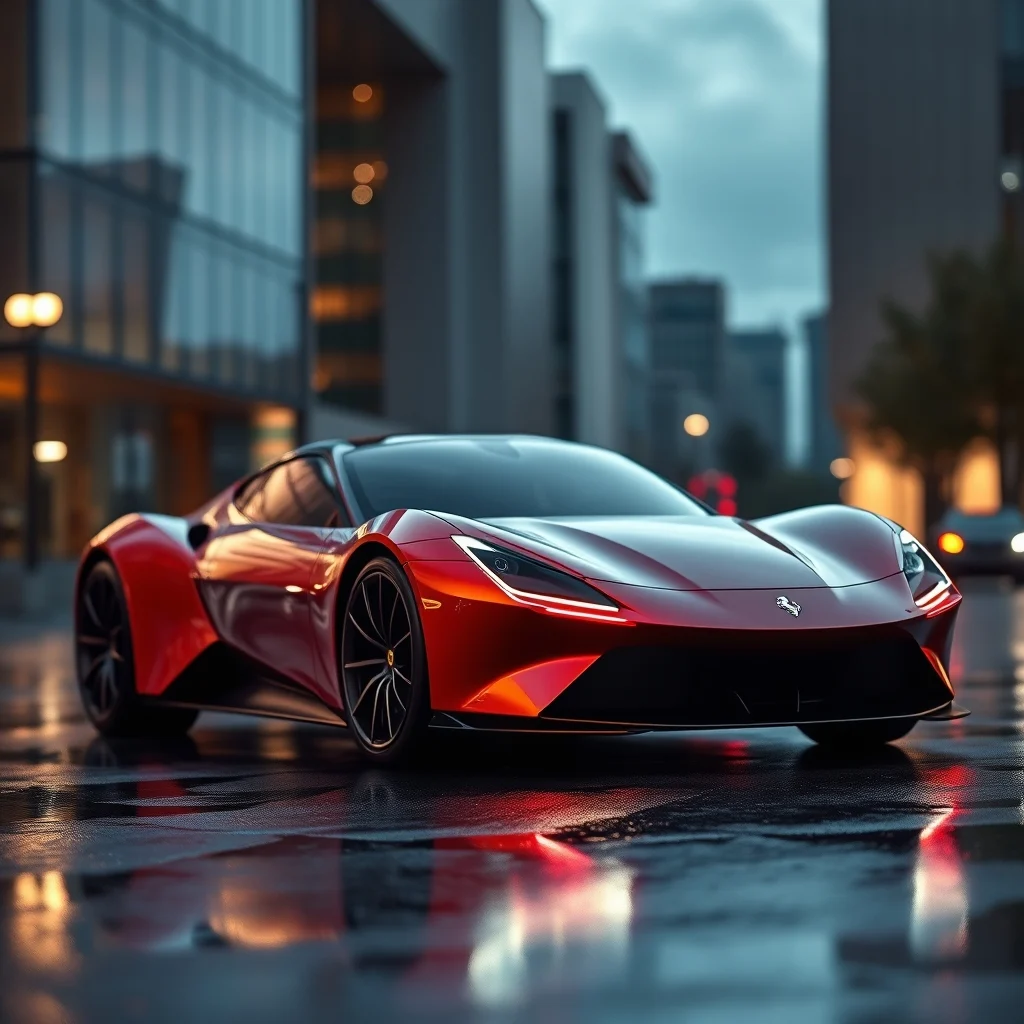
Luxury sports car manufacturer Ferrari has officially unveiled its first-ever fully electric vehicle, the $640,000 Luce, marking a significant departure for the iconic Italian brand. The debut, which took place recently, introduces a five-seater model developed over five years in collaboration with design agency LoveFrom, founded by former Apple design chief Sir Jony Ive.
A New Direction for an Icon
The Luce, meaning “light” in Italian, represents a strategic pivot for Ferrari, a company that had previously expressed reservations about a full electric future, favoring hybrid powertrains. This new model signifies Ferrari’s commitment to electrification, a move that has already generated a polarized reaction online, with commentary ranging from outright dismissal to high praise for its innovative design.
Ferrari CEO Benedetto Vigna stated in Rome that the development of the Luce has been a half-decade-long endeavor. The car features a Ferrari-designed electric motor on each wheel, enabling it to accelerate from 0 to 60 mph in approximately 2.5 seconds. Significantly, Ferrari emphasized that all components are manufactured in-house, a strategy intended to ensure future repairability and protect the vehicle’s long-term resale value.
Navigating a Complex EV Landscape
Ferrari’s entry into the all-electric market occurs at a time of considerable flux within the automotive industry. Major players like Lamborghini and Porsche have reportedly scaled back their EV ambitions, citing challenges such as sluggish demand and intense competition, particularly from Chinese manufacturers who have demonstrated an ability to produce vehicles more rapidly and cost-effectively.
The broader shift towards electric vehicles has encountered numerous hurdles. Automakers such as Ford and Volkswagen have recently re-emphasized their commitment to internal combustion engine vehicles, especially in markets like the US. This shift is partly attributed to waning consumer demand and evolving regulatory landscapes, including past changes in government incentives for EV buyers.
The design of the Luce has drawn parallels to criticisms faced by other luxury brands. Jaguar’s electric concept car, for instance, received backlash for deviating from the brand’s traditional styling cues. Similarly, reactions on social media platforms like X have seen users express concerns about Ferrari’s brand identity, with comments like “Ferrari just killed their brand just like Jaguar did. This is straight to the junkyard trash.”
Design Innovation and Brand Identity
However, not all feedback has been negative. Some enthusiasts have lauded the Luce’s aesthetic, with one post calling it an “absolute masterclass in design” and a “total game changer.” Ferrari’s chief design officer, Flavio Manzoni, acknowledged in an interview with YouTuber Cleo Abram that the concept of an electric Ferrari with a novel design is “polarizing.” He believes, however, that the public will come to appreciate the innovation over time, viewing criticism as an integral part of the design process.
Ferrari has also assured its customer base that it will continue to offer its traditional petrol and hybrid models alongside the new all-electric Luce, aiming to cater to a wider range of preferences and maintain its diverse product portfolio. This strategy acknowledges the varying market demands and preferences for different powertrain technologies.
Competitive Pressures and Market Position
While Ferrari launches its electric contender, rivals face their own set of challenges. Lamborghini has shifted its focus from all-electric to hybrid models, citing insufficient demand for high-end luxury EVs. Porsche, too, has adjusted its EV strategy, reportedly due to weaker sales in key markets like China and potential tariff impacts in the US.
Ferrari, as Europe’s most valuable carmaker, has historically benefited from its strategy of selling highly exclusive vehicles, which has provided a degree of insulation from the pressures impacting mass-market manufacturers. Despite this, Ferrari’s share price has experienced a notable decline of over 25% in the past year, reflecting a broader downturn across the luxury goods sector as global inflation impacts consumer spending on high-end items.
Future Outlook
The introduction of the Luce positions Ferrari at a critical juncture. As the automotive world continues its complex transition towards electrification, the brand’s ability to balance its heritage with forward-thinking innovation will be key. The market’s reception to the Luce, alongside Ferrari’s ongoing strategy for its petrol and hybrid lines, will be closely watched. Observers will be keen to see how the company navigates evolving consumer preferences, technological advancements, and the competitive landscape dominated by both established and emerging players in the coming years.










Leave a Reply