
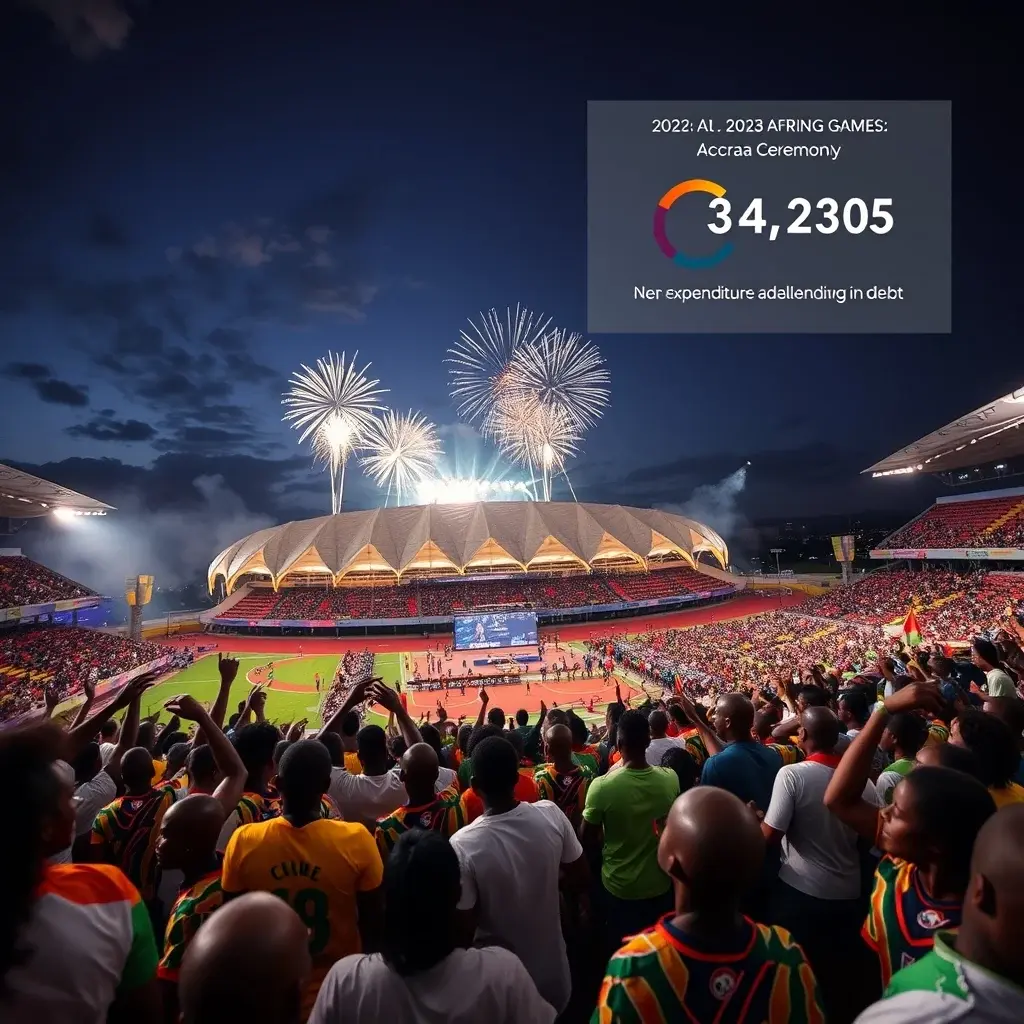
Accra, Ghana – A recent forensic audit by the Ghana Audit Service has revealed significant financial discrepancies surrounding the 2023 African Games, with over GH¢208 million in liabilities remaining unpaid despite a total expenditure of GH¢2.245 billion. The report, released on February 26, 2026, scrutinized the financial management and fund utilization for the continental sporting event hosted by Ghana in March 2024.
Context of the Games and Audit
The 13th African Games, held across Accra, Kumasi, and Cape Coast, marked Ghana’s debut as a host nation for this prestigious event. The Games necessitated substantial investment in infrastructure, including the construction of the Borteyman Sports Complex and the renovation of facilities like the University of Ghana Sports Stadium. While the event itself was widely lauded for its organizational success and improved sporting infrastructure, particularly its opening ceremony, the substantial expenditure quickly became a focal point of public and political debate.
Key Findings of the Audit
The Ghana Audit Service’s comprehensive report detailed that GH¢2,245,515,037.44 was received and spent on the Games from various funding streams. However, a significant finding was the existence of outstanding liabilities totaling GH¢208,583,739.49 as of the audit’s conclusion. These liabilities are broken down into GH¢155,123,020.15, US$4,118,155.65, and €288,775.11 owed to numerous entities and service providers involved in the Games’ organization.
Allegations and Recommendations
While the audit report did not uncover criminal misconduct, it did identify financial irregularities. Consequently, the Auditor-General recommended sanctions against several former government officials and appointees. Among those cited are former Minister for Youth and Sports Mustapha Ussif, former Chief Director of the Ministry William Kartey, and former Chairman of the Local Organising Committee (LOC) Dr. Kwaku Ofosu-Asare. The report also recommended the refund of certain monies associated with these identified irregularities.
Broader Implications for Public Finance
The release of this audit report is expected to intensify calls for greater transparency and accountability in the management of public funds, especially concerning large-scale national projects and international events. The significant expenditure on the African Games occurred during a period when Ghana was implementing fiscal reforms under an International Monetary Fund (IMF)-supported economic recovery program. This has led economic analysts and civil society groups to repeatedly emphasize the need for stringent oversight on such investments.
Future Scrutiny and Investments
The findings are likely to trigger further parliamentary and public scrutiny into procurement decisions, contract awards, and the long-term value derived from the infrastructure developed for the Games. The African Games represented one of Ghana’s largest sporting investments in recent memory, intended to boost sports development, tourism, and international standing. The ongoing debate will likely focus on ensuring that future large-scale national projects are managed with maximum financial prudence and accountability, balancing developmental aspirations with fiscal responsibility.
What to Watch Next
Attention will now turn to how government officials respond to the audit’s recommendations, including any potential sanctions or recovery efforts. The public will also be watching for how these findings influence future government spending on major events and infrastructure projects, potentially leading to stricter procurement protocols and enhanced oversight mechanisms to prevent similar financial outcomes.




Leave a Reply