
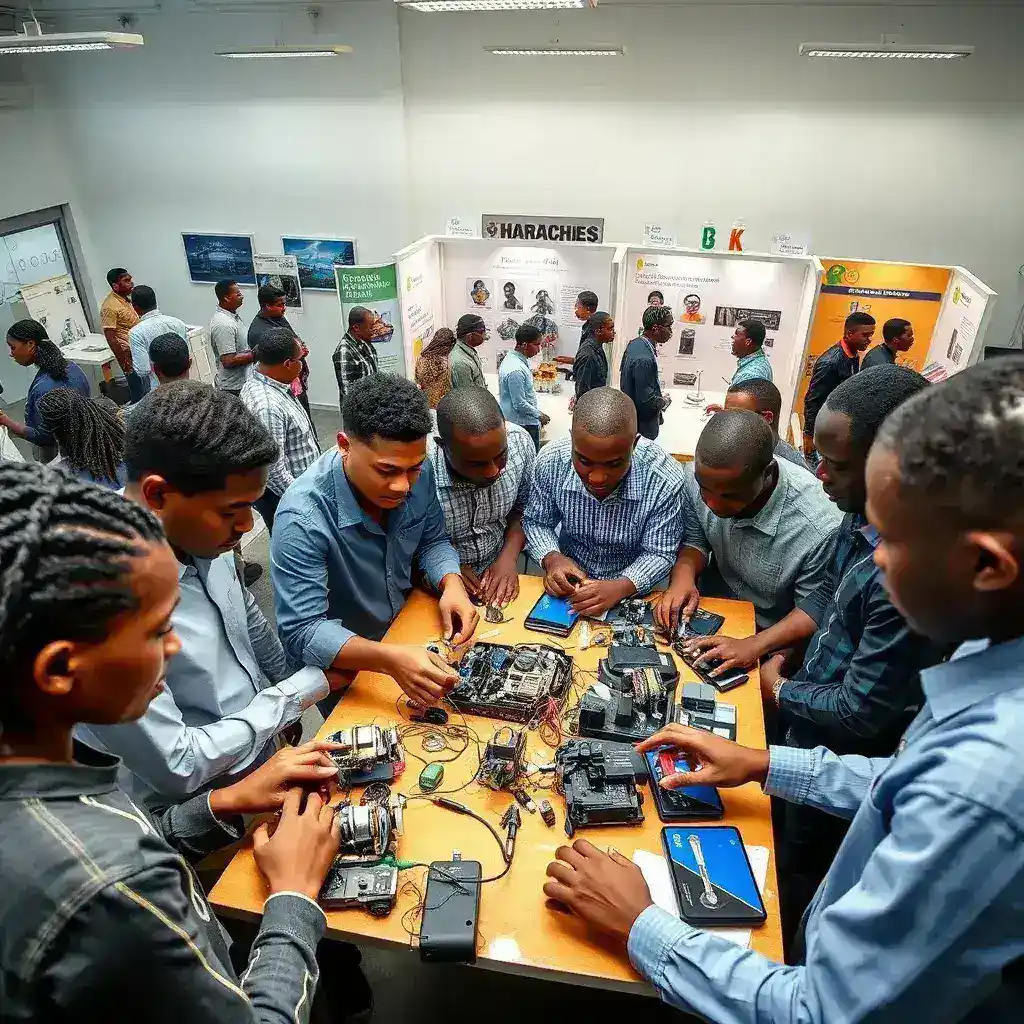
President John Mahama declared that Technical and Vocational Education and Training (TVET) must be recognized as a primary driver of Ghana’s national development, rather than a secondary educational pathway. He made these remarks during the opening of the 4th Applied Research Conference of Technical Universities in Ghana, held in Effia, Western Region. The conference’s theme, “Advancing TVET for Innovation, Technology Transfer and Entrepreneurship for Sustainable Development,” underscores the critical role of practical skills and applied research in fostering economic growth and creating employment opportunities.
Shifting Perceptions of TVET
Historically, TVET in many nations has been perceived as an option for students who do not pursue traditional academic routes. President Mahama’s address signifies a deliberate effort to reframe this narrative within Ghana.
He emphasized that technical universities are pivotal in generating solutions tailored to meet the specific needs of various industries. This focus aims to bridge the gap between academic learning and the practical demands of the job market, thereby fostering innovation and entrepreneurship.
Strategic Investments in Technical Education
The government is backing this strategic shift with concrete financial commitments. President Mahama announced a GH¢10 million support fund dedicated to technical universities. This funding is intended to bolster research initiatives and enhance the capacity of these institutions.
Furthermore, additional resources are earmarked for doctoral training and advanced research programs. This investment signals a commitment to developing a highly skilled workforce capable of driving technological advancement.
The President also revealed significant expansion plans for technical and higher education infrastructure. These include the establishment of a new science university in the Savannah Area and the creation of two new technical universities in Techiman and Jasikan. These developments are expected to increase access to specialized education and cater to regional development needs.
Focus on STEM and Future Technologies
In line with global trends, President Mahama underscored the importance of investing in Science, Technology, Engineering, and Mathematics (STEM) education. He specifically highlighted the need to prepare the younger generation for emerging fields such as artificial intelligence and robotics.
This forward-looking approach aims to equip Ghanaian youth with the skills necessary to thrive in an increasingly automated and technologically driven world economy. The integration of these advanced subjects into the curriculum is seen as crucial for Ghana’s future competitiveness.
Supporting Inclusive and Advanced Learning
Beyond the general push for TVET and STEM, the government is also committed to inclusive education. A GH¢50 million annual tertiary support fund will be established to assist persons with disabilities in accessing higher education.
The President lauded the contributions of lecturers, researchers, and students, recognizing their efforts in driving national development through their innovative work and practical skill acquisition. Their dedication is seen as instrumental in translating educational advancements into tangible societal benefits.
Implications for Ghana’s Development
The renewed emphasis on TVET and applied research signals a strategic pivot in Ghana’s development agenda. By elevating vocational and technical training, the nation aims to cultivate a more skilled and adaptable workforce.
This approach is expected to lead to increased industrial output, job creation, and a stronger entrepreneurial ecosystem. The focus on innovation and technology transfer from technical universities could spur the development of local solutions to national challenges.
The planned expansion of technical universities and the focus on future-ready skills like AI and robotics suggest a long-term vision for Ghana’s economic diversification and technological advancement. What remains to be seen is the implementation strategy for these ambitious plans and how effectively the new funding will be utilized to achieve the desired outcomes in driving sustainable development.










Leave a Reply