
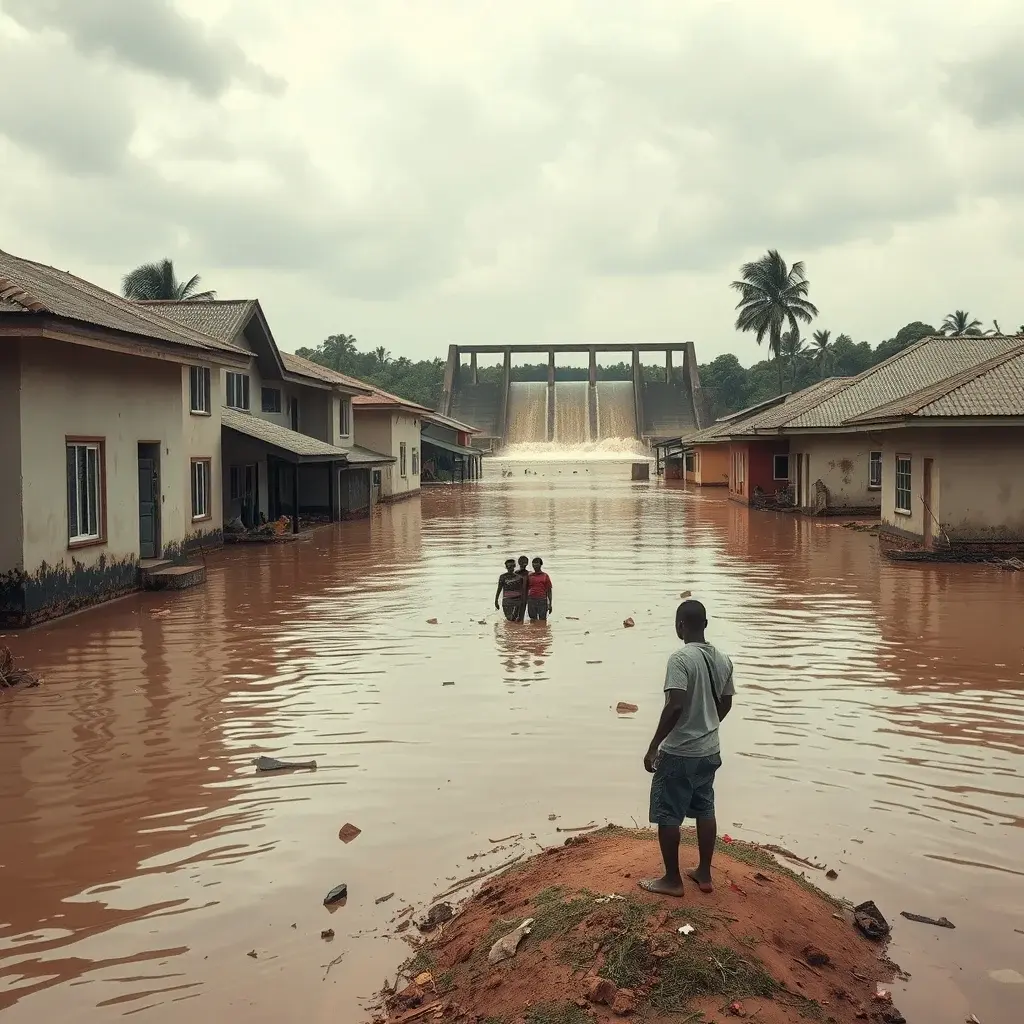
Residents of Sampah Valley in the Weija community, Greater Accra Region, are facing the grim prospect of structural demolitions as the National Disaster Management Organisation (NADMO) warns of potential action following the spillage of the Weija Dam. The spillage, initiated to relieve pressure on the dam, has exacerbated existing flooding in the area, prompting authorities to consider drastic measures to prevent further loss of life and property.
Assessing the Threat
NADMO officials conducted an assessment of the flooded Sampah Valley, engaging with affected residents to understand the scope of the crisis. Isaac Nelson Aklorbortu, the Ga South Municipal Director of NADMO, stated that pulling down certain structures might be the only effective solution to mitigate ongoing flood risks and ensure community safety.
The situation highlights a critical juncture where immediate safety concerns clash with the immediate needs of displaced residents. The spillage, a necessary measure for dam integrity, has inadvertently created a secondary disaster for those living in its downstream path.
A History of Vulnerability
The Weija Dam, a vital water source for Accra, has a history of controlled spillages, particularly during the rainy season. These spillages are designed to prevent the dam from exceeding its structural limits. However, communities situated in downstream areas, often built on flood plains or in low-lying zones, bear the brunt of these operations.
The current crisis in Sampah Valley is not an isolated incident but rather a recurring issue exacerbated by development patterns. Experts have long pointed to inadequate urban planning and enforcement as key contributors to increased vulnerability in flood-prone areas.
Enforcement Lapses and Uncompensated Displacement
Shine Demordzi, the Zonal Director of NADMO, pointed to a lack of stringent oversight and weak enforcement by the Municipal Assembly as significant factors contributing to the current predicament. He indicated that developments in areas susceptible to flooding were allowed to proceed without adequate regulation.
Crucially, Demordzi also warned that residents whose properties might be demolished as part of the mitigation efforts would not receive compensation. This stance underscores the difficult choices authorities face between public safety and the rights of property owners, particularly when development has occurred in disregard of known risks.
Residents’ Plight
Affected residents shared harrowing accounts of the destruction wrought by the floods. Many reported significant damage to their properties, with homes inundated and belongings lost. The immediate aftermath of the spillage has left numerous families displaced and without shelter.
Appeals for urgent assistance have been widespread, with residents expressing despair over their immediate living conditions. The lack of suitable overnight accommodation adds another layer of urgency to the crisis, demanding swift humanitarian intervention.
Broader Implications and Future Outlook
The situation in Sampah Valley serves as a stark reminder of the complex challenges posed by urban development in flood-prone regions. It raises critical questions about land-use planning, building permit regulations, and the enforcement capabilities of municipal authorities.
For residents, the threat of demolition without compensation underscores the need for clearer communication and potentially revised policies regarding disaster preparedness and response in such scenarios. The long-term viability of communities located in high-risk flood zones will undoubtedly be a subject of intense scrutiny.
Moving forward, stakeholders will be watching closely to see how NADMO and the Ga South Municipal Assembly navigate the delicate balance between immediate safety imperatives and the welfare of the affected population. The enforcement of building codes and the management of informal settlements in hazard-prone areas will be critical to preventing future crises of this magnitude.








Leave a Reply