
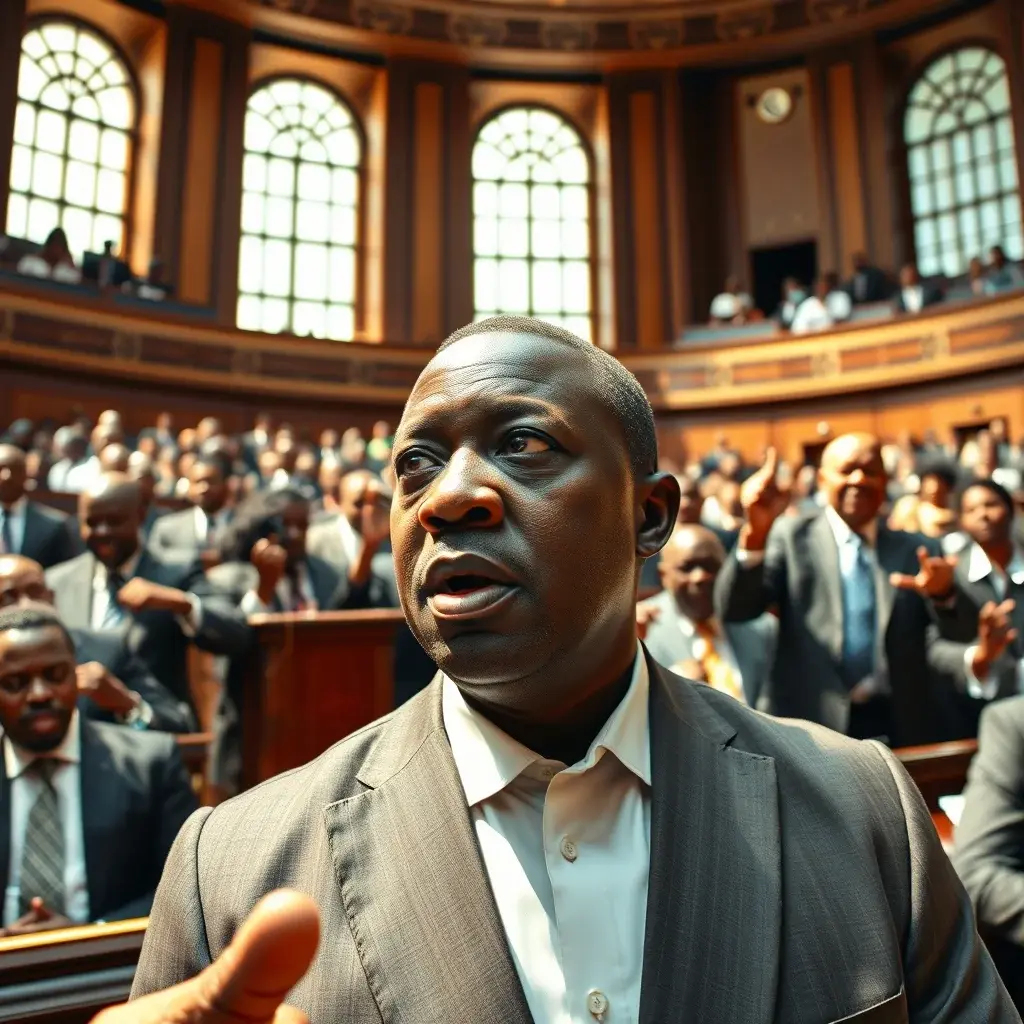
Accra, Ghana – Parliament is on the verge of swiftly passing the reintroduced LGBTQ bill, with Majority Chief Whip Rockson Nelson Dafeamekpor indicating that the legislative process could conclude within weeks. The South Dayi MP revealed on Tuesday that the committee tasked with reviewing the legislation has finalized its work and is set to present its report to the House this Thursday, paving the way for immediate debate and potential passage.
Committee Report Ready for Presentation
The impending presentation of the committee’s report marks a significant step in the bill’s journey through Parliament. Mr. Dafeamekpor confirmed that lawmakers anticipate receiving two committee reports, including the one pertaining to the controversial “Ghanaian family values bill,” commonly referred to as the LGBTQ bill.
“The committee has done its work. They will be laying the report on Thursday,” he stated, emphasizing the readiness of the legislative body to proceed.
Accelerated Legislative Process Explained
Once the report is formally laid before Parliament, the process can move rapidly. Mr. Dafeamekpor explained that the debate at the second reading stage can commence immediately after the report is presented. Following the adoption of the report, the bill moves into the consideration stage.
“When it’s laid, we can take the report, debate it, that’s as part of the principles for second reading, and adopt it,” he elaborated. “Once it’s adopted, we move into consideration.”
The Majority Chief Whip suggested that the consideration stage could even be completed the following day, potentially leading to the bill’s passage shortly thereafter. “Consideration, we can even decide to do consideration on Friday, and pass,” he indicated.
Precedent and Previous Stalling
Mr. Dafeamekpor defended the expedited approach by asserting that Parliament is not starting the legislative process anew. He pointed out that the bill had previously gone through all stages and was passed by the House in an earlier session.
The failure of that previous iteration to become law was attributed to the former President’s refusal to assent to it. “It was a certain president who decided not to sign,” Mr. Dafeamekpor remarked.
Crucially, he stressed that the core substance of the current bill remains largely unchanged from what Parliament had already approved. “So the terms of the bill are essentially what Parliament had already passed,” he affirmed.
Confidence in Swift Passage
When questioned about the timeline for the bill’s passage this year, Mr. Dafeamekpor expressed strong confidence that Parliament would conclude its work within weeks, not months. “Yes, in a couple of weeks, not even months,” he projected.
He anticipated that passage could occur soon after the second reading and consideration stages are completed. “We’ll pass it once we do the second reading on Thursday or Friday, and with consideration, we can pass it.”
Defending Urgency and Avoiding Repetition
The Majority Chief Whip also preemptively addressed potential criticisms regarding the accelerated legislative procedure. He cautioned the opposition New Patriotic Party (NPP) against accusing the Majority of abusing parliamentary urgency procedures.
Mr. Dafeamekpor argued that the speed is justified because lawmakers are already intimately familiar with the bill’s contents, having debated and passed it previously. “Because it will be rapidly done, because we cannot be reenacting what we have already read,” he explained.
Looking Ahead
The swift progression of the LGBTQ bill through Parliament signals a determined effort by the Majority to enact the legislation. Observers will be watching closely to see if the anticipated timeline holds and how the opposition and civil society groups respond to the expedited process. The upcoming days will be critical in determining the bill’s fate and its implications for LGBTQ rights and social discourse in Ghana.








Leave a Reply