
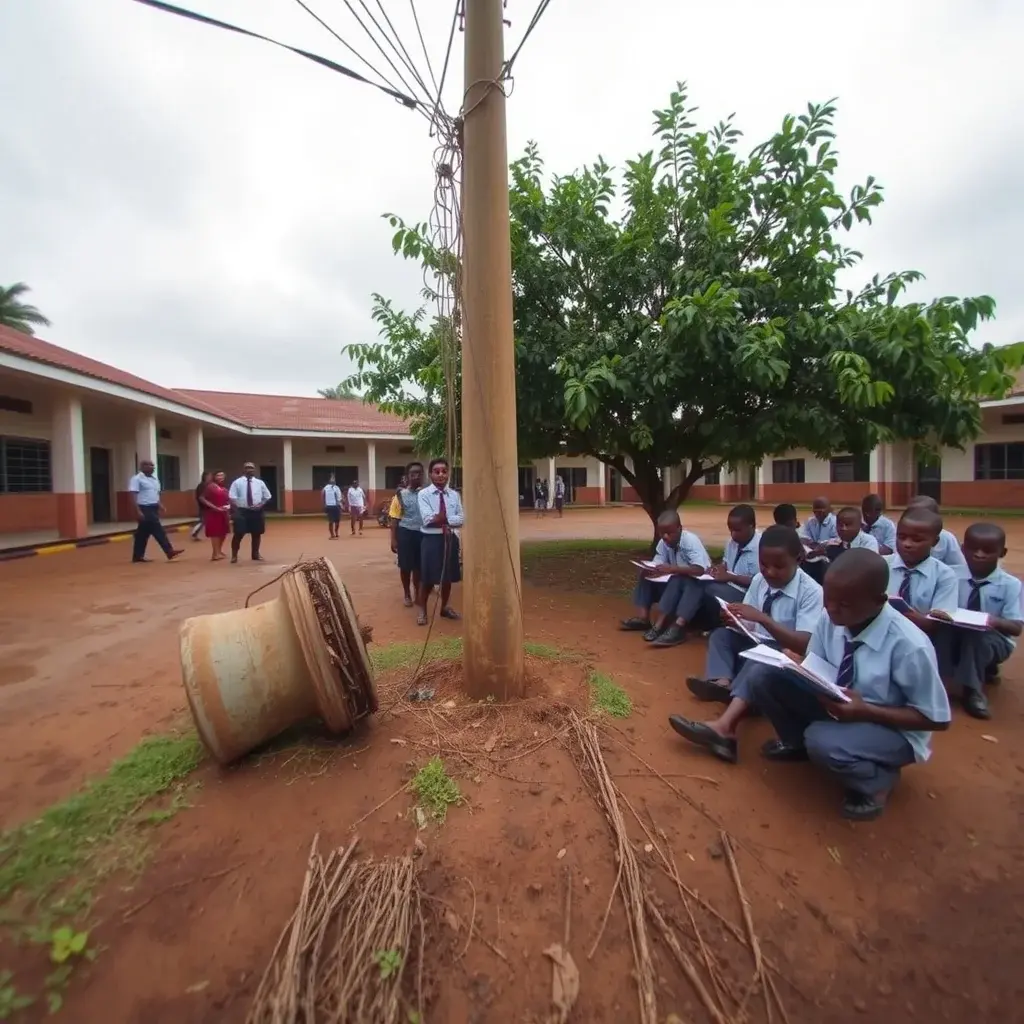
Electricity has been restored to Tanyigbe Senior High School in the Ho Municipality of the Volta Region by the Electricity Company of Ghana (ECG) after a severe rainstorm caused a week-long power outage. The disruption, which began on May 22, significantly impacted academic activities, especially for final-year students preparing for the West African Senior School Certificate Examination (WASSCE).
Storm Damage Leads to Extended Blackout
A powerful rainstorm, characterized by heavy rains and strong winds, led to a critical infrastructure failure at the school. A fallen tree, uprooted by the storm, struck an electricity pole supplying power to the Tanyigbe SHS campus. This incident plunged the entire school into darkness, halting essential services and academic pursuits.
Academic Activities Severely Hampered
The prolonged power outage created an untenable learning environment for students and staff. Teaching and learning processes were significantly hampered, with particular concern for the final-year students. These students were in the crucial final stages of their preparation for the 2026 WASSCE examinations.
In the absence of reliable electricity, students resorted to studying late into the night using makeshift lighting solutions such as torchlights. This improvisation underscored the challenging conditions they faced. Furthermore, the school’s computer laboratory, a vital resource for modern education and examination preparation, was forced to shut down temporarily.
Media Attention Prompts ECG Intervention
Following reports by Myjoyonline that highlighted the plight of Tanyigbe SHS, the Electricity Company of Ghana’s Volta regional branch took action. The media coverage brought the issue to the forefront, prompting a prompt response from the power distribution company to address the damaged infrastructure and restore supply.
Restoration Brings Relief and Resumption of Normalcy
The ECG’s intervention successfully restored power to the campus, bringing much-needed relief to the school community. School authorities expressed their gratitude towards ECG and all other stakeholders involved in resolving the outage. Normal teaching and learning activities have now resumed smoothly.
The restoration of electricity is particularly significant for the WASSCE candidates. They can now adequately prepare for their remaining examinations without the added stress of power disruptions. The school management commended the response once public attention was drawn to their predicament.
Broader Community Impact and Future Needs
Tanyigbe Senior High School serves as an educational hub for several farming communities in the Ho Municipality. These include Klave, Shia, Avee, Nyive, Tokokoe, Atikpui, and the Akoefe enclave. The power outage, therefore, had a ripple effect, impacting the broader community that relies on the school’s resources and the educational continuity it provides.
While expressing thanks for the swift restoration, school authorities also took the opportunity to appeal for continued support. They highlighted the need for ongoing investment in the school’s infrastructure to prevent future disruptions and enhance the learning environment.
Looking Ahead: Infrastructure Resilience
The incident at Tanyigbe SHS underscores the vulnerability of essential public infrastructure to extreme weather events. As climate patterns shift, leading to potentially more frequent and intense storms, the resilience of power supply to educational institutions and other critical facilities will become increasingly important. Stakeholders will likely need to focus on proactive measures, such as improved vegetation management around power lines and the reinforcement of electrical infrastructure, to mitigate the impact of such outages in the future. The swiftness of the response after media attention also raises questions about the mechanisms for escalating and resolving infrastructure issues that affect public services, particularly in remote or underserved areas.










Leave a Reply