
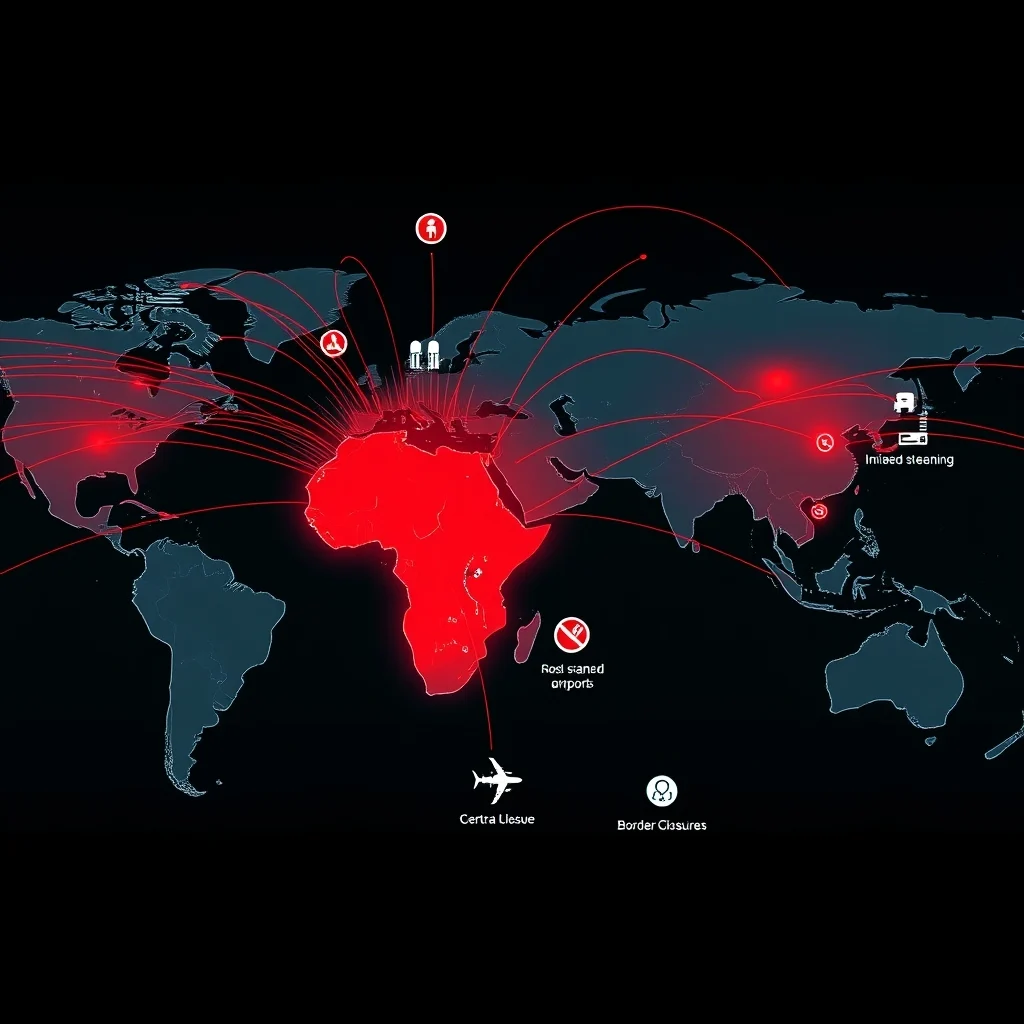
The World Health Organization (WHO) declared an Ebola outbreak in the Democratic Republic of Congo (DRC) a Public Health Emergency of International Concern on Saturday, May 17, citing a high risk of regional spread, prompting numerous countries worldwide to implement heightened travel restrictions and screening measures.
Global Response to Rising Ebola Threat
The escalating situation in the DRC has triggered a swift and varied international response, with nations implementing a range of measures from outright travel bans to enhanced health screenings at entry points. This coordinated effort aims to contain the potential spread of the deadly virus beyond the affected region.
The United States has taken significant steps, initially banning non-citizens who recently traveled to the DRC, Uganda, or South Sudan. This ban was later extended to include green card holders who have been in these countries within the past 21 days. Furthermore, Hartsfield-Jackson Atlanta International Airport was added to the CDC’s travel funnelling list, joining Washington Dulles, where U.S. passport holders returning from affected areas undergo mandatory screening, including temperature checks and travel history verification.
Uganda has opted for a more stringent approach, closing its border with the DRC for four weeks, with immediate effect. While essential operations like humanitarian aid, security, and cargo transport are exempt, any authorized individuals entering Uganda from the DRC must undergo a mandatory 21-day self-isolation period.
Canada has also imposed a 90-day ban on residents from the DRC, Uganda, and South Sudan. Canadian citizens, permanent residents, and other foreign nationals returning from these regions without symptoms are required to quarantine for 21 days from May 30.
Several Caribbean nations have joined the containment efforts. The Bahamas has banned residents from the DRC, Uganda, and South Sudan for 30 days and is implementing enhanced health screenings and potential quarantines for foreigners with recent travel history to these countries. The Cayman Islands announced enhanced screening measures following the arrival of passengers with recent travel history to the DRC.
Varied Screening and Surveillance Measures
Other nations have focused on robust screening and advisories. India has launched screening and surveillance measures at airports and entry points, issuing advisories and urging citizens to avoid non-essential travel to the affected countries. Jordan suspended entry for travelers from the DRC and Uganda on May 19, a measure Bahrain mirrored for foreign travelers from South Sudan, the DRC, and Uganda for 30 days.
Thailand is allowing passengers from the DRC and Uganda to enter only through Suvarnabhumi Airport, where they will undergo screening. Travelers from or through these countries will face mandatory quarantine for at least 21 days, with symptomatic individuals referred to isolation for the same duration.
Kenya’s Ministry of Health has enhanced screening at high-risk entry points and activated isolation and holding facilities at designated border locations. Mexico’s Health Secretary outlined tighter screening measures at airports, advising against travel to Congo and requiring arrivals from the country to observe a 21-day quarantine.
Divergent Views on EU Travel Restrictions
In contrast to many nations, the European Union’s Health Security Committee concluded that entry screenings were not necessary for passengers arriving from the DRC and Uganda, citing a low risk to the EU population. This divergence highlights differing risk assessments and preparedness levels across global health authorities.
Implications and Future Outlook
The global implementation of diverse travel restrictions underscores the seriousness with which the international community views the Ebola outbreak. For travelers, this means increased scrutiny, potential delays, and mandatory quarantine periods, impacting both leisure and business travel. Industries reliant on international movement, such as tourism and aviation, may face further disruptions.
The varying approaches to border control and screening will be critical to monitor. The effectiveness of these measures in preventing international spread will determine future policy adjustments. Public health officials will closely observe case numbers in neighboring countries and the efficacy of the implemented containment strategies. The ongoing evolution of the outbreak and the global response will dictate the future of international travel advisories and restrictions in the coming weeks and months.









Leave a Reply