
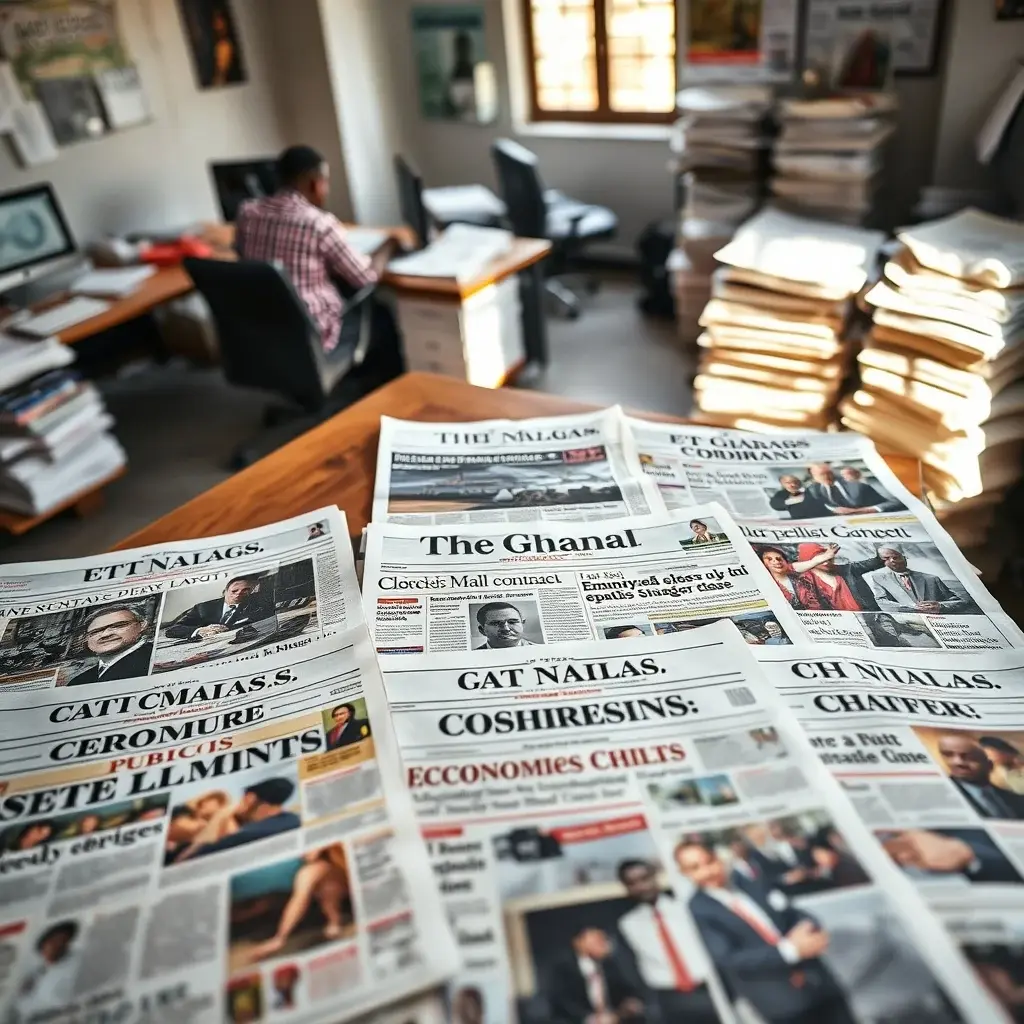
Accra, Ghana – May 28, 2026 – Newspapers across Ghana today, May 28, 2026, are highlighting a national push for dialogue on pressing socio-economic issues, alongside significant coverage of economic challenges facing the nation. Front pages reflect a media landscape prioritizing public discourse and the economic realities impacting citizens.
Context: The Importance of Front Pages
Newspaper front pages serve as a crucial barometer of public interest and media focus in any nation. In Ghana, like many countries, these lead stories often dictate the national conversation for the day, influencing public opinion and policy discussions. The selection of headlines reveals the priorities of media organizations and, by extension, the issues deemed most critical by journalists and editors.
Key Themes Emerge
Several overarching themes dominate the headlines today. A significant portion of coverage is dedicated to calls for broader national dialogue, suggesting a perceived need for consensus-building on key developmental strategies. This focus implies that current approaches may be facing scrutiny or that there is a desire for more inclusive decision-making processes.
Intertwined with this is the persistent issue of economic challenges. Reports likely detail inflation rates, currency fluctuations, or specific sector performance, painting a picture of the current economic climate. These economic narratives are often framed within the context of their impact on the average Ghanaian, underscoring the human element of fiscal policy.
Divergent Perspectives and Specific Issues
While a unified call for dialogue is evident, the specific subjects of this proposed discussion may vary. Some papers might focus on political stability and governance, urging discussions on electoral reforms or anti-corruption measures. Others could be zeroing in on economic policy, advocating for debates on fiscal discipline, investment strategies, or job creation initiatives.
The economic coverage is expected to be multifaceted. Readers can anticipate analyses of government spending, the performance of key industries like agriculture and mining, and the impact of global economic trends on the Ghanaian economy. Data points from institutions such as the Bank of Ghana or the Ghana Statistical Service are likely being cited to substantiate these reports.
Expert Insights and Data
Leading financial analysts and economists are probably quoted extensively, offering interpretations of the current economic situation. These experts often provide context to the raw data, explaining the underlying causes of economic trends and projecting potential future outcomes. Their insights are vital for readers seeking a deeper understanding beyond the headlines.
For instance, a report might cite a recent World Bank or IMF projection for Ghana’s GDP growth, contrasting it with local expert opinions. Similarly, discussions on inflation might reference figures from the Ghana Statistical Service, with commentary from economic think tanks on the effectiveness of monetary policy measures.
Implications for the Public and Industry
The emphasis on national dialogue suggests a public appetite for greater transparency and participation in governance. For citizens, this could translate into increased opportunities for civic engagement and a more informed public discourse on national priorities. It signals that the media is responding to a perceived public desire for more collaborative problem-solving.
For policymakers and industry leaders, the front pages serve as a direct reflection of public sentiment and media scrutiny. The highlighted issues demand attention and likely indicate areas where policy adjustments or new initiatives may be required. The economic narratives underscore the ongoing need for robust and sustainable economic management.
Looking Ahead
The convergence of calls for dialogue and the spotlight on economic realities sets a clear agenda for Ghana in the coming weeks and months. It will be crucial to observe whether these front-page discussions translate into concrete actions and sustained public engagement. The effectiveness of proposed dialogues and the government’s response to economic pressures will be key indicators to watch. Furthermore, the media’s continued focus on these themes will shape the national conversation and influence public perception of the country’s trajectory.





Leave a Reply