
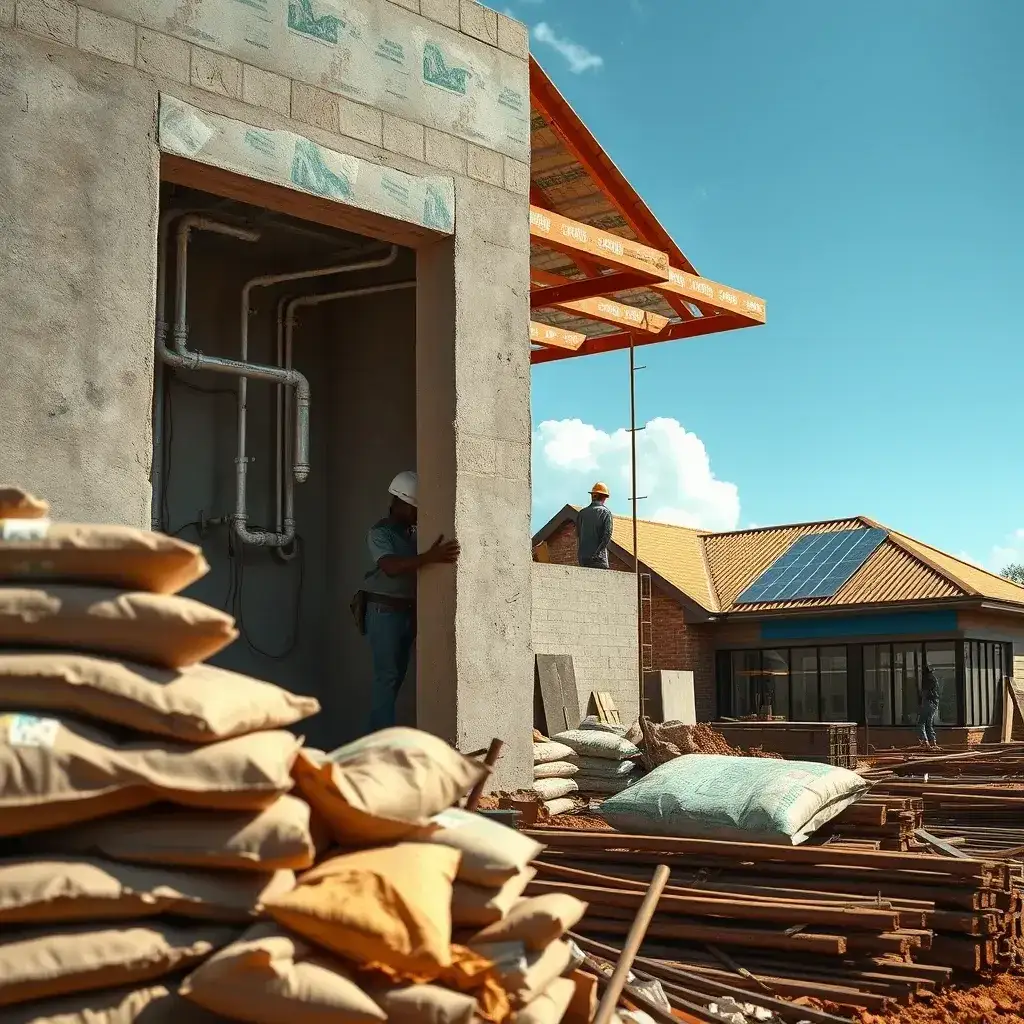
Ghana’s building inflation held steady at 2.2 percent in April 2026, according to the Ghana Statistical Service (GSS). This stability in overall construction costs comes despite significant price increases in specific building materials, while others saw declines. The data reflects a complex market environment for those undertaking construction projects in the country.
Context: Tracking Construction Costs
The Ghana Statistical Service tracks construction costs through the Prime Building Cost Index (PBCI). This index measures the average cost of a basket of construction materials and services. A stable inflation rate suggests that while some components of building are becoming more expensive, others are offsetting these increases, leading to a net flat rate for the overall cost of construction.
Key Drivers of Inflation Identified
The latest PBCI report, released on May 27, 2026, indicates that the index rose to 136.1 in April 2026 from 133.2 in April 2025. This translates to a 2.2 percent increase in the average cost of building materials over the year.
On a month-on-month basis, prices of building inputs saw a 1.5 percent increase between March and April 2026. The GSS report highlighted glazing, plumbing, roofing sheets, and electrical works as the primary contributors to this inflation.
Glazing experienced the highest year-on-year inflation at 16.2 percent. Plumbing followed with 14.5 percent, and roofing sheets recorded 13 percent inflation. Electrical works emerged as the most significant contributor to the sector’s overall inflation, accounting for 52.8 percent of the total increase. Glazing contributed 37.4 percent, while metalwork and plumbing added 23 percent and 22.3 percent, respectively.
Declines in Key Materials Offer Relief
Despite the rising costs in certain areas, significant price drops were observed for essential materials like cement and steel. Cement inflation fell sharply to negative 11.2 percent, and steel inflation recorded negative 3.6 percent. These decreases can help mitigate the impact of rising costs in other categories.
Labor Costs Show Slowdown
Labor inflation also showed signs of slowing, decreasing to 1 percent in April 2026 from 1.6 percent in March 2026. However, monthly labor costs still saw an increase of 0.8 percent, indicating continued upward pressure from wages.
Revised Index for Better Accuracy
Government Statistician, Alhassan Iddrisu, explained that the revised PBCI now uses 2023 as its base year. The index tracks 406 items across all 16 regions of Ghana. This updated methodology aims to provide more accurate and timely data on construction cost trends nationwide.
Advice for Homebuilders
The Ghana Statistical Service advises households planning construction projects to leverage the current lower prices for materials such as cement and steel. Simultaneously, they recommend careful budgeting for more expensive items, including glazing, plumbing, and roofing sheets, to manage overall project costs effectively.
Looking Ahead
The continued stability in Ghana’s building inflation, despite volatile material costs, suggests a complex interplay of supply and demand factors. The GSS’s enhanced PBCI offers a clearer picture for industry stakeholders. Future trends will likely depend on global commodity prices, local supply chain efficiencies, and government infrastructure spending. Consumers and developers will need to closely monitor the price movements of individual components to make informed decisions, particularly regarding the high-inflationary items like glazing and electrical works.








Leave a Reply