
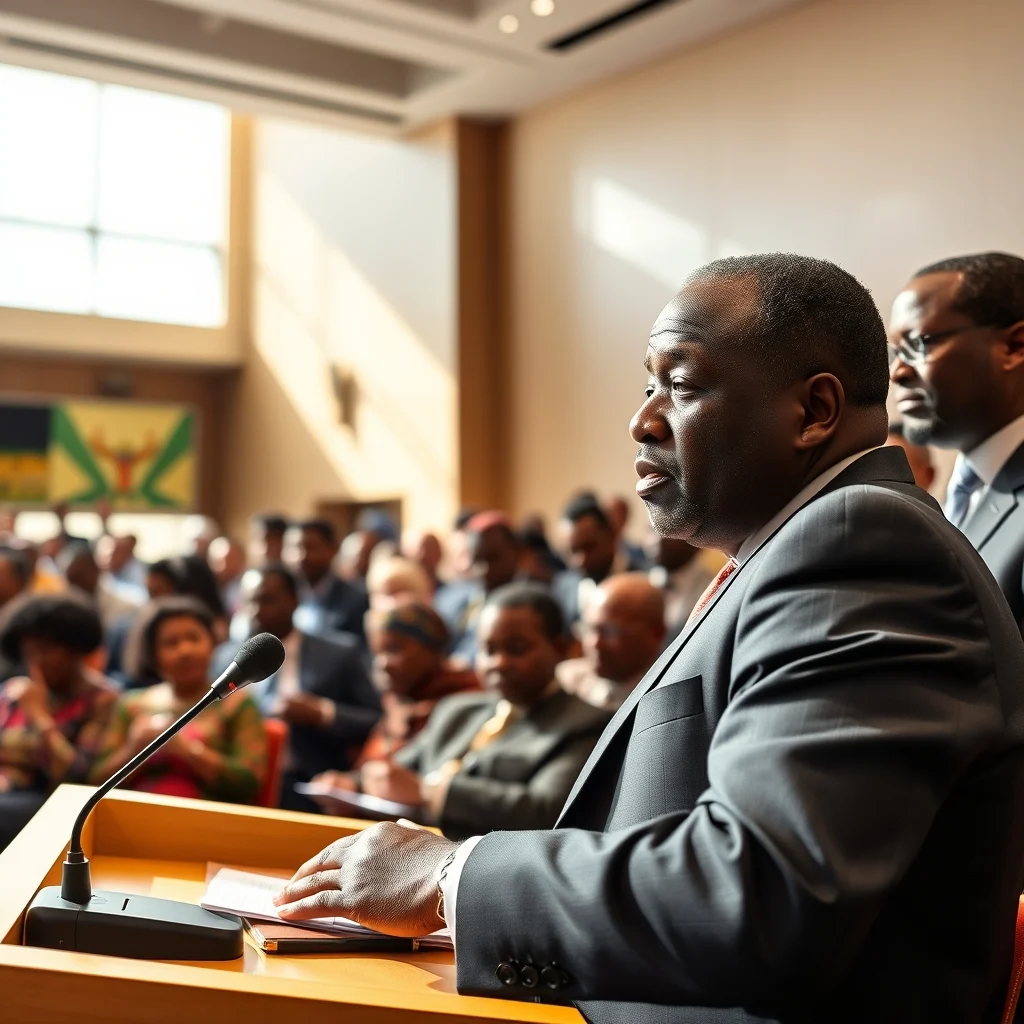
Alex Apau Dadey, Executive Chairman of KGL Group, asserted on Thursday, May 28, at the 10th Ghana CEO Summit that Africa’s primary obstacle to economic transformation is not a lack of innovative ideas, but a chronic failure in consistent execution and the establishment of robust, sustainable institutions.
Dadey highlighted that while the continent teems with entrepreneurial spirit and creative talent, it consistently falters in long-term implementation, leadership stability, and institutional discipline. This inconsistency prevents the realization of the continent’s vast potential.
The Gap Between Ambition and Achievement
The core of Dadey’s argument centers on a critical deficit: the inability to translate ambitious visions into tangible, lasting progress. “Africa’s greatest deficit is not lack of ideas. Africa and Ghana do not suffer from poverty of ambition,” he stated emphatically.
Instead, he proposed, “Too often, Africa suffers from inconsistency of execution.” This means that even well-conceived plans and significant investments can be undermined by a lack of sustained effort, political will, or institutional capacity.
The Role of Leadership and Institutions
Dadey underscored that infrastructure development, often seen as a panacea for economic growth, is insufficient on its own. “Infrastructure development alone cannot transform nations unless it is supported by visionary leadership,” he explained.
This leadership must be coupled with strong institutions that possess the resilience to endure beyond the tenure of individual leaders. Such institutions are crucial for maintaining policy continuity, ensuring accountability, and fostering an environment conducive to long-term investment and growth.
A Call for Enduring Institutions
The KGL Group Chairman called for a new paradigm in African leadership, one that prioritizes the creation of enduring institutions over the pursuit of short-term gains. This generational shift is necessary to build a foundation for sustained development.
This requires leaders in both the public and private sectors to adopt a long-term perspective, focusing on building systems and frameworks that can outlast political cycles and economic fluctuations. The emphasis must shift from individual success stories to collective, institutionalized progress.
Expert Perspectives and Data
While Dadey’s remarks were central, the sentiment echoes broader discussions within development economics. Reports from institutions like the African Development Bank often cite governance and institutional quality as critical determinants of economic success. For instance, the bank’s various governance reports frequently point to challenges in bureaucratic efficiency and policy implementation as significant hurdles to unlocking Africa’s economic potential.
Similarly, studies on sustainable development often highlight the importance of strong legal frameworks and regulatory bodies in attracting foreign direct investment and fostering domestic entrepreneurship. Without these, even substantial capital inflows may not translate into broad-based economic upliftment.
Implications for the Continent and Beyond
Dadey’s call to action implies that stakeholders – including governments, businesses, and international partners – must re-evaluate their strategies. The focus needs to move beyond ideation and project initiation to rigorous, consistent implementation and institutional strengthening.
For businesses operating in Africa, this means advocating for and contributing to better governance and institutional frameworks. For policymakers, it signifies a need to prioritize long-term planning and invest in the capacity of public institutions. International partners may need to shift their aid and investment models to support institutional development more directly.
Looking Ahead
The coming years will reveal whether African nations can heed this call for consistent execution. The success of initiatives aimed at institutional reform and leadership development will be critical indicators. Observers will watch for concrete examples of long-term projects reaching completion and demonstrating sustained impact, driven by robust governance structures.










Leave a Reply