
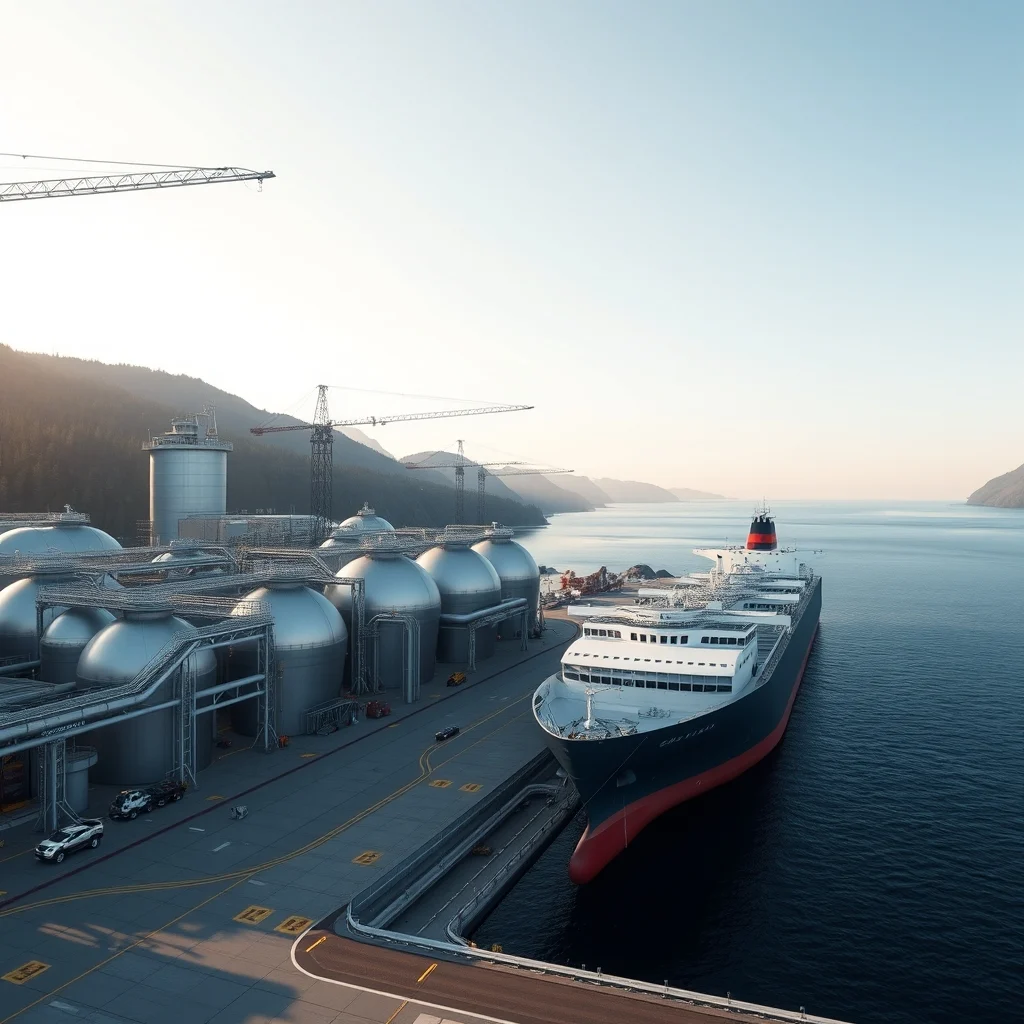
Canada has inked a significant long-term agreement to export liquefied natural gas (LNG) to Germany, marking the first such deal between the two nations. Announced Wednesday in Vancouver by Canada’s Energy Minister Tim Hodgson, the agreement will supply one million tonnes of LNG annually from the proposed Ksi Lisims project in British Columbia to Germany’s national energy utility company, SEFE, for up to 20 years, beginning in the early 2030s. This deal arrives as Europe actively seeks stable energy alternatives and Canada aims to broaden its trade relationships beyond the United States.
Context: Shifting Energy Landscapes
The agreement comes at a critical juncture for global energy markets. Russia’s invasion of Ukraine in 2022 significantly disrupted traditional energy flows to Europe, prompting a continent-wide search for reliable and secure energy suppliers. Simultaneously, Canada, a nation rich in natural resources, has historically relied heavily on the U.S. market for its energy exports. Data from Canada’s energy regulator indicates that virtually all of Canada’s LNG exports in 2024 were destined for the United States, highlighting a long-standing trade dependency.
A New Trade Corridor Opens
Minister Hodgson described the deal as a pivotal moment, asserting that Canada is well-positioned to address the energy supply gaps exacerbated by geopolitical conflicts. He emphasized Canada’s strengths as a “reliable democracy” with abundant natural resources. The agreement is particularly crucial for the Ksi Lisims LNG project, located on British Columbia’s coast, which is still awaiting a final investment decision.
Hodgson expressed confidence that this German commitment will accelerate the securing of necessary funds for Ksi Lisims, potentially within months, paving the way for construction to commence soon after. Prime Minister Mark Carney has identified the Ksi Lisims project as a national priority, eligible for expedited review processes. The deal is a direct outcome of a trade mission led by Carney to Berlin last August, signaling a proactive diplomatic effort to forge new energy partnerships.
Challenges and Criticisms Emerge
Despite the celebratory announcement, the Ksi Lisims project faces significant opposition. More than a dozen Indigenous and environmental groups have pledged to challenge the development, citing environmental risks and legal contestations. Alex Walker from Environmental Defence voiced strong criticism, labeling Ksi Lisims a “high-risk, legally contested fossil fuel project that has failed for decades to attract capital.” Some First Nations have also initiated legal actions against the project.
Conversely, the Nisga’a Nation, whose territory would host the facility, is a proponent of the project, viewing it as an opportunity for economic development. The political landscape also reflects divisions, with Conservative leader Pierre Poilievre criticizing the current government for perceived delays in supporting LNG projects, suggesting that earlier action could have provided Europe with energy supplies sooner. He characterized the announcement as “headlines without deadlines, announcements without actions.”
Internal Party Dynamics and Climate Concerns
Prime Minister Carney also faces internal pressure regarding climate policy. A group of fourteen Liberal MPs recently communicated their “deeply concerned” sentiments to the Prime Minister, fearing a potential rollback of environmental commitments due to increased focus on energy development. Adding to this internal dissent, former environment minister Steven Guilbeault announced his resignation from the Liberal caucus, citing a desire to pursue his lifelong environmental advocacy outside of parliamentary politics.
Minister Hodgson responded to Guilbeault’s departure by characterizing the Liberal Party as a “big tent party” that accommodates a range of viewpoints. He stated that the party ultimately coalesces around collective decisions and executes on them. In a separate development on Wednesday, Prime Minister Carney announced Canada’s decision to acquire early warning aircraft technology from a Swedish manufacturer, diverging from U.S. contenders. This move aligns with Carney’s stated intention to reduce reliance on U.S.-made military procurements, aiming to diversify defense spending.
Looking Ahead: The Future of Canadian Energy Exports
The landmark agreement with Germany represents a significant step for Canada in diversifying its energy export markets and solidifying its role as a reliable global energy partner. However, the success of the Ksi Lisims project hinges on overcoming environmental and Indigenous opposition, securing final investment, and navigating the complex political and climate-related discussions within Canada. The coming years will be crucial in determining whether this ambitious deal translates into tangible energy infrastructure and a lasting shift in Canada’s trade profile.








Leave a Reply