
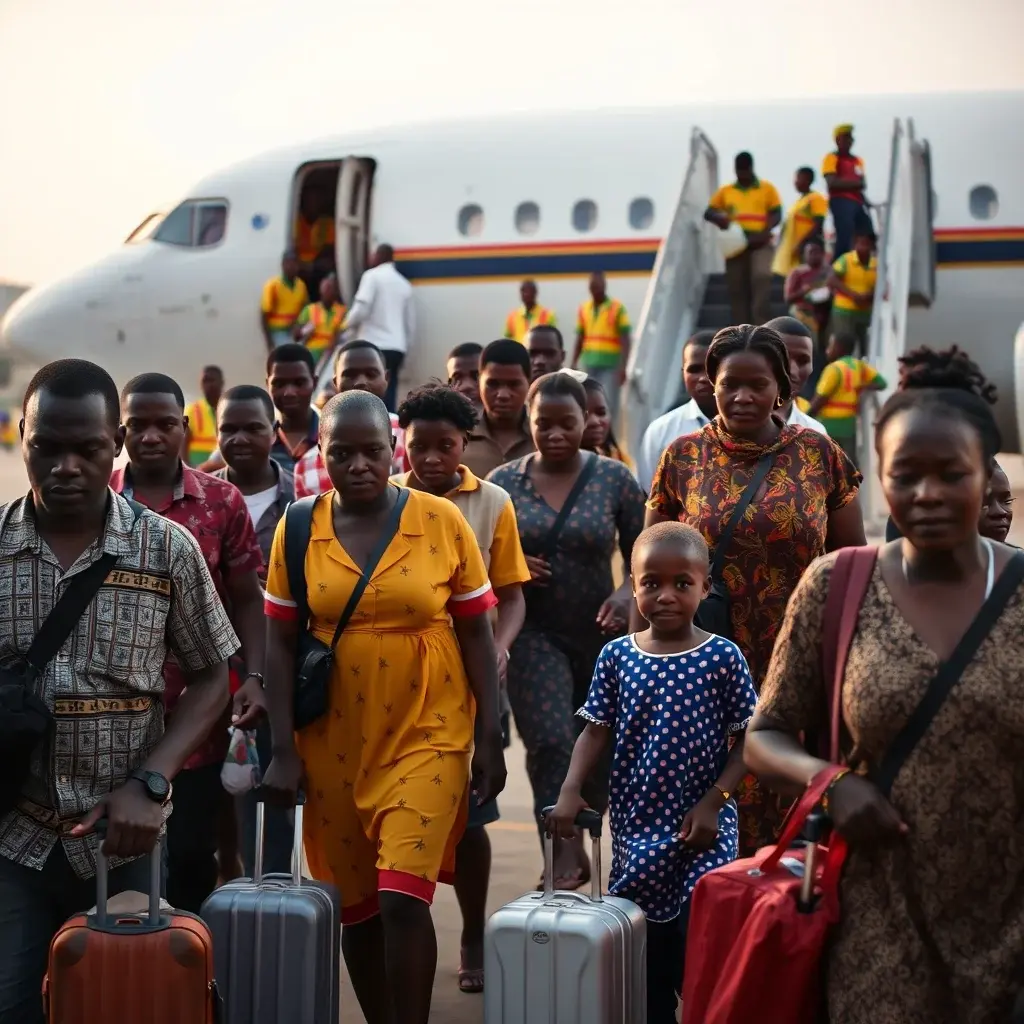
Ghana’s government has initiated the evacuation of its citizens from South Africa due to ongoing unrest and hostility targeting foreign nationals, compelling Accra to prioritize the safety and well-being of its people. The decision, announced by Ghana’s High Commissioner to South Africa, Benjamin Quashie, follows failed attempts to resolve the escalating tensions through diplomatic engagement with South African authorities.
Context of Escalating Tensions
The situation in South Africa has seen a rise in xenophobic incidents and unrest, creating an increasingly hostile environment for foreign nationals, including a significant Ghanaian population. These incidents have led to economic hardship and insecurity for many Ghanaians residing and working in the country.
Ghanaian authorities initially engaged with South African officials to find solutions to the persistent unrest. However, these efforts did not yield the desired results, as the demonstrations and hostility continued unabated.
Decision to Evacuate
High Commissioner Quashie explained that South African authorities held the view that the demonstrations would eventually cease. Despite these assurances, the incidents persisted, impacting the livelihoods and safety of Ghanaians.
“We realised that in our engagement with the South African authorities, while we were offering solutions to what was happening, they took an entrenched position,” Quashie stated in a Citi FM interview. He further elaborated that the continuous nature of the unrest forced the Ghanaian government’s hand.
“But it kept happening, and most of our people had economic challenges,” he added, highlighting the severe impact on the Ghanaian community.
Evacuation Process Underway
The Ghanaian government ultimately concluded that immediate action was necessary to protect its citizens from further hardship. “When we got to the point where we realised if we don’t take a stance it will hurt our people, that was where we decided to start evacuating those who want to go home,” Quashie said.
The evacuation exercise is being coordinated by Ghana’s diplomatic mission in South Africa in collaboration with the Ministry of Foreign Affairs. The first batch of 300 evacuees arrived in Accra on Wednesday, marking the beginning of the organized return for those wishing to leave.
Mr. Quashie confirmed that the exercise has proceeded smoothly and will continue for all Ghanaians who voluntarily wish to return home. This underscores the voluntary nature of the repatriation efforts.
Government Commitment to Citizen Welfare
The Ghanaian government has reiterated its commitment to the welfare of its citizens, both domestically and internationally. “The government of Ghana cares about its citizens both at home and abroad, and we have a President and a Foreign Affairs Minister who care deeply about what Ghanaians go through abroad,” Quashie emphasized.
Temporary support, counseling, and reintegration assistance have been arranged for the returning Ghanaians to help them adjust back home. This indicates a structured approach to managing the returnees and ensuring their well-being post-evacuation.
Implications and Future Outlook
The evacuation highlights the significant challenges faced by foreign nationals in South Africa and the diplomatic complexities arising from such situations. It also underscores the responsibility governments feel towards protecting their citizens abroad, even if it necessitates repatriation.
Moving forward, the success of the reintegration programs for the evacuees will be crucial. Additionally, the ongoing diplomatic dialogue between Ghana and South Africa will be important in seeking long-term solutions to prevent future incidents and ensure the safety of all foreign nationals in South Africa. Observers will be watching to see if South Africa implements more robust measures to curb xenophobic violence and protect its foreign resident communities.










Leave a Reply