
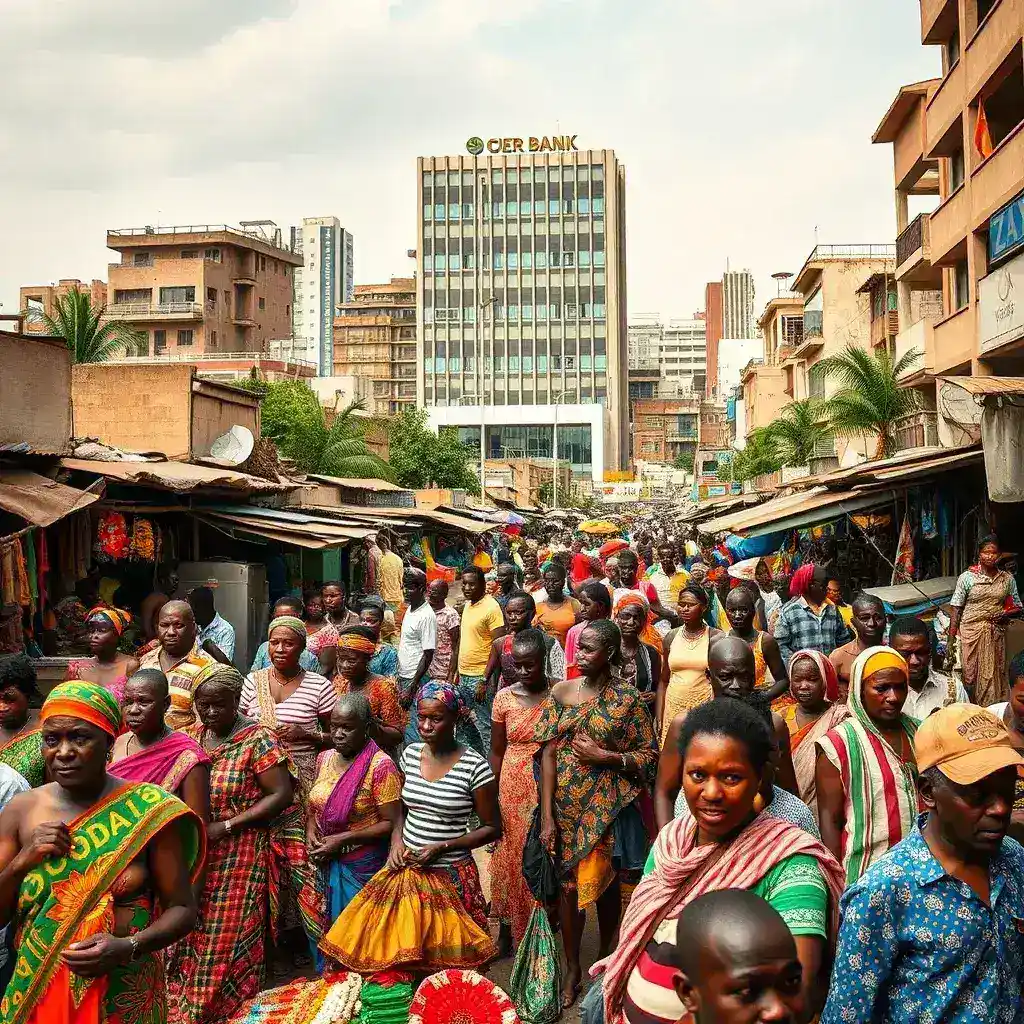
The recent wave of alleged xenophobic attacks and rising economic nationalism in South Africa, particularly the growing hostility toward Ghanaian traders and small business owners operating within the informal economy, presents a critical juncture for Ghana. A viral video captured a South African woman confronting a Ghanaian small-business operator, articulating widespread frustration that foreign nationals should return to their home countries and focus on developing them. While emotionally charged, her points highlight deeper economic issues that Ghana must urgently address regarding its own business scaling challenges.
The South African Perspective: Economic Nationalism and Informal Trade
The confrontation in the video reflects a growing tide of economic nationalism in parts of Africa, fueled by high unemployment, inequality, and economic frustrations. The South African woman distinguished between multinational corporations like MTN, Standard Bank, and DSTV, which she argued employ locals and contribute to the economy, and informal traders. She stated that large companies are respected because they invest, create jobs, and build infrastructure, unlike many African migrants who she claimed participate in already congested informal sectors.
This perspective, while not justifying xenophobia or violence, points to a perception that businesses contributing formally to an economy are more legitimate than those operating in the informal sector. Dismissing these underlying economic frustrations as mere xenophobia, without deeper examination, risks ignoring crucial systemic issues.
Ghana’s Core Challenge: Why Businesses Struggle to Scale
The situation prompts a more uncomfortable but vital question for Ghana: Why do many Ghanaian businesses remain small, fragmented, and informal, despite the nation’s abundant human and natural resources? Ghana, a significant gold producer, sees many citizens seeking economic survival abroad through informal work and small trading activities. This suggests that the issue is not just migration, but the structural conditions within Ghana that hinder large-scale enterprise development.
Structural Constraints Hindering Ghanaian Business Growth
Several structural constraints impede the growth of Ghanaian businesses. The high cost of doing business is a significant barrier. Young entrepreneurs face substantial upfront costs, such as multi-year rent advances for modest operating spaces, which can drain capital before operations even begin.
Access to credit is another major hurdle. Traditional banks often require collateral, audited accounts, and formal documentation that many small businesses lack. Even when financing is available, interest rates are frequently prohibitively high. Informal lenders offer convenience but often impose repayment terms that strain fragile cash flows, forcing entrepreneurs into a cycle of survival rather than growth.
Weak governance and management systems also play a crucial role. Many small businesses lack structured governance, formal accounting, auditing practices, and professional management frameworks. This often leaves them as personality-driven survival ventures rather than scalable enterprises attractive to investors.
Furthermore, there is a weak culture of strategic partnerships and limited digital integration. Many businesses operate almost entirely in cash, with low adoption of digital payment systems and formal banking relationships. Entrepreneurs also tend to prioritize complete ownership of small businesses over partial ownership in larger, more scalable enterprises.
The Social Prestige of Migration
Beyond economic factors, a cultural phenomenon known as the “flight mentality” contributes to the challenge. In Ghana, travelling abroad is often associated with prestige and success, regardless of actual living conditions. This cultural glorification of migration weakens confidence in building sustainable local opportunities and drains entrepreneurial talent.
Transitioning from Survival Businesses to Continental Champions
Ghana’s entrepreneurial discourse needs to mature. The focus must shift from celebrating individual affluence to fostering a national environment where Ghanaian businesses can become continental and global competitors. The aspiration should be to create Ghanaian-owned firms that rival the scale and reach of companies like MTN, Shoprite, or DSTV, companies capable of expanding across borders, employing thousands, and shaping regional economies.
Policy and Entrepreneurial Reforms Needed
Addressing these challenges requires deliberate structural reforms. Reforming commercial rent systems by establishing affordable commercial hubs and flexible rental agreements is crucial. Expanding access to affordable capital through alternative credit assessment systems that recognize transaction histories and digital activity is essential.
A national small business transformation agenda focusing on managerial and governance capacity is vital. Entrepreneurs need structured education in financial management, corporate governance, and investment readiness. Strengthening digital and strategic business ecosystems by encouraging integration with banks, fintech, and e-commerce platforms will improve transparency and scalability.
A cultural shift in ownership mindsets, promoting partnerships and equity financing, is also necessary. Finally, Ghana must intentionally build a national narrative that celebrates local economic transformation and enterprise creation with the same enthusiasm currently attached to migration.
Looking Ahead: Building Ghana’s Economic Future
The underlying economic issues highlighted by the South African confrontation are critical for Ghana’s future. The nation’s long-term influence will depend not just on its resources, but on its ability to cultivate businesses powerful enough to expand beyond its borders and shape markets across Africa and the world. The focus must be on building globally competitive enterprises that create jobs, drive innovation, and transform economies continentally.










Leave a Reply