
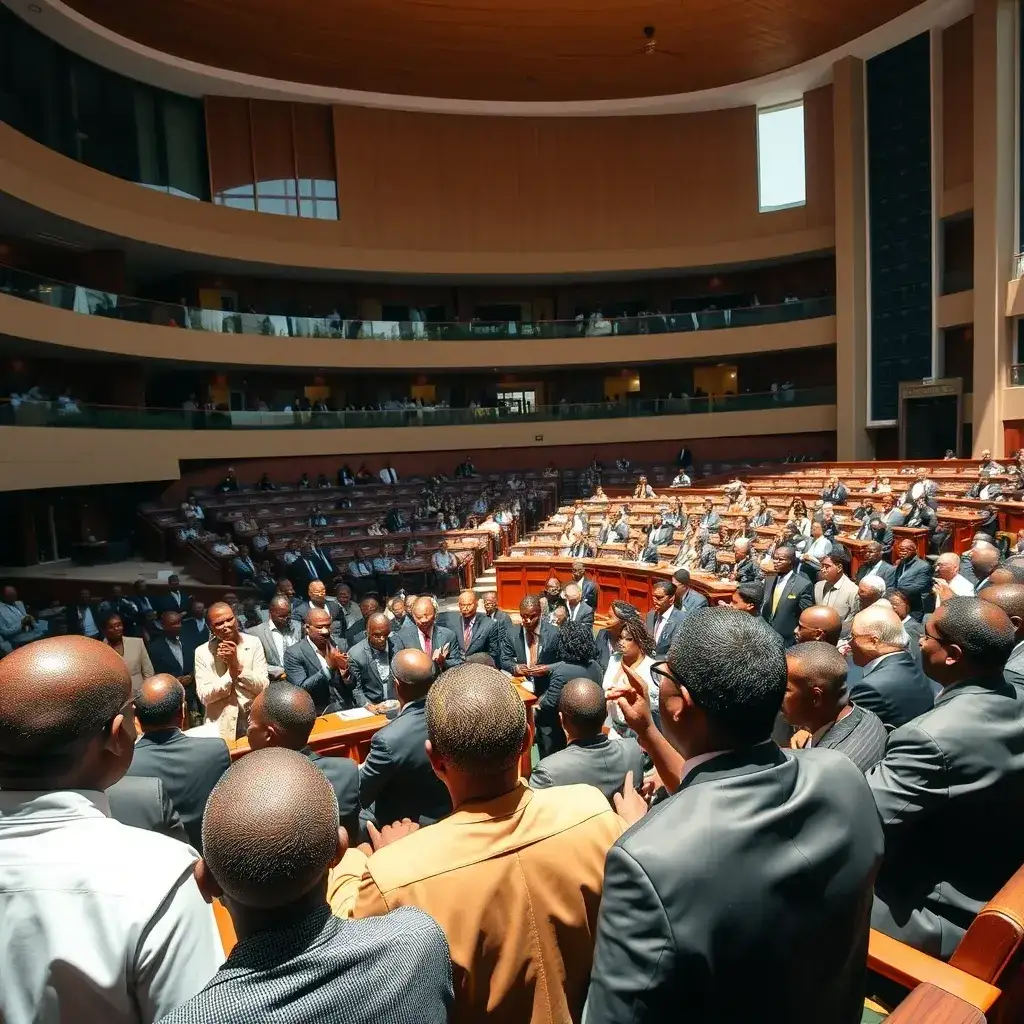
Accra, Ghana – Following the parliamentary approval of the Human Sexual Rights and Family Values Bill, Majority Leader Mahama Ayariga emphatically defended the legislation on the floor of Parliament, asserting that its core objective of prohibiting LGBTQ+ practices and advocacy remains intact despite recent amendments. The bill, widely known as the anti-LGBTQ bill, was passed after months of intense public debate and international scrutiny.
Context of the Bill
The Human Sexual Rights and Family Values Bill, sponsored by a bipartisan group of Members of Parliament, aims to criminalize LGBTQ+ activities, advocacy, and the promotion of what it terms non-conventional sexual relations and family values. Its journey through Parliament has been marked by significant public discourse and legal considerations.
Amendments and Constitutional Scrutiny
Mr. Ayariga addressed concerns that amendments made during parliamentary deliberations had diluted the bill’s strength. He clarified that certain modifications were introduced by the committee primarily to ensure the bill’s provisions would withstand constitutional challenges.
Specifically, he highlighted concerns regarding media reporting and legal representation. “I am convinced that any court in this country would have struck down any attempt to prosecute a media house for reporting on a matter relating to LGBTQ,” Ayariga stated.
He further argued that Ghanaian courts would likely not support punitive actions against lawyers representing individuals accused under the new law. “And I am definitely convinced that no court would have tolerated the punishment of a lawyer who attempts to provide legal services in defense of a person practicing LGBTQ,” he added.
The Majority Leader suggested that the committee’s caution in proposing these amendments was to eliminate ambiguity and preempt potential constitutional challenges. “So in my opinion, perhaps the committee needlessly brought this proposal to us,” he remarked, “But I think that it is out of abundance of caution to make things very clear that the committee proposed this amendment.”
Substance Remains Unchanged
Despite these revisions, Mr. Ayariga firmly maintained that the fundamental substance and purpose of the bill have not been significantly diluted. “These are the only issues, these are the watered down,” he clarified, directly refuting claims of dilution. “This bill is not watered down.”
He emphasized that the legislation rests on two principal pillars, underscoring its unwavering intent to prohibit LGBTQ+ practices and advocacy within Ghana.
Broader Implications
The passage of the bill and the Majority Leader’s defense of its integrity signal a firm stance by the Ghanaian Parliament on LGBTQ+ rights and visibility. The amendments, aimed at ensuring constitutional compliance, suggest a careful navigation of legal frameworks while preserving the bill’s core objectives.
The international community has closely monitored the bill’s progress, with human rights organizations raising concerns about potential discrimination and human rights violations. The government’s position, as articulated by Mr. Ayariga, indicates a commitment to enforcing the law as passed, while also appearing to address potential legal loopholes.
Looking Ahead
The focus now shifts to the implementation of the Human Sexual Rights and Family Values Bill and how its provisions will be enforced in practice. Observers will be watching for potential legal challenges that may arise from its application and its impact on the LGBTQ+ community in Ghana. Further scrutiny will also likely be placed on how Ghana’s legal system interprets and upholds the bill’s clauses, particularly concerning freedom of expression and the right to legal representation.










Leave a Reply