
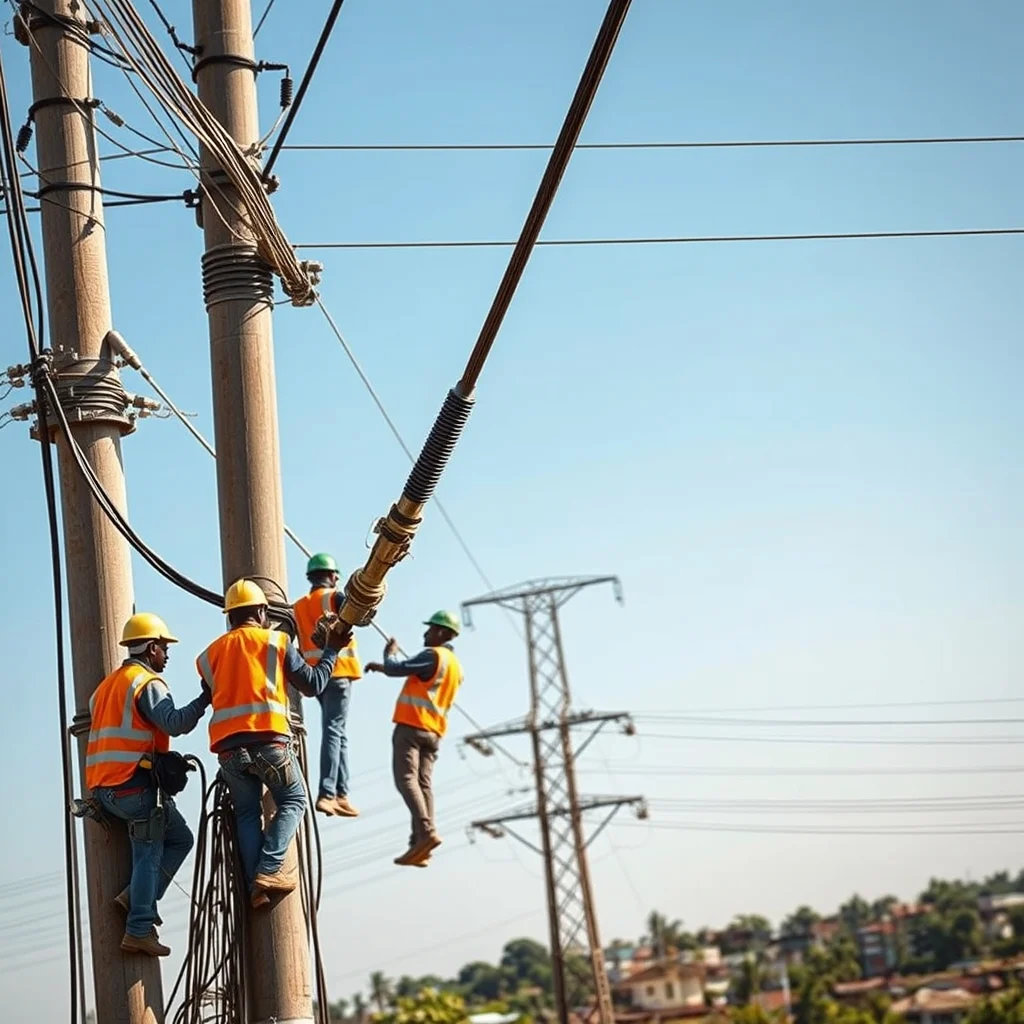
The Electricity Company of Ghana (ECG) has set a completion target of June 5, 2026, for a significant upgrade of key sub-transmission lines serving the Greater Kumasi area. This project aims to enhance power transfer capacity and improve the reliability of electricity supply across the Ashanti Region.
Project Scope and Objectives
The extensive upgrade focuses on vital transmission routes, specifically connecting the KNUST Primary Substation to the Kaase Primary Substation, and subsequently from Kaase to the Ridge Bulk Supply Point. These works are crucial for modernizing the existing infrastructure.
As detailed in a statement signed by Dr. Charles Nii Ayiku Ayiku, General Manager for External Communications at ECG, the project involves replacing older, less efficient 265 square millimeter conductors with advanced 400 square millimeter conductors. Additionally, weak and outdated cables are being systematically changed out to bolster the network’s performance.
Benefits for Communities
The anticipated outcomes of this infrastructure enhancement are substantial. ECG expects a marked improvement in voltage quality and overall power supply stability for several communities. These include Kaase, Kuntenase, Sewua, and Bekwai, along with their surrounding areas.
Furthermore, the upgrade will reinforce the critical sub-transmission connection linking the Kumasi 1 (K1) and Kumasi 2 (K2) Bulk Supply Points. This strengthening is designed to significantly improve the resilience of the entire electricity network within the Ashanti Region, making it less susceptible to disruptions.
Addressing Customer Concerns
ECG has acknowledged the temporary inconveniences faced by customers and residents due to the ongoing construction activities. The company has issued an apology, emphasizing that these disruptions are a necessary undertaking to secure a more dependable and robust power supply for the region’s future.
Industry Impact and Future Outlook
This investment by ECG underscores a broader trend in the energy sector towards modernizing aging power infrastructure to meet growing demand and ensure grid stability. Such upgrades are vital for supporting economic development and improving the quality of life for residents.
The successful completion of this project by mid-2026 will serve as a benchmark for similar initiatives in other regions. It highlights the critical role of consistent investment in transmission and distribution networks. Stakeholders will be watching closely to see if the project meets its timeline and delivers the promised improvements in power reliability for millions of Ghanaians.










Leave a Reply