
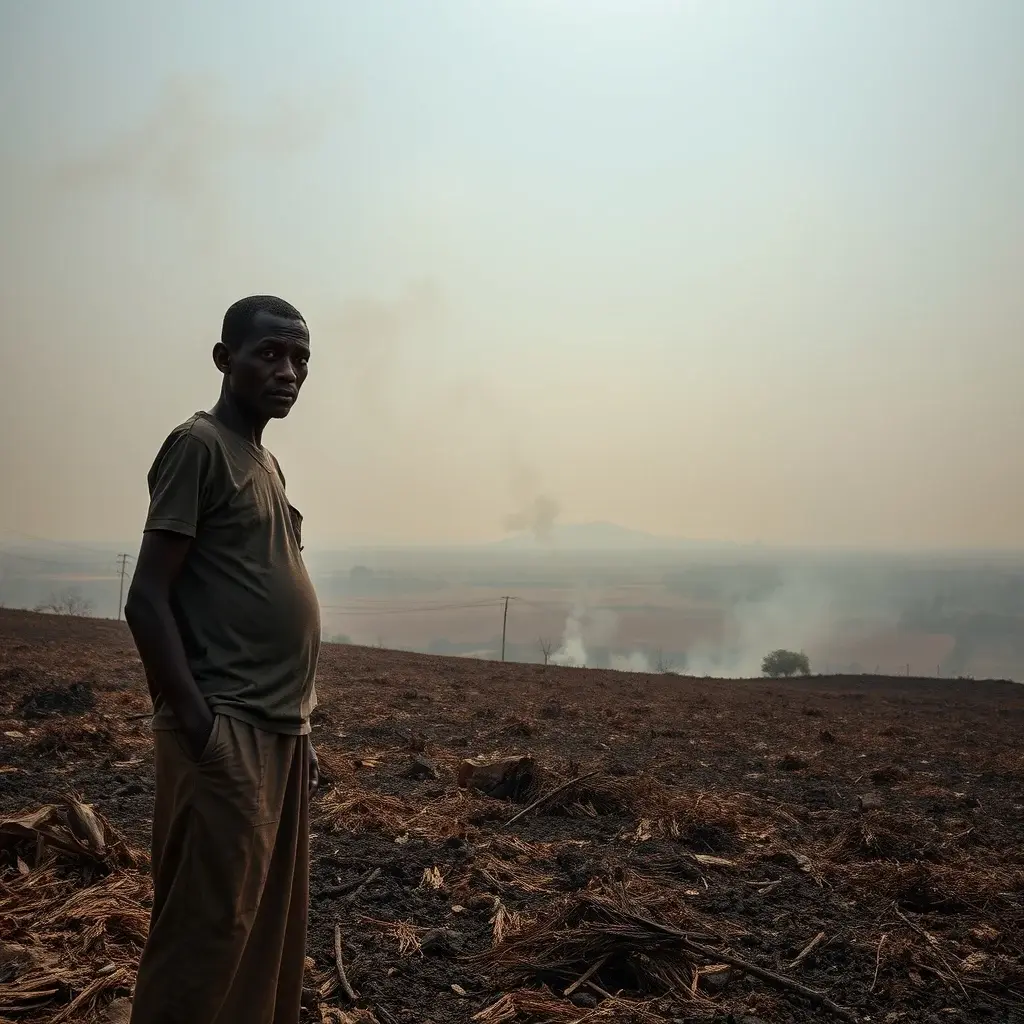
Experts are raising urgent concerns over the widespread practice of burning crop waste and trees to clear farmlands across Ghana, warning that it is fueling a growing public health and environmental crisis. The practice, prevalent in regions like Asutsuare, involves both slash-and-burn agriculture for land preparation and burning of crop residue post-harvest, significantly contributing to air pollution and long-term environmental damage.
Context: The Cycle of Burning in Ghanaian Agriculture
Slash and burn farming is a traditional method where farmers clear land by cutting down vegetation and setting it ablaze. The resulting ash enriches the soil, making it fertile for crops like maize and cassava. Following harvest, many farmers burn leftover stalks and leaves, known as crop residue, to quickly prepare fields for the next planting season. This dual use of fire at both the beginning and end of the farming cycle is a cost-effective, albeit hazardous, practice for many smallholder farmers in West Africa who lack access to machinery or expensive chemicals.
Health Impacts: A Growing Public Health Concern
The smoke generated from burning crop residue produces air pollution levels exceeding World Health Organization safety thresholds by over 100 times per kilogram of residue burned, according to a forthcoming study by the Council for Scientific and Industrial Research (CSIR). This pollution poses significant health risks, particularly to vulnerable populations like children and the elderly.
Cecilia Teye Ameh, a 15-year rice farmer, shared her experiences, stating that smoke from bush burning has triggered asthma attacks, exacerbated high blood pressure, and caused severe eye irritation, which experts warn could lead to vision loss over time. “When I inhale the smoke I get sick and I go to Juapong Hospital for medicine. When it enters my eyes it burns like someone rubbed green pepper in them,” she explained.
Mathias Kwame Nunekpeku, a farmer with two decades of experience, highlighted how his asthma and diabetes are worsened by the practice. “Anytime I burn the bush, the smoke catches me and my asthma starts at once,” he said, describing chest tightness and coughing fits that impede his work. The high cost of weedicides, he noted, leaves farmers with few alternatives to burning for clearing fields, especially when cattle damage crops and spread weeds.
Dr. Kwaku Onwona-Hwesofour Asante, one of the study authors, emphasized the direct link between polluted air and health issues. “When polluted air mixes with oxygen and is inhaled into the body, it can have serious health effects. It can trigger asthma attacks, and with prolonged exposure, increase the risk of lung cancer,” he stated.
Benson Owusu, a public health specialist, underscored that these health consequences extend beyond farmers to entire communities. “This is a public health issue. The smoke from bush burning can expose whole communities—not just farmers—to dangerous air pollution,” he warned, citing potential long-term illnesses including reduced lung function, diabetes, infertility, and stillbirths.
Environmental Degradation and Food Security Risks
Beyond health, the environmental toll is substantial. A 2023 study in northern Ghana revealed that approximately one in four farmers burn crop residues, with the practice reaching up to 60 percent in northern regions due to the long dry season. The CSIR report indicates that fires over the past decade have degraded vast lands, destroying soil nutrients, reducing fertility, contaminating water sources, and accelerating land degradation.
Charles Nyaaba, former secretary of the Peasant Farmers Association, warned of severe long-term risks to food security. “We are destroying the very foundation of our food systems,” he stated. “Burning kills the living organisms in the soil that support plant growth. This is why we now depend heavily on imported fertilizers and even food.” He advocates for a transition to agroecological farming methods like mulching, crop rotation, and organic fertilizers to improve soil health and reduce reliance on fire and chemicals.
Challenges in Enforcement and Seeking Alternatives
Ghana’s Bushfire Prevention and Control Act aims to restrict uncontrolled fires, but enforcement remains a significant challenge. While the Ghana National Fire Service has trained volunteers for education, their resources and personnel are often insufficient to monitor remote rural areas effectively. “We are intensifying community education and will begin enforcing by-laws more strictly. Offenders will be arrested and prosecuted,” said Desmond Ackah, public relations officer for the Ghana National Fire Service, though past enforcement has been criticized as weak.
Dr. Robert Amesiya, Greater Accra Regional Director of the Ghana Health Service, noted a sharp increase in respiratory diseases in the Greater Accra Region. Outpatient visits for Chronic Obstructive Pulmonary Disease (COPD) in Ayawaso West Municipality nearly doubled to 26,000 in the two years to 2023, a rise partly attributed to worsening air quality from seasonal burning. He called for urgent collaboration between government agencies and local actors to enhance public education on the dangers of smoke exposure and promote precautionary measures like wearing nose masks during periods of poor air quality.
Looking Ahead
The ongoing reliance on burning practices in Ghana highlights a critical juncture where immediate economic needs clash with long-term health and environmental sustainability. The effectiveness of current regulations and the potential for widespread adoption of alternative farming methods will be key factors to watch. Increased investment in farmer education, accessible and affordable sustainable agricultural inputs, and robust enforcement of existing laws are crucial steps that could mitigate the escalating health and environmental crises. The future of Ghana’s food systems and the well-being of its citizens hinge on finding viable solutions that break the cycle of burning.









Leave a Reply