
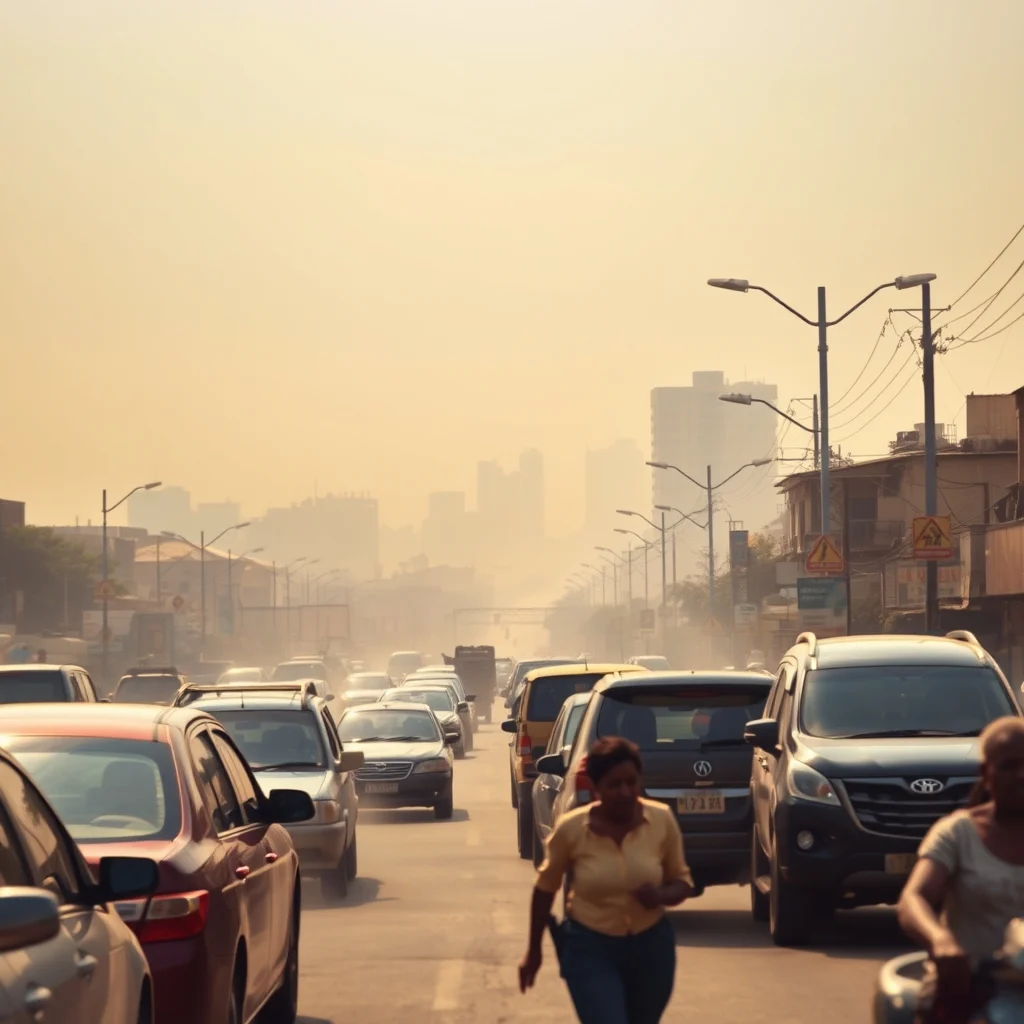
Ghana’s Environmental Protection Authority (EPA) has partnered with Columbia University’s Lamont-Doherty Earth Observatory to create the first comprehensive, nationwide map of dangerous fine particulate matter (PM2.5) air pollution, dating back to 2005. Announced on March 29, 2026, this initiative aims to address a critical data gap that has hindered efforts to combat air pollution, which causes an estimated 32,000 deaths annually in Ghana and costs the nation approximately 2.5 billion US dollars, or 4.5% of its GDP, according to World Bank figures.
For decades, understanding air quality in Ghana has been limited to areas with installed monitoring equipment, leaving vast regions unassessed. Selina Amoah, Head of Air Quality at the EPA, stated at a recent workshop in Accra that existing monitoring data reveals particulate matter concentrations exceeding national standards in most monitored locations, underscoring the pervasive nature of the problem.
Bridging the Data Divide with GRASP
The core of this collaboration is the Gridded Africa Surface Pollution (GRASP) dataset, developed by Dr. Daniel Westervelt and his team at Columbia University. GRASP integrates data from NASA satellites, which pass over Ghana at least twice daily, with ground-level sensor readings collected over the past decade.
Employing advanced machine learning techniques, GRASP generates a detailed air quality picture for every part of Ghana, including areas that have never been monitored. Dr. Westervelt highlighted the challenges in data collection, noting the scarcity of surface-level air quality data in Ghana over the past 20 years, which necessitated the development of alternative methods.
The resulting dataset covers the entire country from 2005 to 2024 and will be updated regularly. It is freely accessible on the GRASP website, featuring an interactive map, downloadable data, and tools for generating regional and city-specific charts.
The Urgent Need for Air Quality Data
Desmond Appiah, Country Lead for the Clean Air Fund in Ghana, emphasized the long-standing absence of robust data infrastructure and its tangible consequences. He explained that the low level of air quality data collection in Africa prevents policymakers from receiving actionable information.
Appiah also pointed out that air quality is a transboundary issue, with pollution often traveling across regions. He stressed the importance of neighboring countries adopting similar air quality improvement trajectories for collective benefit.
Evaluating Policy Effectiveness
The GRASP dataset was instrumental in evaluating Ghana’s emissions levy, introduced in February 2024. This levy charged vehicle owners an extra fee, intended to reduce air pollution as a co-benefit. However, the policy was rescinded by the subsequent government before completing a full year.
The Columbia team’s analysis using GRASP data revealed no statistically significant change in PM2.5 levels between the periods before and after the levy’s implementation. Dr. Westervelt stated that the data suggests the policy did not achieve substantial reductions in air pollution.
While not dismissing emissions pricing as a concept, Westervelt noted that successful implementation, like New York City’s congestion charge, requires foundational elements such as robust public transit infrastructure, poverty alleviation, and income support. He suggested that these building blocks are not yet fully in place in Ghana for such policies to be widely accepted or effective.
Recommendations for Cleaner Air
Dr. Westervelt proposed more practical measures for Ghana, including restricting the import of older, high-polluting vehicles, expanding cleaner public transportation options, and subsidizing cleaner cooking fuels. He identified vehicles and household cooking as the two primary sources of PM2.5 pollution in the country.
He described traditional cooking methods using wood or charcoal as highly polluting and recommended government subsidies for alternative methods that significantly reduce emissions. This aligns with the EPA’s acknowledgment that nearly the entire population is exposed to air quality exceeding World Health Organization (WHO) guidelines.
Current Air Quality and Future Outlook
The GRASP data indicates that Ghana’s air quality is not significantly improving nor rapidly deteriorating but remains at unacceptably high levels. Accra’s annual average PM2.5 concentration has been between 25 and 26.5 micrograms per cubic meter since 2021, far exceeding the WHO’s annual guideline of 5 micrograms per cubic meter.
Westervelt expressed concern over these levels, noting they are more than double those found in major European or US cities. Despite Ghana’s progress, such as phasing out leaded gasoline and moving to low-sulfur diesel, and operating 15 regulatory monitors and 28 local sensors, the EPA acknowledges the widespread exposure to polluted air.
The partnership with Columbia University provides Ghana with an unprecedented, continuous, and freely accessible record of its air quality changes over two decades. This tool will be crucial for holding future policies accountable. Westervelt expressed hope that this data will help Ghana begin to turn the corner towards cleaner air in the near future, with the availability of data now dependent on political will for action.










Leave a Reply