
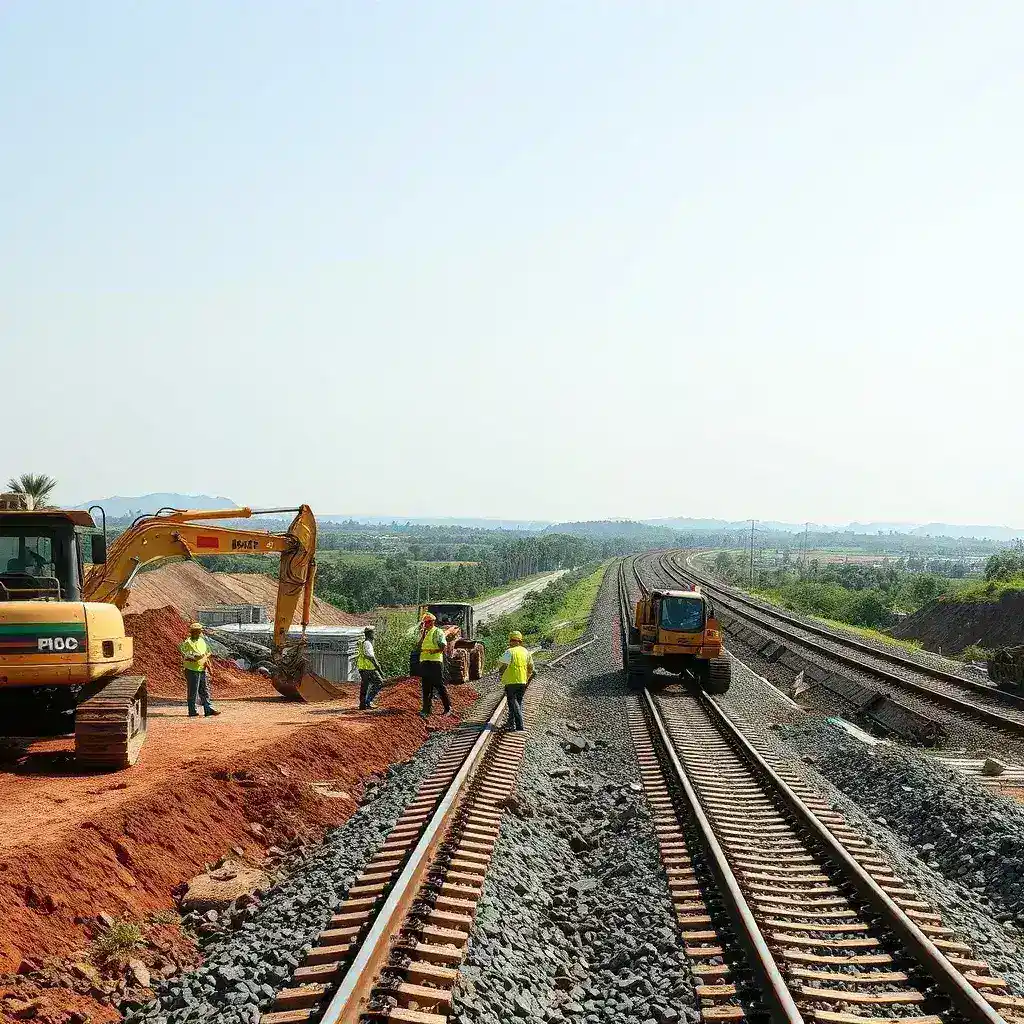
President John Dramani Mahama announced at the 2026 May Day celebration in Koforidua that the comprehensive reconstruction of the Western Rail Line will be incorporated into the government’s flagship ‘Big Push’ programme. The move aims to revitalize trade in the Western Corridor by improving the transport of key commodities like bauxite, manganese, and cocoa.
Context: Revitalizing State Assets
This strategic decision is part of a broader government initiative to revive underperforming state-owned assets and enhance industrial productivity. The ‘Big Push’ programme is designed to inject significant investment into critical infrastructure projects, fostering economic growth and job creation.
The President highlighted recent successes in this revitalization effort. He confirmed that the Tema Oil Refinery (TOR) has resumed operations. Furthermore, key financial institutions, including the Agricultural Development Bank (ADB) and the National Investment Bank (NIB), have undergone successful recapitalization. The Tema Shipyard is also showing clear signs of recovery, according to presidential reports.
Broader Economic Strategy
The incorporation of the Western Rail Line into the ‘Big Push’ signals a commitment to modernizing and expanding the nation’s railway infrastructure. This is crucial for efficiently moving raw materials and agricultural products from their sources to processing facilities and export terminals.
Improved rail transport is expected to significantly reduce logistics costs for industries reliant on the Western Corridor. This includes the mining sector, which transports bauxite and manganese, and the agricultural sector, particularly cocoa farmers.
By facilitating smoother and faster movement of goods, the government anticipates a boost in export volumes and increased competitiveness for Ghanaian commodities on the international market.
Call to Action for Labour
During his address, President Mahama directly challenged the leadership of the Ghana Trades Union Congress (TUC) and the wider labour movement. He urged workers to be more proactive in identifying and reporting mismanagement and operational inefficiencies within state enterprises.
“And so when you see things going wrong, don’t sit aloof. Point it out and make sure corrections are done,” the President stated. He emphasized that when state companies fail, the workforce ultimately bears the brunt of the consequences.
Labour’s Perspective on Employment
In response, Mr. Joshua Ansah, Secretary-General of the TUC, acknowledged the government’s efforts in job creation and asset revitalization. However, he stressed that the state cannot solely address the national employment crisis.
Mr. Ansah articulated that sustainable, long-term employment hinges on a robust and competitive private sector. “While government‑led job creation is welcome, sustainable employment must be driven by a supported and competitive private sector,” he remarked.
The TUC leader also called for specific government interventions to lower borrowing costs for businesses. He proposed measures such as placing a cap on the spread between lending and deposit rates. This, he believes, would incentivize greater private investment and stimulate economic activity.
Implications for the Western Corridor and Beyond
The integration of the Western Rail Line into the ‘Big Push’ programme signifies a significant investment in the region’s economic future. It promises enhanced connectivity and efficiency for key industries, potentially leading to increased production and export revenues.
For workers, this could mean more stable employment opportunities in revitalized sectors. However, the call for greater accountability from labour unions highlights the ongoing need for effective governance and operational management in public enterprises.
The dialogue between the government and the TUC underscores the complex interplay between public investment, private sector growth, and employment creation. The success of these initiatives will likely depend on coordinated efforts to improve infrastructure, reduce business costs, and foster a more competitive economic environment.
Looking ahead, attention will be on the specific timelines and funding mechanisms for the Western Rail Line’s reconstruction. Observers will also monitor the government’s response to the TUC’s proposals for reducing business borrowing costs and the impact of these developments on overall industrial productivity and job growth.








Leave a Reply