
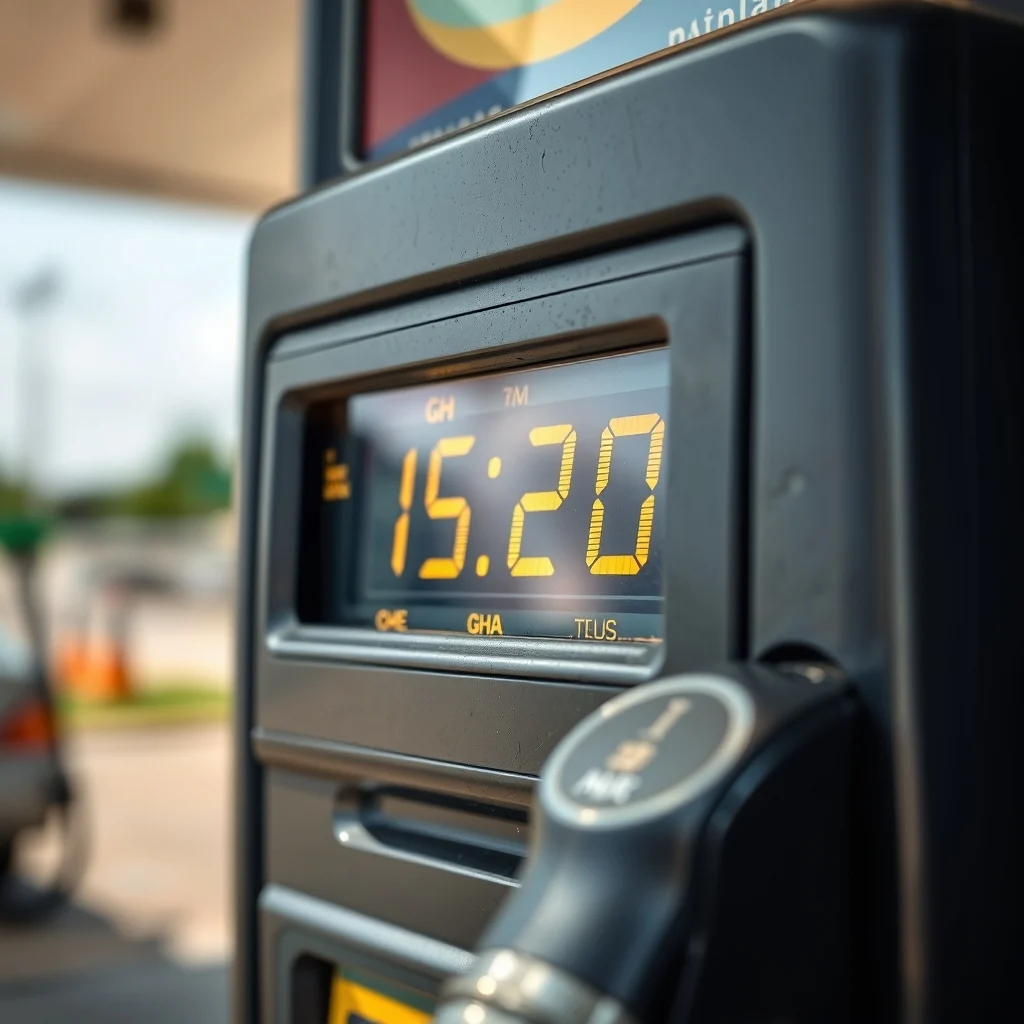
Some Oil Marketing Companies (OMCs) in Ghana have begun increasing fuel prices at the pumps starting June 1, 2026, aligning with the bi-weekly review dictated by the country’s price deregulation policy. Star Oil was among the first to adjust, raising petrol prices to GH¢15.20 per litre, a notable increase from the previous GH¢14.60.
Price Deregulation and the New Window
The adjustments are a direct consequence of the price deregulation policy governing the petroleum sector. This policy allows OMCs to adjust prices based on market dynamics every two weeks. The National Petroleum Authority (NPA) sets a price floor for each pricing window. For the June 1 to June 16 period, the NPA announced a price floor for petrol at GH¢15.20 per litre. This marks an increase from the previous window’s price quote.
Interestingly, while Star Oil has matched the petrol price floor, its diesel price remains at GH¢15.81, a figure that appears to be above the NPA’s set price floor for diesel, which was announced as GH¢15.49 for the same period. The implications of this discrepancy for diesel pricing by other OMCs are yet to be seen.
Industry Projections and Market Movements
Industry players, represented by the Chamber of Oil Marketing Companies (COMAC), had projected a mixed trend for the current pricing window. Their outlook suggested that petrol prices could climb between 4.20% and 6.20%, potentially pushing the price per litre to GH¢15.92. Conversely, diesel was anticipated to decrease in price, ranging from 1.65% to 2.00%, bringing the litre price down to approximately GH¢17.2.
COMAC also forecast a potential rise in Liquefied Petroleum Gas (LPG) prices by up to 2.24%, which could set the price per kilogram at GH¢17.30. These projections are particularly influenced by how OMCs finance their product acquisition from bulk oil distributors, with many reportedly operating on credit terms.
Factors Influencing Price Adjustments
According to COMAC, the varied price movements are attributed to a combination of factors. Lower global crude oil prices have provided some relief, alongside ongoing interventions by the government and industry stakeholders. However, recent pressures on the Ghana cedi have also played a significant role in shaping the pricing outlook.
A key element influencing these adjustments is the Joint Government-Industry measure. This intervention, extended from the previous pricing window, has been modified. For petrol, the intervention has been effectively zeroed out, meaning consumers will bear the full brunt of market price changes. For diesel, the intervention has been reduced to GH¢1.07. This continued, albeit reduced, cushioning aims to shield consumers from the immediate impact of higher global market prices while allowing prices to gradually align with international benchmarks.
Implications for Consumers and the Market
The upward adjustment in petrol prices directly impacts consumers’ transportation costs and the operational expenses of businesses reliant on fuel. The differing price floors and actual pump prices, especially for diesel, may lead to variations in pricing across different OMCs, potentially creating competitive dynamics or confusion for consumers.
The reduction in the government-industry intervention for diesel suggests a move towards greater market price alignment. As the price deregulation policy continues to evolve, consumers can expect more frequent price fluctuations influenced by global market trends, currency exchange rates, and policy interventions. The market will be closely watching how other major OMCs, such as Goil, Shell, Total, and Zen Petroleum, respond to Star Oil’s price adjustments and the NPA’s price floor for this period.







Leave a Reply