
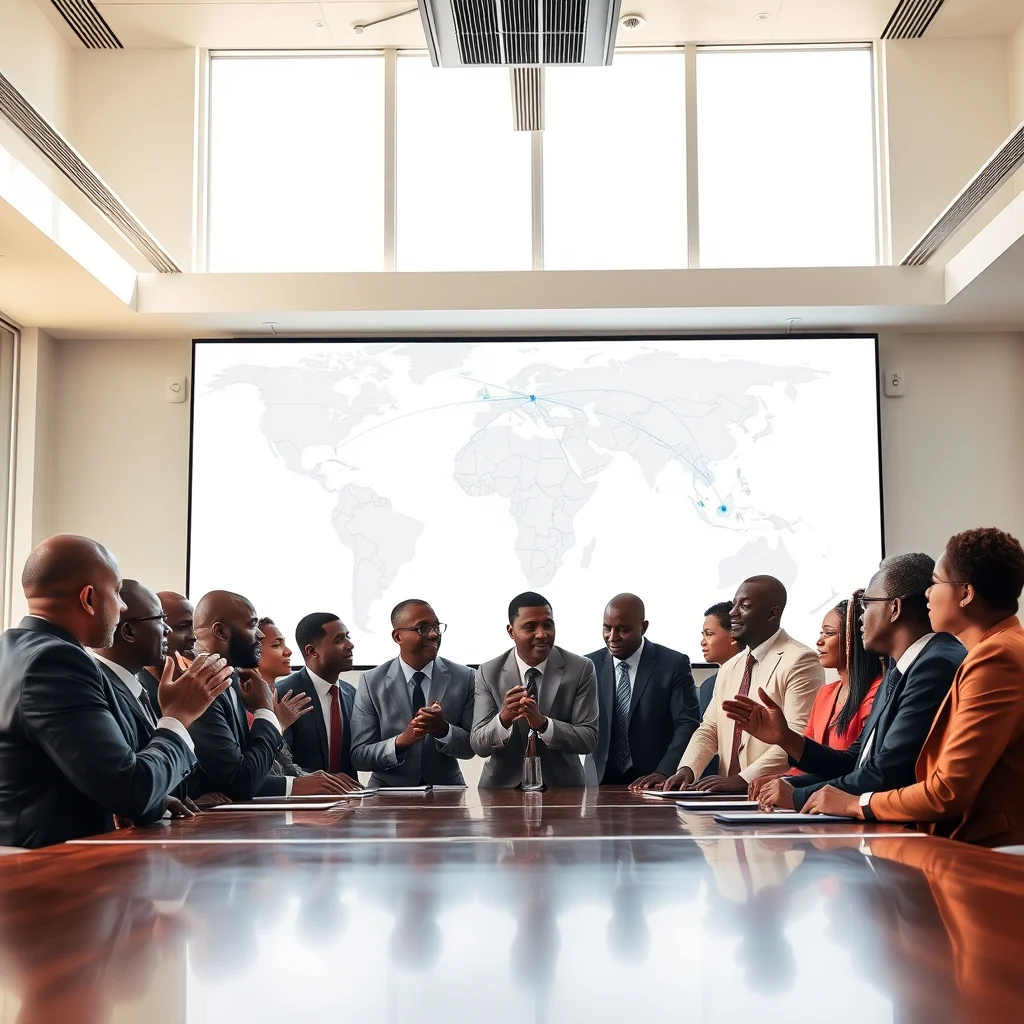
Former Ghanaian President John Dramani Mahama urged African nations on Monday, June 1, to bolster their unity and regional economic integration to effectively address complex global challenges. Speaking at Chatham House in London, Mahama emphasized that isolation is no longer a viable strategy for any African country facing today’s geopolitical and economic uncertainties.
The call for stronger intra-African cooperation comes as the continent grapples with significant global shifts. These include increasingly disrupted supply chains, evolving trade blocs, a rise in economic nationalism, and pervasive global uncertainty. Mahama highlighted the need for African nations to build internal economic resilience to navigate these turbulent waters.
The African Continental Free Trade Area: A Transformative Opportunity
A central focus of Mahama’s address was the African Continental Free Trade Area (AfCFTA). Headquartered in Accra, the AfCFTA is viewed as a pivotal initiative for Africa’s economic future.
Mahama stated that successful implementation of the AfCFTA holds the potential to significantly boost intra-African trade. It could also expand industrial production, strengthen regional value chains, and crucially, reduce Africa’s over-reliance on external economic shocks.
For decades, many African economies have operated on a model of exporting raw commodities while importing finished goods at much higher prices. Mahama described this dependency as both unsustainable and strategically disadvantageous for the continent’s long-term prosperity.
Ghana’s Commitment to Resilience and Integration
Ghana, under Mahama’s perspective, remains steadfast in its commitment to key economic strategies. These include industrial transformation, adding value to raw materials, diversifying exports, and deepening regional economic integration.
The former president reiterated that in the current global landscape, no African nation, irrespective of its size or resource endowment, can effectively manage intricate geopolitical and economic complexities alone. He declared, “African unity is therefore no longer simply a political aspiration; it is a strategic imperative.”
Strategic Pragmatism in International Partnerships
Beyond internal cooperation, Mahama also underscored the importance of forging balanced and mutually beneficial international partnerships. While reaffirming Ghana’s dedication to its traditional allies, he stressed the need to expand cooperation with emerging economies and new global power centers.
Mahama articulated Ghana’s foreign policy approach as one guided by “strategic pragmatism rooted in Ghana’s national interest,” rather than ideological rigidity or dependency. This pragmatic stance allows the nation to build bridges across geopolitical divides, a skill he believes will be increasingly valuable in a fragmented global system.
The goal of these partnerships, according to Mahama, is to foster growth in key areas. These include expanding market access, facilitating technology transfer, creating employment for the youth, supporting industrialization efforts, and ultimately strengthening the continent’s economic transformation.
Looking Ahead: The Path to a Resilient Africa
The discourse highlights a critical juncture for Africa. The success of initiatives like the AfCFTA will be crucial in determining the continent’s ability to withstand global economic headwinds and chart its own course towards sustainable development. As global dynamics continue to shift, the emphasis on regional cooperation and strategic international engagement will likely shape Africa’s economic and political future. Observers will be watching closely how quickly and effectively member states can implement AfCFTA protocols and foster the necessary political will to overcome internal barriers to trade and investment.





Leave a Reply